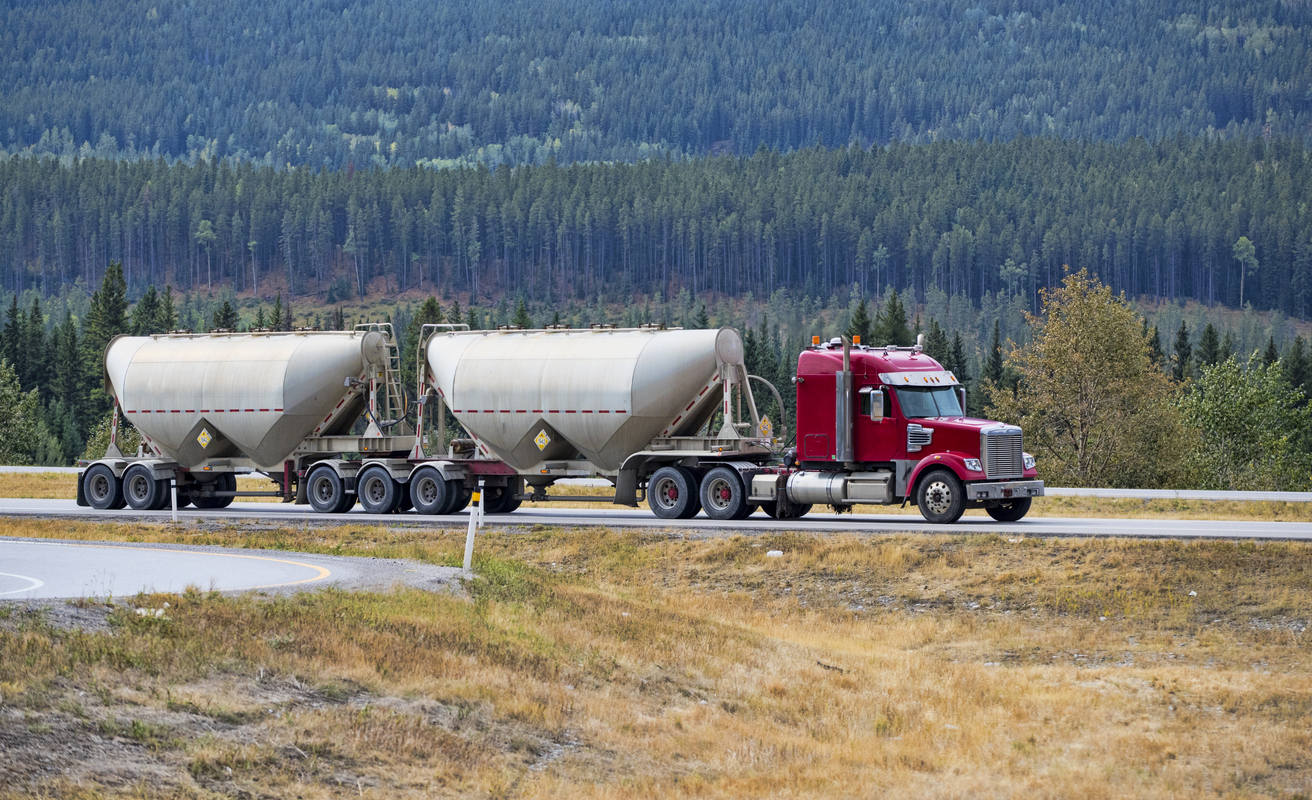
Quick Answer Commercial trucking insurance in Indiana runs $7,000 to $14,000 a year for a semi truck with a clean record, based on Alvix’s own Indiana rate data. Hot shot rigs price lower, starting near $5,500.
Tank trucks and heavy haul equipment run well above $12,000. Every interstate carrier also has to clear a $750,000 federal BIPD floor, on top of whatever Indiana’s own intrastate filing requires.
Key Takeaways
- Tow trucks need $750,000 in liability plus roughly $50,000 in garagekeepers coverage.
- Indiana intrastate BIPD files at $300,000; interstate carriers need $750,000.
- New authorities often quote 40-70% higher than their year-2 renewal.
- Shopping your policy every renewal, not just year 1, is the top cost-saving move.
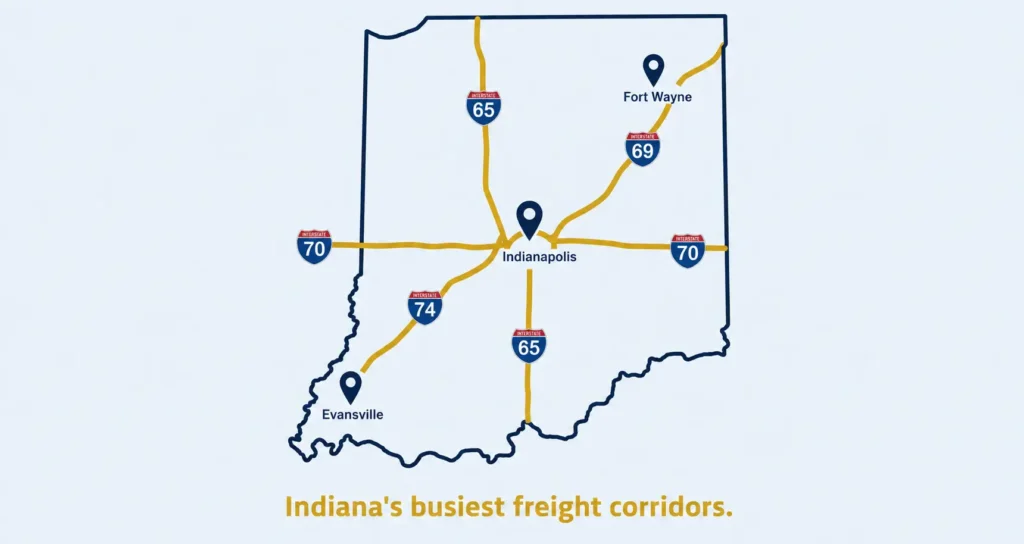
Commercial trucking insurance in Indiana protects fleets running some of the busiest freight corridors in the Midwest. I-65, I-69, I-70, and I-74 all cross the state, carrying manufacturing, agricultural, and last-mile freight through Indianapolis in every direction.
A semi truck with a clean record typically insures for $7,000 to $14,000 a year here. Your exact number depends on freight type, radius, and how long you’ve held your authority.
Primary liability insurance sets the floor everything else builds on. Getting that starting number wrong is the fastest way to overpay, or to run underinsured when a load goes bad.
How Much Does Commercial Trucking Insurance Cost in Indiana?
Semi trucks, hot shot rigs, and heavy equipment each carry a different Indiana rate, broken out below by vehicle type.
1. Average Indiana Insurance Rates by Vehicle Type
| Vehicle Type | Annual Premium Range (Indiana) |
|---|---|
| Box Truck | $3,500 – $8,000 |
| Hot Shot | $5,500 – $11,000 |
| Semi Truck (Dry Van/General Freight) | $7,000 – $14,000 |
| Dump Truck | $7,000 – $13,000 |
| Tow Truck | $7,000 – $16,000 |
| Flatbed | $7,000 – $14,000 |
| Reefer (Refrigerated) | $8,000 – $16,000 |
| Auto Hauler / Car Carrier | $9,000 – $20,000 |
| Heavy Haul | $11,000 – $27,000 |
| Tank Truck | $12,000 – $32,000 |
These ranges come from Alvix’s own rate data across 23 licensed states, not one national average. Your quote still moves with MVR, credit, and claims history.
2. What Actually Moves Your Indiana Premium
Two carriers can rate the same driver completely differently. One underwriter calls Indiana a preferred state; another treats it as a tougher market for the same risk.
Carrier choice matters as much as state choice. Rating factors that move your number most:
- Length of your operating authority and your MVR
- Freight type, from general dry van to hazmat
- Operating radius and where your equipment is garaged
- Truck and trailer values, plus claims history
- Credit score and driver age
Some underwriting models pull more than your commercial MVR. A few carriers cross-check a personal claims history report while quoting, so a minor personal-auto glass claim from years back can still nudge a new-authority quote higher.
BIPD Insurance and Indiana’s Liability Minimums
BIPD stands for bodily injury and property damage liability, the coverage that pays medical bills and property repair costs when your truck causes a wreck. It’s also where Indiana carriers most often get caught underinsured.
1. The Federal BIPD Floor for Interstate Carriers
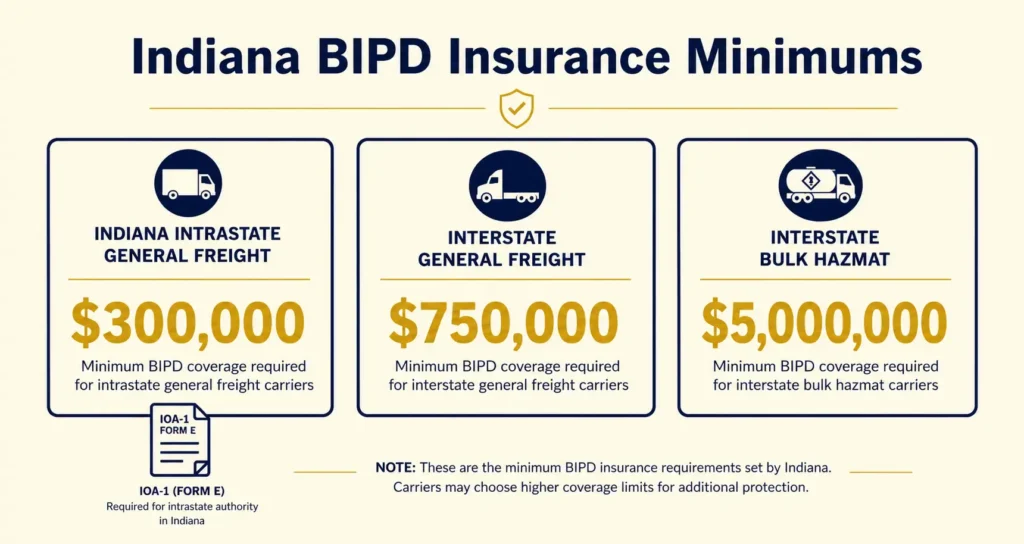
Any Indiana carrier crossing state lines falls under FMCSA’s minimum financial responsibility rule. General freight requires $750,000 in combined BIPD coverage.
Non-bulk hazmat moves that number to $1,000,000. Bulk hazmat and certain explosives push it to $5,000,000.
2. Indiana’s Intrastate BIPD Filing Requirements
Carriers that never leave Indiana answer to a lower bar. Indiana’s Motor Carrier Services division sets a $300,000 BIPD minimum for general freight staying inside state lines.
That filing runs through an IOA-1 application backed by a Form E insurance certificate, not the federal BMC-91X filing interstate carriers use.
3. Why Brokers Push Past the Legal Minimum
Most freight brokers won’t dispatch to a carrier running the bare federal floor. A $1,000,000 policy is the practical minimum for general freight, even though $750,000 is technically legal, and we see this trip up new authorities constantly: legal to run, but no broker will load it.
| Carrier Type | Minimum BIPD Coverage | Governing Body |
|---|---|---|
| Indiana intrastate, general freight | $300,000 | Indiana DOR Motor Carrier Services |
| Interstate, general freight (non-hazmat) | $750,000 | FMCSA |
| Interstate, non-bulk hazmat | $1,000,000 | FMCSA |
| Interstate, bulk hazmat / explosives | $5,000,000 | FMCSA |
| Broker practical floor, general freight | $1,000,000 | Industry standard, not law |
Core Coverage Types Every Indiana Carrier Needs
BIPD is the floor, not the whole policy. A complete Indiana program layers several coverages on top of it.
1. Primary Liability Insurance in Indiana
Primary liability pays for the other party’s injuries and property damage when you’re at fault, the coverage an Indiana trooper’s accident report triggers first at the scene of any wreck. Every dollar figure discussed above under BIPD lives inside this policy, not a separate one.
2. General Liability Insurance in Indiana
General liability insurance protects against claims that happen off the road entirely. Carriers regularly confuse it with primary liability, and running only one leaves a gap most owner-operators don’t discover until a claim gets denied.
| Coverage | What it actually pays for |
|---|---|
| General liability | A loading-dock injury, a warehouse accident, or property damage away from the truck |
| Primary liability | A moving-vehicle accident on the road |
3. Physical Damage Insurance in Indiana
Physical damage protection repairs or replaces your own truck after a collision, fire, or theft. Insurers pay actual cash value at claim time regardless of what the policy lists as the stated amount.
That’s exactly why insuring a truck above its real market value, a line item we flag constantly during renewal reviews, buys nothing extra.
4. Cargo Insurance in Indiana
Cargo freight insurance protection covers freight lost, damaged, or stolen in transit. The limit should track your heaviest realistic load, not a round number picked at binding; a dry van running $40,000 loads gains nothing from a $100,000 cargo limit except a bigger premium.
5. Trailer Interchange Insurance in Indiana
Trailer interchange insurance covers trailers you don’t own but pull under a written interchange agreement, common at intermodal yards and drop-and-hook freight.
It has no purpose on a policy for a carrier who owns and pulls only their own trailer. That’s one of the more common overpayment items we catch on a declarations page review.
6. Occupational Accident Insurance in Indiana
Occupational accident insurance fills a real gap. Indiana, like most states, doesn’t require an owner-operator to carry workers’ compensation on themselves as a sole proprietor.
Occupational accident coverage is the substitute layer for medical bills and lost income after an on-the-job injury, since there’s no statutory program standing behind you otherwise.
7. Excess Liability Insurance in Indiana
Excess liability insurance sits above your primary and general liability limits, paying out only once those underlying policies are exhausted.
It’s priced as a percentage of the primary premium, not a flat rate. That’s why 2 carriers running identical trucks can see very different excess quotes if their underlying limits differ.
8. Reefer Breakdown Insurance in Indiana
Reefer breakdown coverage pays for spoiled cargo when a refrigeration unit fails mid-route, a distinct add-on most carriers assume standard cargo insurance already includes. It usually doesn’t.
Cheap, fast-issue cargo policies frequently exclude specific commodities by default. Commonly excluded on the cheapest reefer policies:
- Eggs
- Frozen dairy and ice cream
- Other high-claim, temperature-sensitive freight
Confirming the exact commodity list with the insurer before booking a load matters more than the coverage’s price tag.
9. Hazmat Liability Insurance in Indiana
Hazmat liability coverage raises your BIPD limit for hazardous freight, and the exact tier depends on whether the load is placarded:
- Placarded hazmat (loads requiring a visible diamond placard): $1,000,000-$5,000,000, regardless of quantity
- Non-placarded hazmat below the reportable quantity threshold: can qualify for the standard $750,000 general freight tier
10. Non-Trucking Liability Insurance in Indiana
Non-trucking liability, commonly called bobtail coverage, protects you when you’re driving the truck for personal use, off-dispatch and outside your motor carrier’s operating authority.
- Covered: personal errands, driving home, off-dispatch bobtail miles
- Not covered: anything while under dispatch, even running empty, which still falls to primary liability
Carriers 100% leased to a single motor carrier should check their lease agreement before paying for this separately, since the carrier’s own policy sometimes already covers bobtail miles.
11. Equipment Breakdown Insurance in Indiana
Equipment breakdown coverage repairs mechanical or electrical failures on refrigeration units, lift gates, and other onboard equipment, but only for damage that’s sudden and accidental.
A reefer unit that finally quits after years of deferred maintenance is a wear-and-tear claim, not a covered breakdown, a distinction that trips up more owner-operators than the coverage’s fine print suggests it should.
How Much Insurance Does a Tow Truck Need in Indiana?
Emergency towing in Indiana needs at least $750,000 in liability coverage on units rated 10,000 pounds GVWR or heavier, plus roughly $50,000 in garagekeepers coverage.
1. Liability and Garagekeepers Coverage Minimums
Garagekeepers coverage protects a customer’s vehicle from fire, theft, and vandalism while it sits on your lot. Lowering your tow truck insurance premiums starts with matching this limit to what you actually store on site.
2. On-Hook Towing and Secondary Hauling Coverage
On-hook towing coverage protects the vehicle you’re actively hauling, separate from your own truck’s physical damage policy. Secondary hauling under the same authority scales cargo limits by freight type:
- Household goods: $300,000
- General freight: $750,000
- Oil transportation: $1,000,000
- Hazardous materials: $5,000,000
Trucking Insurance in Indiana by Vehicle Type
Indiana freight isn’t one kind of load. Manufacturing corridors, agricultural country, and warehouse hubs each pull a different rig onto the same highways, and every one of them insures a little differently.
Most Indiana-focused trucking insurance content stops at semi trucks and maybe hot shot rigs. Grain, livestock, garbage, and logging trucks rarely get their own state-level breakdown anywhere, which is exactly where a generic policy quote tends to miss real exposure.
1. Flatbed Trucking Insurance in Indiana
Flatbed trucking insurance covers open-deck rigs hauling steel, lumber, and machinery, where load-securement claims run higher than on enclosed trailers.
FMCSA’s cargo securement rules apply directly to how a flatbed load gets chained and strapped. Insurers weigh a carrier’s securement record almost as heavily as its accident history when pricing the policy.
2. Heavy Haul Trucking Insurance in Indiana
Heavy haul coverage scales up for oversized construction and industrial equipment moving through Indiana’s manufacturing corridors, running $11,000 to $27,000 a year. Moving an oversize or overweight load means 2 separate approvals have to line up:
- An INDOT oversize/overweight permit for the route
- Insurance that actually covers the declared equipment value
Missing either one stops the load, not just the insurance side of it.
3. Auto Hauler Trucking Insurance in Indiana
Auto hauler insurance protects multi-vehicle car carriers, where declared cargo value drives the premium more than mileage does.
A claim on a multi-car trailer scales with how many vehicles are actually loaded at the time of loss. Declared values need updating whenever the mix of vehicles on the trailer changes.
4. Dry Van Trucking Insurance in Indiana
Dry van trucking insurance covers the state’s most common general-freight setup, and it typically prices lower than flatbed or reefer work for the same radius, since enclosed cargo faces less load-securement and weather exposure.
5. Reefer Trucking Insurance in Indiana
Refrigerated truck insurance covers cold-chain freight through Indiana’s food and pharmaceutical distribution lanes, running $8,000 to $16,000 a year. The standard policy usually needs the reefer breakdown add-on discussed above; without it, a spoiled load from a failed unit isn’t a covered cargo claim at all.
6. Tank Truck Insurance in Indiana
Tank truck insurance covers fuel, chemical, and bulk-liquid hauling across the state, running $12,000 to $32,000 a year, the widest range of any Indiana vehicle type because hazmat classification can move the BIPD requirement from $750,000 up to $5,000,000 on the same truck.
7. Livestock Trucking Insurance in Indiana
Livestock truck insurance covers the state’s agricultural transport corridors. Cargo coverage on a livestock load gets underwritten differently than standard freight, since a loss is assessed against veterinary and market-value standards rather than a flat replacement cost.
8. Hot Shot Trucking Insurance in Indiana
Hot shot trucking insurance covers gooseneck and step-deck rigs running shorter, faster lanes, priced from $5,500 to $11,000 a year.
Higher-paying specialized freight often gates access behind a coverage tier above the state minimum. The cheapest policy that legally qualifies you to run isn’t always the one that gets you the better-paying loads.
9. Dump Truck Insurance in Indiana
Dump truck insurance serves Indiana’s construction and aggregate hauling, running $7,000 to $13,000 a year. Standard policies commonly exclude off-road and private-property work.
A truck spending real time on active job sites rather than public roads needs that exposure confirmed with the carrier directly. Vehicle types where Indiana carriers most often carry the wrong exposure on their policy:
- Dump trucks running off-road on active construction sites
- Logging trucks working private timberland instead of public routes
- Grain trucks crossing farm fields between fields and the elevator
10. Local Freight Trucking Insurance in Indiana
Local freight trucking insurance covers shorter-radius, regional hauls around Indianapolis. Pricing tracks the filed operating radius closely; a truck filed for a 500-mile radius pays long-haul rates even if it never actually runs past 250 miles.
11. Box Truck Insurance in Indiana
Box truck insurance covers delivery fleets running Indianapolis and other Indiana metro hubs, priced from $3,500 to $8,000 a year.
Brokers sometimes quote box truck freight close to full-trailer rates, assuming the smaller box costs less to run. Fixed costs like insurance don’t scale down with trailer size the way per-mile freight rates do.
12. Last-Mile Delivery Insurance in Indiana
Last-mile fleets running tight Indianapolis delivery windows carry the same box-truck foundation, with cargo limits matched to smaller, high-frequency loads instead of full trailer values, and a claims pattern that skews toward frequent, lower-severity incidents rather than the occasional large loss more typical of long-haul lanes.
13. Amazon Relay Insurance in Indiana
Insurance for Amazon Relay covers gig-freight carriers running under a delivery service partner authority. Amazon’s own program sets a coverage floor for DSP fleets, but an independent contractor running Relay loads outside that structure still needs a standard commercial policy underneath it, not Amazon’s program coverage alone.
14. Logging Truck Insurance in Indiana
Logging truck insurance covers Indiana’s timber-haul operations, running $9,500 to $20,000 a year. Off-road and private-timberland work is the exposure most standard policies quietly exclude, the same gap that trips up dump truck and grain haulers working job sites or farm fields instead of public roads.
15. Grain Truck Insurance in Indiana
Grain truck insurance covers the state’s agricultural haulers, running $6,000 to $12,000 a year. Claims frequency typically spikes during harvest, when trucks run longer hours on rural roads carrying heavier loads than the rest of the year.
16. Garbage Truck Insurance in Indiana
Garbage truck insurance covers waste and recycling fleets running municipal and private routes, running $7,000 to $15,000 a year. Frequent stop-and-go driving on tight residential streets pushes claims frequency higher than most vehicle types on this list, even as average severity per claim tends to run lower.
17. Intermodal Trucking Insurance in Indiana
UIIA and intermodal insurance covers container and port-drayage carriers accessing rail yards, running $8,000 to $18,000 a year.
The carrier easiest to get approved with as a new authority isn’t always the one that gets you through a rail yard gate. Confirm the policy actually carries the intermodal interchange endorsement before committing to drayage work, not after a dispatcher rejects your certificate.
18. For-Hire Trucking Insurance in Indiana
For-hire trucking liability covers carriers hauling freight owned by other businesses, where the shipper or broker’s contract often sets liability terms above the statutory minimum before the carrier ever sees a load.
19. Long-Haul Trucking Insurance in Indiana
Long-haul carriers running the full I-65/I-69/I-70/I-74 network still need the same primary liability foundation as every other Indiana fleet, priced from $8,000 to $16,000 a year, with rates set by the widest radius actually driven, not just the home state on the authority.
20. Fleet Insurance in Indiana
Fleet insurance becomes the more efficient structure once an operation runs several of these vehicle types under one authority instead of insuring each truck separately, and it’s usually the point where a dedicated account manager starts to matter more than the premium itself.
A carrier running I-65 toward Louisville faces different exposure than one working I-70’s rural stretch to the west. That logic carries into Kentucky and Ohio, Indiana’s 2 busiest neighboring freight states.
What Actually Drains an Indiana Trucking Insurance Budget
1. Why New Authority Quotes Run Higher in Year 1
New authorities in Indiana routinely quote 40-70% higher than the same operation’s year-2 renewal. That isn’t about your years behind the wheel.
Carriers price the company’s loss history, not driver tenure. A 20-year CDL holder and a 2-year holder starting fresh authority the same day often quote the same.
We’ve seen new Indiana hot shot authorities lock in around $800 a month with a clean record, close to $9,600 a year. Our new venture truck insurance guide covers what actually moves that number down faster than time alone.
2. Line Items Owner-Operators Commonly Overpay For
The same handful of line items show up overpriced on renewal after renewal:
- Stated-amount physical damage priced above actual cash value
- Non-trucking liability duplicated when your motor carrier already covers you off-dispatch
- Cargo limits set at $100,000 when freight never exceeds $40,000 a load
- Trailer interchange coverage left on a policy for an owner who only pulls their own trailer
- Physical damage deductibles untouched since the policy was first written
- A filed operating radius that no longer matches how far the truck runs
Our owner-operator coverage guide walks through how to catch most of these on your own declarations page before your next renewal call.
Staying DOT-Active and Compliant in Indiana
1. IOA-1, Form E, and Indiana Motor Carrier Services
Indiana intrastate carriers activate authority through an IOA-1 application filed with Motor Carrier Services. That filing pairs with a Form E certificate proving your BIPD coverage meets the state minimum.
Miss that pairing and the state treats your authority as inactive, even if you already paid for a policy.
2. Federal Filings for Interstate Carriers
Interstate carriers file differently. Your insurer submits a BMC-91X to FMCSA instead of Form E, and an MCS-90 endorsement rides alongside the policy as a public-protection backstop.
Your FMCSA safety rating and CSA score also feed into what carriers quote at renewal. A growing number of insurers now also check your ELD provider’s compliance status before binding a new policy, a shift most Indiana carriers haven’t heard about yet.
FAQs
Get Your Indiana Trucking Insurance Quote
Indiana’s freight corridors reward carriers who show up correctly insured and stay that way through every renewal.
The carriers who overpay usually aren’t running bad risk. They’re running a policy that never got reviewed after year 1.
Ready to Lock In Coverage That Actually Fits Your Freight?
Alvix Insurance Group has placed trucking policies since 2014. 24/7 certificate of insurance access means a broker’s COI request doesn’t wait until Monday.
A dedicated account manager reviews your Indiana coverage at every renewal. Get your Indiana trucking insurance quote and find out whether your current policy still matches the freight you’re running.


