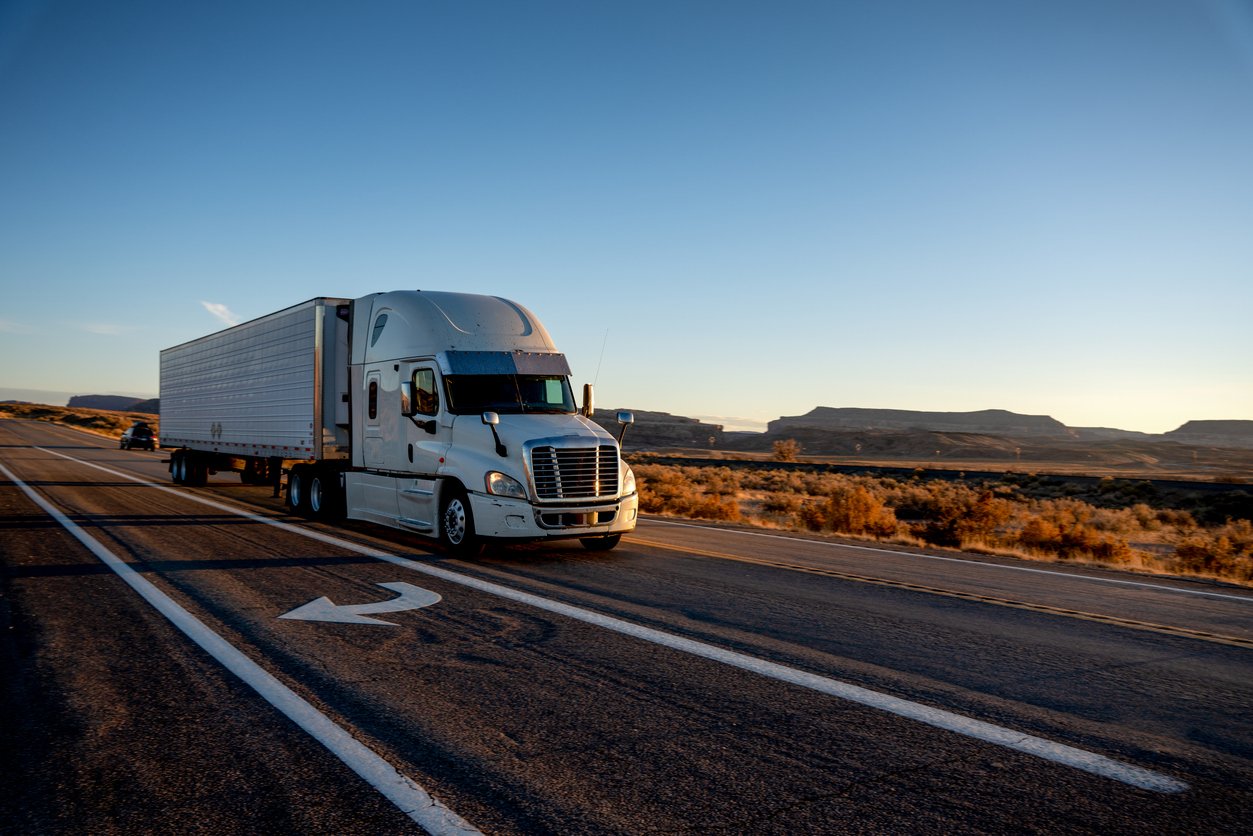
Primary truck liability insurance pays third-party bodily injury and property damage claims when your truck is at fault.
It’s the coverage FMCSA requires before your MC authority can move a load, and it underlies every other policy, including excess liability coverage.
Skip it, let it lapse, or file it wrong, and your authority stops being active. Not a paperwork technicality. A parked truck.
Key Takeaways
- Primary liability covers accidents your truck causes. It doesn’t cover your own truck or the freight inside it.
- The federal minimum is $750,000 for general freight, but most brokers require $1,000,000. Alvix places limits up to $5,000,000 CSL.
- New authorities typically pay $16,000-$24,000 in year 1. Your carrier’s loss history drives the price, not your driving years.
- The 3 most common overpayments we catch at renewal: duplicate non-trucking liability, a mismatched radius, and a stale deductible.
Primary Truck Liability Insurance: Definition and Scope
Primary Truck Liability Insurance is the policy FMCSA checks before your MC authority goes active. It’s also what most brokers mean when they ask for your Certificate of Insurance.
It’s often confused with 2 other policies:
- General liability covers non-vehicle risks, like an injury at your terminal. Nothing to do with the road.
- Cargo insurance covers the freight you’re hauling, not the people or property your truck hits.
A pickup or box truck used for business needs commercial primary liability, not a personal auto policy. The trigger is Gross Vehicle Weight Rating (GVWR).
Over roughly 10,001 lbs, insurers treat it as commercial, regardless of the title.
Federal Minimums and Broker Requirements for Primary Liability Coverage
Federal Minimum Liability Limits Under 49 CFR Part 387
Under 49 CFR Part 387, general freight carriers must carry at least $750,000 in primary liability. That’s the legal floor, not what a broker accepts.
| Operation Type | Federal Minimum |
|---|---|
| General freight | $750,000 |
| Under 10,001 lbs GVW | $300,000 |
| Hazmat or passenger-carrying | $5,000,000 |
| Typical broker or shipper floor | $1,000,000 |
Most brokers won’t dispatch on the bare federal minimum. Alvix places policies up to $5,000,000 CSL, so a higher requirement later doesn’t mean rebuilding your program.
MCS-90 insurance requirements covers the endorsement that has to sit alongside these limits.
MCS-90 Filing Accuracy Matters More Than Your Rate
A cheap policy with a wrong filing is worse than a pricier one filed correctly. We’ve seen brokers refuse a load over a missing endorsement, not a missing dollar of coverage.
A mismatch between what your agent files and what’s on your policy is the top reason a new authority sits stuck in “Pending” instead of “Active.” A paperwork problem with real consequences.
Alvix Primary Liability Coverage Limits and Vehicle Classes
We build primary liability around what you haul and where you run, not a generic template.
Combined Single Limit (CSL) and PIP Options
A combined single limit means one number covers bodily injury and property damage, not the separate caps used in standard liability coverage.
Alvix structures policies at CSL limits up to $5,000,000, with Personal Injury Protection (PIP) added where your state requires it.
Vehicle Classes Covered: Owned, Hired, Scheduled, and Non-Owned Autos
Your policy can extend past the truck in your yard today:
- Any Auto: covers any vehicle operated under the policy
- Scheduled Autos: specific vehicles listed by VIN
- Owned Autos: vehicles titled to your business
- Hired Autos: short-term rented or leased vehicles used for business
- Non-Owned Autos: vehicles you don’t own but operate for business, like an employee’s personal truck
A mixed fleet with occasional rentals needs Hired and Non-Owned coverage written in explicitly, not assumed.
Primary Truck Liability Insurance Cost by Fleet Profile
New Authority vs. Established Carrier Pricing
A 20-year veteran and a 2-year CDL holder opening the same new authority can get quoted identically.
Carriers price the company’s loss history, not the driver’s resume, and a new MC number has none yet.
| Fleet Profile | Typical Annual Primary Liability Range |
|---|---|
| New authority, year 1 | $16,000 – $24,000 |
| New authority, local radius, older equipment | $6,500 – $11,000 |
| Established carrier, 2+ clean years | $9,000 – $14,000 |
| High-risk state or vehicle class | $28,000 – $40,000+ |
Rates ease once a carrier builds 1-2 claims-free years on file. Our new venture truck insurance guide covers what to expect in that stretch.
Underwriting Data and CSA Scores Behind Your Renewal Price
Some underwriting models score more than your driving record. A few pull a personal auto claims report and count a minor old glass claim against your commercial quote.
Underwriters also pull your CSA and inspection data at every renewal. A violation logged only as a warning still shows up in your percentiles and prices accordingly.
Our FMCSA safety ratings guide breaks down what underwriters look at.
Common Overpayments on Primary Liability Coverage
The same 3 line items show up on nearly every policy we check.
Duplicate non-trucking liability. If you’re 100% leased, your carrier’s policy usually covers non-trucking liability (bobtail) for personal use between loads. A separate endorsement duplicates that cost.
A radius that no longer matches your lanes. A policy filed for a 500-mile radius while you run 250-mile lanes means paying long-haul rates for regional risk. Re-rating it fixes the gap.
A deductible nobody’s revisited. Moving a physical damage deductible from $1,000 to $2,500 can meaningfully lower your premium if you can absorb the larger claim cost. Most owner-operators set it once and never revisit it.
Our owner-operator coverage guide walks through how these line items interact across a full policy.
Primary Liability Compared to General Liability, Cargo, and Excess Coverage
Excess Liability on Top of Primary Coverage
Excess liability sits on top of your primary policy’s limit. If primary caps at $1,000,000 and a serious accident generates $2,500,000 in claims, it keeps that gap from coming out of your assets.
Coverage Comparison at a Glance
These coverages get confused since they all appear on one Certificate of Insurance, but protect different things.
| Coverage Type | What It Covers |
|---|---|
| Primary Truck Liability | Bodily injury and property damage your truck causes to others |
| General Liability | Non-vehicle risks: slip-and-fall, premises, advertising injury |
| Cargo Insurance | Loss or damage to the freight you’re hauling |
| Trailer Interchange | Damage to a non-owned trailer under an interchange agreement |
| Physical Damage | Repair or replacement of your own truck |
A broker’s COI request usually checks several of these at once. Missing one is a common reason a load gets pulled last minute.
How Alvix Places and Manages Your Primary Liability Policy
Getting a Quote and Activating Your Policy
We start with your operation: fleet size, commodities, radius, and loss history, then build coverage around that.
Once you agree to terms, we file the MCS-90 endorsement with FMCSA, and your certificate of insurance is ready before the first broker asks.
Annual Renewal Reviews and Ongoing Policy Support
Alvix Insurance Group gives clients 24/7 certificate of insurance access, so a Friday-night request doesn’t mean waiting until Monday. You also get a dedicated account manager, not a rotating call center.
At renewal, we check for the same 3 overpayment items covered above. Our claims process guide explains what happens after a policy gets used.
Primary Truck Liability Insurance FAQs
Get a Primary Truck Liability Insurance Quote
Your operating authority depends on a policy filed correctly and priced against what you haul, not a generic template.
Alvix Insurance Group builds coverage around your fleet size, freight, and lanes, with limits up to $5,000,000 CSL and a dedicated account manager every renewal.


