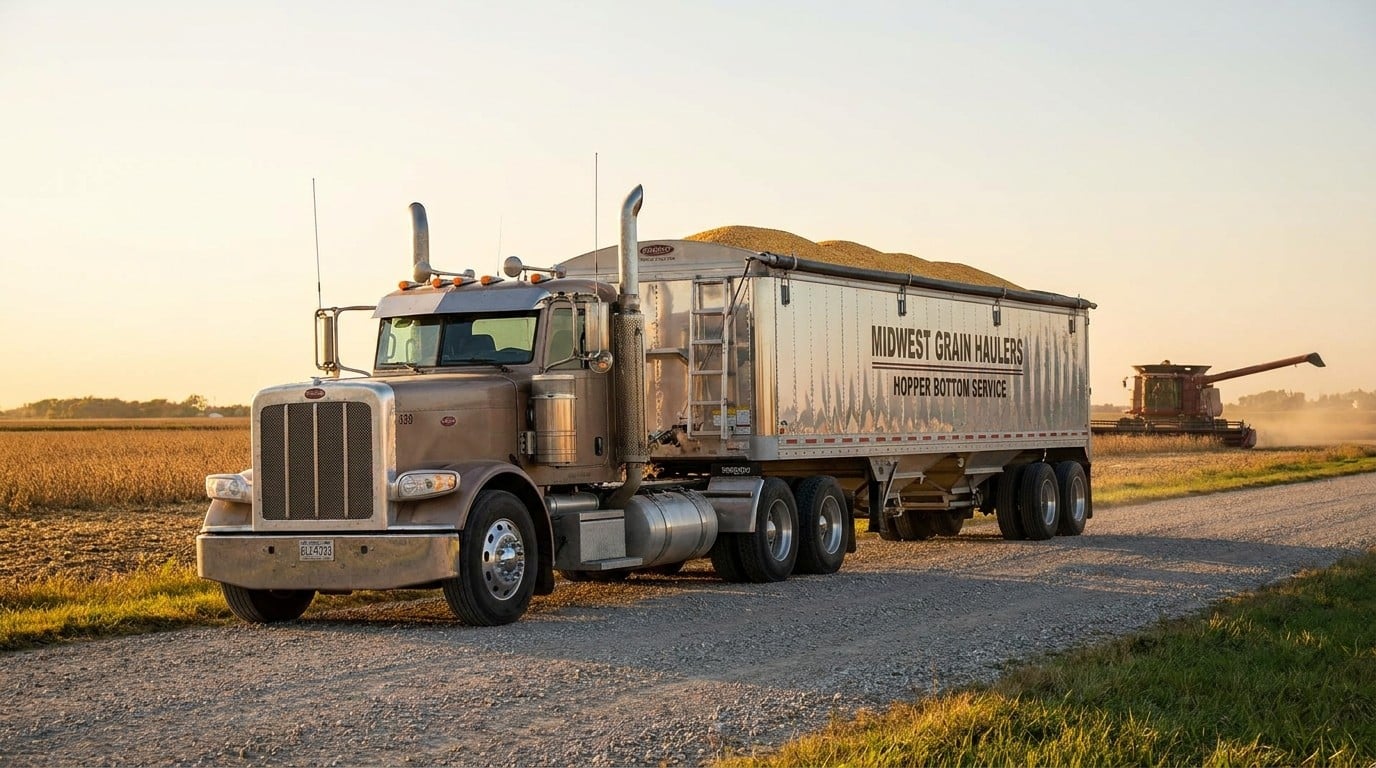
Quick Answer: Grain truck insurance is a commercial trucking policy built for agricultural haulers. It covers your truck, trailer, and the grain load itself against accidents, theft, and spills. Most grain elevators and brokers require proof of cargo coverage before they will assign loads, so this insurance is often a condition of doing business, not just a safety net.
Key Takeaways
- Grain truck insurance bundles liability, cargo, and physical damage coverage into one policy.
- U.S. farms move over 500 million tons of grain by truck each year, according to the USDA.
- Grain type and trailer setup both affect what coverage you need and what it costs.
- Most grain elevators and brokers require cargo insurance before they will give you loads.
- Owner-operators, farm trucking businesses, and grain hauling fleets all need this coverage.
- Typical owner-operator premiums run roughly $9,000–$14,000 per year; see the cost section below for what drives that number.
- Alvix Insurance Group offers specialized grain truck insurance nationwide.
What Is Grain Truck Insurance?
Grain truck insurance is a commercial trucking policy designed for businesses that haul agricultural commodities like corn, soybeans, and wheat. It rolls several coverage types liability, cargo, and physical damage into one program built around the risks of farm hauling.
Insurers customize these policies around a handful of details:
- Hauling radius
- Cargo type
- Fleet size
- Driver experience
- State regulations
- Interstate operations
Not every commercial trucking policy is written for agricultural work; specialized coverage closes gaps a general policy leaves open.
Why Grain Truck Insurance Matters
Hauling grain is not the same as hauling general freight. Grain haulers drive rural roads, pull onto farm property, and deal with sharp surges in demand during harvest. Standard trucking policies are not built around these conditions, which can leave real gaps in coverage.
The USDA’s Agricultural Transportation reports show that trucks move more than 500 million tons of grain across the U.S. every year. Trucking is the backbone of agricultural logistics, moving grain from field to elevator to processor. Without the right coverage, one accident can put a hauling business under.
Agricultural Transportation at a Glance
| Measure | Figure |
| Grain moved annually in the U.S. | 500+ Million Tons |
| Farm freight hauled by truck | Over 60% of shipments |
| U.S. farms relying on truck transport | 80%+ |
| Peak hauling season | Harvest Season |
Source: USDA Agricultural Transportation Reports
Agricultural transportation depends heavily on trucking. Insurance protection is a business necessity, not an option.
Types of Grain Transported by Agricultural Haulers
Grain haulers move many different crops between farms, elevators, and processing plants. The crop you haul affects your cargo value, your contamination risk, and sometimes the rules you have to follow.
| Grain Type | Common Use in U.S. Agriculture |
| Corn | Livestock feed, ethanol, food processing |
| Soybeans | Animal feed, soybean oil, exports |
| Wheat | Flour, bread, and pasta production |
| Rice | Food manufacturing and exports |
| Barley | Brewing and livestock feed |
| Oats | Cereals and feed products |
| Sorghum | Feed grain and ethanol production |
| Canola | Vegetable oil production |
Specialty grains and seed products often need extra cargo protection because they’re worth more and spoil or cross-contaminate more easily.
Types of Trailers Used to Haul Grain
Trailer choice depends on the crop, the haul distance, and local farming practices, and it directly affects your premium.
Common Grain Hauling Trailers Include
| Trailer Type | Primary Use |
| Hopper Bottom Trailer | The most common bulk-grain trailer; unloads easily through bottom gates |
| Grain Hopper Trailer | Built specifically for hauling dry bulk crops |
| End Dump Trailer | Handles large volumes with fast unloading |
| Belt Trailer | Best for delicate grain that’s easily damaged by rough handling |
| Farm Grain Wagon | Short hauls between farms and nearby storage |
| Walking Floor Trailer | Unloads gradually and evenly without tipping |
Insurers weigh trailer type, equipment value, and how the equipment is used when they price your policy.
Essential Grain Truck Insurance Coverages
1. Primary Liability Insurance
This is the foundation of any grain trucking policy. It pays for injuries or property damage your truck causes to someone else, and federal and state rules require you to carry at least a minimum amount.
2. Physical Damage Coverage
Physical damage coverage pays for repairing or replacing your truck and trailer after a covered event, including:
- Collision
- Theft
- Fire
- Vandalism
- Weather-related events
Skip this coverage, and you’re paying every repair bill yourself.
3. Motor Truck Cargo Insurance
Cargo insurance protects the grain itself while it’s in your truck. It typically covers:
- Spills
- Theft of cargo
- Contamination
- Losses from an accident
Many buyers and brokers won’t hand you a load without proof of this coverage.
4. General Liability Insurance
General liability covers incidents that happen off the road, things your commercial auto policy won’t touch. Examples:
- Customer injuries on your premises
- Property damage at loading facilities
- Legal expenses from third-party claims
General liability fills coverage gaps that commercial auto insurance does not address.
Grain Truck Insurance Coverage Comparison
| Coverage Type | Required | Protects |
| Primary Liability | Yes | Third-party injuries and property damage |
| Physical Damage | No | Your Truck and trailer |
| Cargo Insurance | Often required by brokers/elevators | Grain cargo |
| General Liability | Recommended | Business liability claims |
| Workers Compensation | Depends on state | Employee injuries |
| Umbrella Coverage | Optional | Extra liability protection above your other limits |
Who Needs Grain Truck Insurance?
This coverage fits a wide range of agricultural transport operations:
- Owner-operators
- Farm trucking businesses
- Agricultural transportation companies
- Grain hauling fleets
- Grain elevator contractors
- Independent agricultural carriers
If you transport grain for profit, specialized trucking insurance is essential.
What Factors Affect Grain Truck Insurance Costs?
Insurers weigh several risk factors before setting your premium. Your driving record, truck value, and claims history usually matter most.
| Factor | Impact on Cost |
| Driving History | High |
| Truck Value | High |
| Cargo Type | Medium |
| Operating Radius | High |
| Claims History | High |
| Years in Business | Medium |
| Fleet Size | Medium |
What Does It Actually Cost?
A single owner-operator hauling grain regionally might see premiums in the range of $9,000–$14,000 per year for a combined liability, cargo, and physical damage package, a small fleet (3–5 trucks) might run $30,000–$55,000 per year in total. These figures vary a lot by state, driving record, and coverage limits, use them as a planning starting point, not a quote.
Commercial Truck Accident Data
| Statistics | Figure |
| Large truck crashes annually | $160,000+ |
| Injury crashes involving trucks | $70,000+ |
| Fatal truck crashes annually | $5,000+ |
| Average severe liability claim | Can exceed $100,000 |
Sources: FMCSA, NHTSA, ATA Industry Reports
Even one major accident can create serious financial exposure for a grain hauling business.
How to Lower Grain Truck Insurance Premiums
Insurers reward operations that actively manage risk. A few changes can meaningfully lower what you pay over time:
- Hire drivers with clean records
- Keep vehicles on a regular maintenance schedule
- Install dash cameras on all trucks
- Use telematics to track driving behavior
- Run ongoing driver safety training
- Review your coverage limits every year
Frequently Asked Questions
Why Grain Haulers Choose Alvix Insurance Group
Agricultural haulers deal with risks a generic trucking policy isn’t built for. Alvix Insurance Group helps trucking businesses put together coverage that matches how grain actually moves.
- Coverage available nationwide
- Options for owner-operators and fleets
- Cargo and liability protection
- Competitive insurance programs
- Experienced trucking insurance specialists
- Fast quote process
Final Thoughts
Grain hauling is one of the backbones of agricultural transportation. Protecting your truck, cargo, drivers, and business with the right coverage cuts your financial risk and keeps loads moving through every season.
Alvix Insurance Group works with agricultural haulers nationwide. Contact Alvix Insurance Group to get a customized grain truck insurance quote today. Their team understands agricultural hauling and builds coverage to match.


