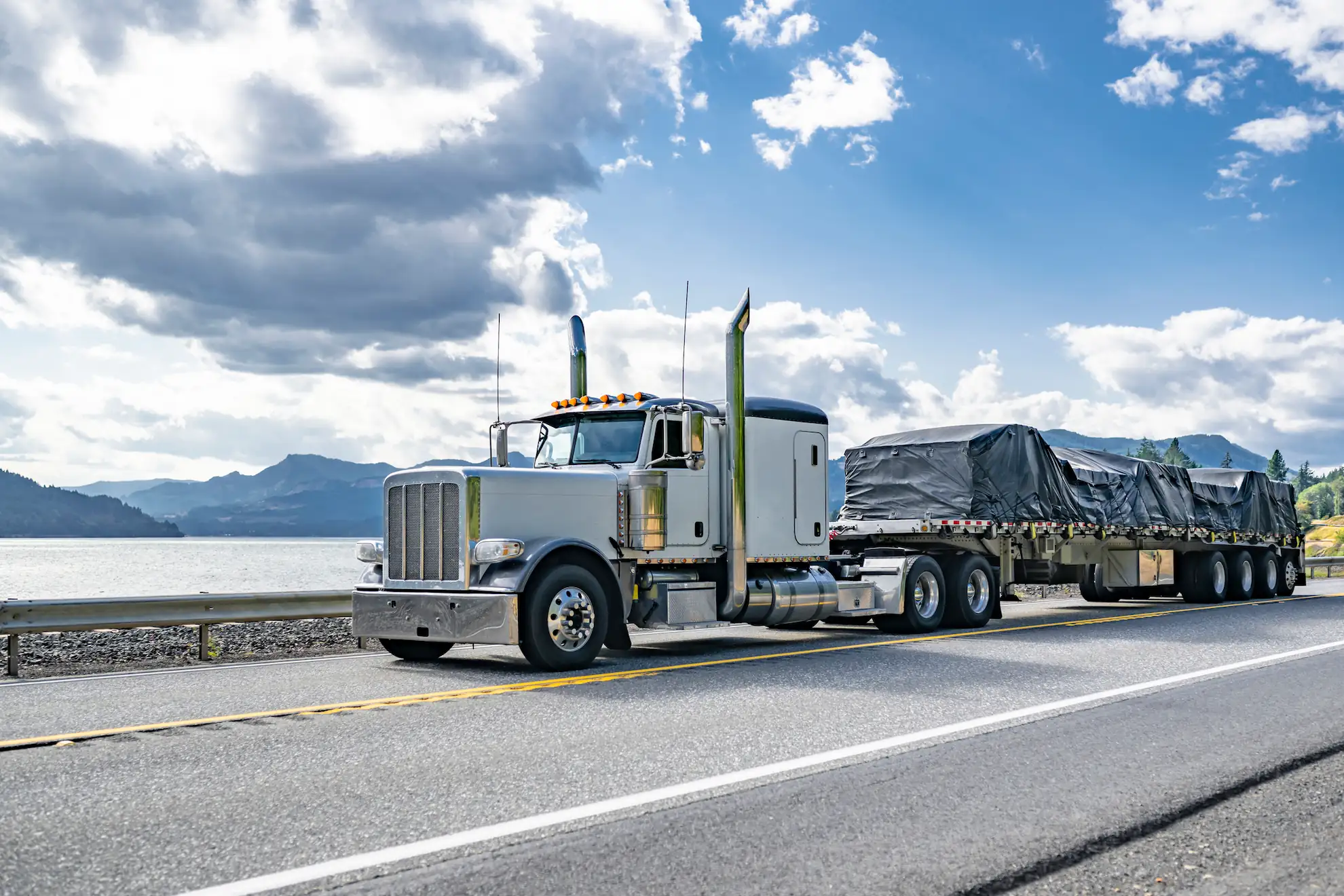
Reviewed by the Alvix Insurance Group commercial trucking team, which has placed flatbed and heavy-haul coverage.
Flatbed trucking insurance costs $9,000 to $24,000 a year for most owner-operators in 2026, and the spread comes down to authority age, state, and how your cargo policy is written.
Open-deck freight carries real load-shift and weather exposure that a dry van never sees, which is exactly why a generic commercial auto policy leaves gaps a flatbed operator finds out about only after a claim gets denied.
This guide covers the full coverage stack, the exclusion almost every flatbed operator misses, and the specific moves that lower a premium without cutting coverage you actually need. For the base policy, every flatbed truck needs to first have Primary Truck Liability Insurance.
Quick Answer: Flatbed trucking insurance is a stack of primary auto liability, broad form motor truck cargo, physical damage, general liability, trailer interchange, and non-trucking liability, priced 15-20% above dry van coverage because of load-shift and weather risk. Established owner-operators pay $9,000-$18,000 a year; new authorities pay $16,000-$28,000; leased-on operators pay $4,000-$9,000.
How Much Does Flatbed Trucking Insurance Cost in 2026
Flatbed rates move on three things: how long you’ve held authority, where you run, and what you haul. Every other factor (deductibles, radius, driver record) adjusts the number from there.
1. Established owner-operators pay $9,000 to $18,000 a year
- An operator with two or more clean years under their own authority sits in this range for a full liability, cargo, and physical damage stack at $1,000,000 combined single limit.
- Alvix’s own rate data puts Florida flatbed coverage at $9,000-$18,000 a year, which lines up with the broader commercial truck insurance cost data FreightWaves tracks across carriers for standard coverage.
2. New authority costs 25-40% more
- A first-year authority with no claims history typically pays $16,000-$28,000 a year for the identical coverage stack an established operator gets for less.
- Underwriters price the unknown, not the vehicle.
- Rates drop meaningfully once you clear 2-3 years of claims-free operation, which is why a new authority guide built around this exact timeline matters more than a generic quote comparison in year one.
3. Leased-on operators pay the least
Running under a motor carrier’s authority instead of your own drops the cost to roughly $ 4,000- $ 9,000 a year, since the carrier’s policy already covers primary liability and often cargo.
The trade-off is dispatch control, not just price, so this decision should weigh both sides.
| Operator Type | Typical Annual Cost |
|---|---|
| Leased-on to a motor carrier | $4,000–$9,000 |
| Established owner-operator (2+ years) | $9,000–$18,000 |
| New authority (first year) | $16,000–$28,000 |
| High-value cargo or oversized/heavy haul | $18,000–$35,000+ |
What Coverage Do Flatbed Trucking Companies Actually Need
A flatbed policy is six coverages working together, not one blanket product. Skipping any one of these is how a single incident turns into an uninsured loss.
1. Primary auto liability
- FMCSA sets a $750,000 minimum financial responsibility for interstate general freight under 49 CFR Part 387, filed through a BMC-91 as part of interstate operating authority registration.
- In practice, almost no freight broker will tender a load below $1,000,000 combined single limit, so primary liability at the higher limit is the realistic floor, not the ceiling.
- The filing itself works alongside your MCS-90 compliance requirements, which is what actually keeps your authority active with the FMCSA.
2. Broad-form motor truck cargo
- Standard cargo policies carry blanket exclusions that don’t fit open-deck freight.
- A broad-form endorsement naming your actual commodities through Cargo Freight Insurance Protection is what actually closes the gap covered in detail below.
3. Physical damage: collision and comprehensive
- Physical Damage Protection Coverage splits into collision (any at-fault or not-at-fault impact) and comprehensive (theft, fire, weather).
- Stated-value policies priced above the truck’s actual cash value are wasted premium, since the insurer pays the lower figure at claim time regardless of what the policy states.
4. General liability for job-site loading
- Flatbed drivers tarp and chain loads at customer yards and construction sites, not just drive between them.
- Auto liability doesn’t cover an injury or property damage during that loading process; General Liability Insurance Coverage does.
5. Trailer interchange
- Trailer interchange covers damage to a trailer you don’t own while it’s in your possession under an interchange agreement.
- Trailer Interchange Insurance Protection only makes sense if you’re actually pulling someone else’s trailer, a distinction covered in the mistakes section below.
6. Occupational accident and non-trucking liability
- Occupational Accident Insurance Coverage covers a driver’s medical bills and lost income outside workers’ comp, which most owner-operators don’t carry.
- See the full definition on the Alvix glossary for trucking insurance if any of these terms are new.
Haan, ek additional explanatory line add karna is section ko aur valuable bana dega. Niche har location ke liye 3–4 line ka improved version diya hai.
Flatbed Trucking Insurance Available Across Multiple States
Alvix Insurance Group provides Flatbed Trucking Insurance for owner-operators and fleet businesses across multiple U.S. states. Whether you transport construction materials, steel, lumber, heavy machinery, or oversized freight, our customized insurance solutions help protect your trucks, trailers, cargo, and business while meeting FMCSA and state insurance requirements.
Flatbed Trucking Insurance in West Virginia
Businesses transporting steel, construction materials, heavy equipment, and industrial freight can benefit from Flatbed Trucking Insurance in West Virginia. We help owner-operators and fleet owners compare coverage options designed to protect their trucks, cargo, drivers, and business while supporting safe and compliant operations.
Designed for businesses that haul:
- Steel and metal products
- Construction and building materials
- Heavy machinery and equipment
- Oversized and specialized freight
Flatbed Trucking Insurance in South Carolina
Trucking businesses hauling construction materials, machinery, steel, and commercial freight can benefit from Flatbed Trucking Insurance in South Carolina. We help owner-operators and fleet owners find flexible coverage options that protect against transportation risks, cargo losses, accidents, and liability claims.
Our coverage can help protect:
- Commercial flatbed trucks and trailers
- Construction and industrial cargo
- Drivers and business assets
- Local, regional, and interstate operations
Flatbed Trucking Insurance in Florence
Businesses transporting construction equipment, steel, machinery, and commercial freight in Florence can benefit from Flatbed Trucking Insurance in Florence. We help owner-operators and fleet owners compare insurance options designed to protect their vehicles, cargo, drivers, and business from the risks associated with flatbed hauling.
Coverage is available for:
- Construction materials and equipment
- Heavy machinery and industrial freight
- Flatbed trucks and trailers
- Local and long-haul trucking operations
Flatbed Trucking Insurance in Georgia
Businesses looking for Flatbed Trucking Insurance in Georgia need dependable coverage for transporting construction materials, steel, lumber, machinery, and oversized freight across local and interstate routes. We help Georgia flatbed operators and fleet owners compare customized insurance solutions based on their equipment, cargo, operating radius, and business requirements.
Our coverage helps protect:
- Flatbed trucks and trailers
- Steel, lumber, machinery, and construction materials
- Cargo and transported equipment
- Owner-operators and trucking fleets
- Liability, physical damage, and other covered risks
Flatbed Truck Insurance in Louisville
Businesses searching for Flatbed Truck Insurance in Louisville need coverage tailored to hauling construction materials, steel, lumber, machinery, and heavy equipment throughout Louisville and surrounding areas. We help owner-operators and fleet businesses compare insurance options designed to protect their trucks, trailers, cargo, and drivers while supporting local and interstate operations.
Our coverage helps protect:
- Flatbed trucks and trailers
- Construction materials and heavy equipment
- Cargo during transportation
- Owner-operators and fleet businesses
- Liability and physical damage risks
Flatbed Truck Insurance in Knoxville
Businesses searching for Flatbed Truck Insurance in Knoxville need reliable coverage for hauling construction materials, steel, machinery, lumber, and oversized loads. We help owner-operators and fleet owners compare insurance options designed to protect their trucks, cargo, trailers, and drivers throughout Knoxville and Tennessee. Whether you operate locally or across state lines, customized coverage helps reduce financial risks and keeps your flatbed trucking business moving with confidence.
Our coverage helps protect:
- Flatbed trucks and trailers
- Construction materials, machinery, and heavy equipment
- Owner-operators and fleet businesses
Flatbed Truck Insurance in Texas
Businesses searching for Flatbed Truck Insurance in Texas need reliable coverage for hauling oilfield equipment, construction materials, steel, and oversized loads. We help owner-operators and fleet owners compare insurance options designed to protect their trucks, cargo, trailers, and drivers throughout Texas. Whether you operate locally or across state lines, customized coverage helps reduce financial risks and keeps your business moving with confidence.
Our coverage helps protect:
- Flatbed trucks and trailers
- Cargo and heavy equipment
- Owner-operators and fleet businesses
- Liability and physical damage risks
Flatbed Trucking Insurance in Louisiana
Flatbed Trucking Insurance in Louisiana is designed for businesses transporting industrial equipment, timber, construction materials, and commercial freight. Our customized policies help reduce financial risks while supporting local and interstate flatbed trucking operations. We work with businesses of all sizes to find coverage that matches their hauling needs and daily operations.
Coverage is ideal for:
- Local and interstate flatbed carriers
- Timber and industrial freight haulers
- Construction material transport
- FMCSA-compliant trucking businesses
Flatbed Trucking Insurance in Kentucky
Whether you’re hauling agricultural equipment, machinery, lumber, or building materials, Flatbed Trucking Insurance in Kentucky helps protect your business from unexpected risks. Our insurance solutions are tailored to your truck type, cargo, and operating radius, giving you dependable protection on every trip.
Coverage includes protection for:
- Trucks and trailers
- Cargo and equipment
- Liability claims
- Business operations
Flatbed Trucking Insurance in Tennessee
Flatbed carriers transporting steel, heavy equipment, construction materials, and industrial freight can benefit from Flatbed Trucking Insurance in Tennessee. We help owner-operators and fleet owners compare policies that provide reliable protection while supporting long-term business growth and compliance.
Designed for businesses that haul:
- Steel and metal products
- Construction materials
- Heavy machinery
- Oversized freight
Flatbed Trucking Insurance in North Carolina
Businesses looking for Flatbed Trucking Insurance in North Carolina can choose coverage designed for local, regional, and interstate trucking operations. Our experienced team helps you compare policies that protect your business against accidents, cargo losses, and liability claims.
Our policies help protect:
- Commercial flatbed trucks
- Cargo and trailers
- Drivers and business assets
- Long-haul operations
Flatbed Trucking Insurance in Nevada
Mining, construction, and industrial businesses rely on flatbed transportation every day. Our Flatbed Trucking Insurance in Nevada provides dependable protection for specialized hauling operations. We help trucking companies secure insurance that supports safe operations while minimizing costly financial risks.
Coverage is available for:
- Mining equipment transport
- Heavy machinery hauling
- Construction materials
- Oversized loads
Flatbed Trucking Insurance in Kansas
Kansas trucking companies transporting agricultural machinery, steel, construction materials, and commercial freight can benefit from Flatbed Trucking Insurance in Kansas. Our goal is to provide flexible insurance solutions that keep your trucks, cargo, and drivers protected throughout every haul.
We help protect:
- Agricultural haulers
- Construction trucking businesses
- Commercial freight carriers
- Owner-operators and fleets
Flatbed Trucking Insurance in Missouri
Our Flatbed Trucking Insurance in Missouri is designed for businesses hauling manufacturing equipment, heavy machinery, construction materials, and oversized cargo. Every policy can be customized to fit your operational needs, helping reduce risks while keeping your business compliant.
Coverage supports:
- Manufacturing freight
- Heavy equipment transport
- Flatbed trailers
- Commercial trucking operations
Flatbed Trucking Insurance in New Jersey
Businesses searching for Flatbed Trucking Insurance in New Jersey need coverage that matches the demands of local deliveries and interstate freight transportation. Our insurance specialists help you compare policies that offer dependable protection for your vehicles, cargo, and business.
Insurance solutions include protection for:
- Trucks and trailers
- Cargo and equipment
- Drivers and businesses
- Liability and physical damage
Flatbed Trucking Insurance in Johnson City
Owner-operators and fleet businesses looking for Flatbed Trucking Insurance in Johnson City can find customized coverage for hauling steel, lumber, heavy equipment, construction materials, and oversized freight. We help businesses choose insurance that supports safe operations while meeting both state and FMCSA requirements.
Coverage is designed for:
- Local trucking companies
- Regional freight carriers
- Owner-operators
- Fleet businesses
Flatbed Trucking Insurance in Spartanburg
Manufacturing and industrial freight are a major part of the local transportation industry. Our Flatbed Trucking Insurance in Spartanburg helps businesses protect their trucks, trailers, cargo, and drivers. Whether you operate a single truck or a growing fleet, we provide coverage options tailored to your business goals and hauling requirements.
Ideal for transporting:
- Steel and metal products
- Industrial machinery
- Construction materials
- Oversized commercial freight
Flatbed Truck Insurance in Texas
Businesses searching for Flatbed Truck Insurance in Texas need dependable coverage for hauling construction materials, steel, oilfield equipment, machinery, and oversized freight. Our customized insurance solutions help owner-operators and fleet businesses protect their trucks, trailers, cargo, and operations while supporting Texas and interstate trucking requirements.
Coverage can help protect:
- Flatbed trucks and trailers
- Construction and industrial cargo
- Heavy machinery and equipment
- Liability and physical damage risks
- Owner-operators and trucking fleets
Flatbed Trucking Insurance in Bowling Green
Businesses looking for Flatbed Trucking Insurance in Bowling Green can benefit from coverage designed for hauling lumber, steel, construction materials, agricultural equipment, and commercial freight. We help owner-operators and fleet businesses compare insurance options based on their equipment, cargo, routes, and operating needs.
Coverage is ideal for:
- Local and regional flatbed carriers
- Construction material haulers
- Agricultural equipment transport
- Steel and lumber freight
- Owner-operators and fleet businesses
Flatbed Trucking Insurance in Covington
Flatbed Trucking Insurance in Covington provides protection for businesses transporting construction supplies, industrial equipment, machinery, steel, and other secured flatbed freight. Whether you operate locally or across state lines, customized coverage can help protect your vehicles, cargo, drivers, and business from unexpected financial losses.
Coverage can include protection for:
- Flatbed trucks and trailers
- Industrial and construction equipment
- Cargo-related risks
- Liability claims
- Physical damage to commercial vehicles
Flatbed Trucking Insurance in Columbus
For businesses hauling heavy equipment, building materials, steel, lumber, and oversized freight, Flatbed Trucking Insurance in Columbus can provide essential protection for daily trucking operations. Our insurance solutions can be tailored to the size of your fleet, type of cargo, and operating radius.
Coverage is designed for:
- Commercial flatbed carriers
- Heavy equipment haulers
- Construction freight businesses
- Steel and lumber transporters
- Local and interstate operations
Flatbed Trucking Insurance in Chattanooga
Businesses searching for Flatbed Trucking Insurance in Chattanooga can find coverage designed for transporting construction materials, machinery, steel products, industrial equipment, and oversized loads. We help owner-operators and fleet owners compare insurance options that support their trucking operations while helping manage liability and physical damage risks.
Our coverage can help protect:
- Flatbed trucks and trailers
- Heavy machinery and equipment
- Construction and industrial cargo
- Drivers and business assets
- Liability and physical damage exposures
Flatbed Truck Insurance in Richmond
Flatbed Truck Insurance in Richmond is designed for trucking businesses transporting lumber, steel, construction materials, machinery, and other commercial freight. Whether you operate a single flatbed truck or manage a larger fleet, customized insurance solutions can help protect your vehicles, cargo, and business throughout local and interstate operations.
Coverage is available for:
- Owner-operators and fleet businesses
- Flatbed trucks and trailers
- Construction and industrial freight
- Heavy equipment transportation
- Liability and physical damage risks
Flatbed Trucking Insurance in Alabama
Businesses searching for Flatbed Trucking Insurance in Alabama need dependable coverage for transporting construction materials, steel, lumber, agricultural equipment, machinery, and other commercial freight. Our customized insurance solutions help owner-operators and fleet businesses protect their trucks, trailers, cargo, and operations while managing the risks associated with local and interstate hauling.
Coverage can help protect:
- Flatbed trucks and trailers
- Construction and agricultural equipment
- Steel, lumber, and commercial cargo
- Liability and physical damage risks
- Owner-operators and trucking fleets
Flatbed Trucking Insurance in Augusta
Businesses looking for Flatbed Trucking Insurance in Augusta can benefit from coverage designed for transporting construction materials, heavy machinery, steel, lumber, and industrial equipment. Whether you operate locally, regionally, or across state lines, customized insurance options can help protect your vehicles, cargo, drivers, and business from unexpected losses.
Coverage is designed for:
- Local and regional flatbed carriers
- Construction material haulers
- Heavy equipment transportation
- Steel and industrial freight
- Owner-operators and fleet businesses
Flatbed Trucking Insurance in Illinois
Flatbed Trucking Insurance in Illinois helps trucking businesses manage the risks involved in hauling construction materials, manufacturing equipment, steel, machinery, lumber, and oversized freight. Our insurance solutions can be tailored to your truck type, cargo, routes, and operating radius to provide reliable protection for daily trucking operations.
Insurance solutions can protect:
- Flatbed trucks and trailers
- Manufacturing and industrial cargo
- Heavy machinery and equipment
- Liability and physical damage exposures
- Commercial trucking operations
Flatbed Trucking Insurance in Savannah
Businesses searching for Flatbed Trucking Insurance in Savannah can find coverage suited for transporting construction supplies, steel, lumber, machinery, industrial equipment, and other commercial freight. Whether you operate a single truck or manage a growing fleet, customized coverage can help reduce financial risks and protect your trucking business.
Coverage can include protection for:
- Commercial flatbed trucks
- Trailers and transported cargo
- Construction and industrial equipment
- Liability claims
- Physical damage to vehicles
Flatbed Trucking Insurance in Macon
Owner-operators and fleet businesses looking for Flatbed Trucking Insurance in Macon can benefit from coverage designed around their equipment, cargo, routes, and daily operations. From construction materials and steel to heavy machinery and commercial freight, the right insurance can help protect your business against accidents, cargo losses, and other trucking-related risks.
Coverage is ideal for:
- Construction material haulers
- Heavy equipment transporters
- Steel and lumber carriers
- Local and interstate flatbed operations
- Owner-operators and fleet businesses
Flatbed Trucking Insurance in Charleston
Businesses seeking Flatbed Trucking Insurance in Charleston need coverage that can support the demands of transporting construction materials, industrial equipment, steel, machinery, and oversized freight. Our customized insurance options help trucking businesses protect their trucks, trailers, cargo, and operations while managing liability and physical damage risks.
Our coverage can help protect:
- Flatbed trucks and trailers
- Industrial and construction cargo
- Heavy machinery and equipment
- Drivers and business assets
- Liability and physical damage risks
Flatbed Trucking Insurance in Indiana
Flatbed Trucking Insurance in Indiana provides protection for trucking businesses hauling manufacturing equipment, steel, construction materials, agricultural machinery, lumber, and other commercial freight. We help owner-operators and fleet businesses compare coverage options based on their equipment, cargo type, operating radius, and transportation needs.
Coverage can support:
- Manufacturing and industrial freight
- Agricultural equipment transport
- Construction material hauling
- Flatbed trucks and trailers
- Liability and physical damage protection
Flatbed Trucking Insurance in Ohio
Businesses searching for Flatbed Trucking Insurance in Ohio can benefit from customized coverage for hauling steel, machinery, construction materials, manufacturing equipment, lumber, and oversized loads. Whether your operation serves local customers or handles interstate freight, the right insurance can help protect your trucks, cargo, drivers, and business.
Insurance solutions are available for:
- Commercial flatbed carriers
- Heavy equipment haulers
- Steel and manufacturing freight
- Construction material transport
- Owner-operators and trucking fleets
Flatbed Trucking Insurance in Canton
Businesses looking for Flatbed Trucking Insurance in Canton can find coverage designed for hauling steel, lumber, construction materials, machinery, heavy equipment, and other commercial freight. Customized insurance solutions help address the risks associated with flatbed operations while protecting your vehicles, cargo, and business during local and interstate trips.
Coverage can help protect:
- Flatbed trucks and trailers
- Heavy equipment and machinery
- Construction and industrial cargo
- Liability claims
- Physical damage risks
Flatbed Trucking Insurance in Athens
Owner-operators and fleet businesses searching for Flatbed Trucking Insurance in Athens can benefit from coverage tailored to transporting construction materials, steel, lumber, machinery, agricultural equipment, and oversized freight. We help trucking businesses choose insurance options based on their cargo, equipment, routes, and operating requirements.
Coverage is designed for:
- Local and regional flatbed carriers
- Construction and agricultural haulers
- Heavy machinery transportation
- Steel and lumber freight
- Owner-operators and fleet businesses
Why Flatbed Freight Costs More to Insure Than Dry Van or Reefer
Underwriters don’t guess at this premium gap. Three specific, checkable factors drive it.
1. Cargo securement is a federally regulated risk, not a judgment call
- Flatbed load securement is governed directly by 49 CFR Part 393, Subpart I, which sets minimum tie-down counts and working load limits by commodity type.
- A securement violation found during a roadside inspection doesn’t just risk a citation; it becomes a documented pattern underwriters price against at renewal.
- FMCSA’s cargo securement rules page is worth reading once, not because it’s exciting, but because it’s the actual standard your insurer measures a claim against.
2. VIN and GVWR can force commercial classification regardless of use
- If a truck’s factory VIN lists it as cab-and-chassis, or the GVWR clears roughly 10,000 pounds, most personal-auto carriers decline the risk outright and route it to commercial pricing, even when the owner insists the use is personal.
- This is not a negotiable point with the DMV or the insurer; titling a truck at a lower GVWR than the VIN shows to dodge this is insurance fraud, and it gives the insurer grounds to deny a claim and rescind the policy entirely after the fact.
3. Open-deck freight is exposed for the entire trip
- Rain, road spray, and debris hit an open flatbed load from pickup to delivery, not just during a weather event.
- Water damage to drywall, machinery, and electronics is one of the most common cargo claims flatbed carriers file, and it’s the exact exposure the next section covers.
The Cargo Coverage Gap Almost Every Flatbed Operator Misses
This is the single detail that separates a policy that pays out from one that gets contested, and it’s the part most flatbed guides skip entirely.
1. The rust, dampness, and tarp exclusion buried in standard wording
- Most motor truck cargo policies exclude damage from dampness, rust, and corrosion by default.
- If rain reaches cargo because a strap loosened or a tarp tore in transit, a standard adjuster’s first move is to classify it as improper securement, not a covered peril, and deny the claim on that basis alone.
2. Ask for the endorsement by name, not just “broad form”
“Broad form” alone doesn’t guarantee wetness and corrosion are covered; some carriers write broad form endorsements that still carve out rust and dampness specifically.
Before binding or renewing a flatbed cargo policy, confirm the following in writing, in this order:
- Ask whether the policy names wetness, rust, and corrosion as covered perils, not just “broad form cargo.”
- If the answer is unclear, ask for the exact exclusion wording in the policy document, not a verbal summary.
- Confirm whether the tarp condition or the fastening method is a stated condition for the endorsement to apply.
- Get the confirmation in writing from the agent, since a policy silent on this point should be treated as excluding it until proven otherwise.
This is the one clause worth reading in full before signing, not skimming.
3. Document securement before every load, not after a claim
- Time-stamped photos of straps, chains, and tarp placement before departure are the single cheapest thing an operator can do to convert a contested claim into a paid one.
- Adjusters weigh contemporaneous evidence heavily; a photo from the yard beats a driver’s recollection every time.
How to Lower Your Flatbed Insurance Premium Without Losing Coverage
Rates move on verifiable inputs, not luck. These four levers move the needle without cutting the protection you actually need.
1. Raise your physical damage deductible
Moving from a $1,000 to a $2,500 deductible commonly saves $ 400- $ 900 a year, as long as the cash reserve exists to cover a claim at the higher number.
2. Match the radius of operation to your actual lanes
A policy filed for a 500-mile radius when the truck actually runs 250 miles regionally is paying long-haul rates for regional work. How location impacts trucking insurance costs breaks down exactly how radius, not just state, moves this number.
3. Share telematics and dash cam data with your underwriter
Forward-facing dash cameras and ELD data showing low hard-braking events give underwriters verifiable proof of risk, which routinely earns a discount at renewal that a clean record alone doesn’t unlock automatically.
4. Keep cargo limits matched to real freight value
A $100,000 cargo limit is wasted premium if the freight hauled never exceeds $40,000 a load. Review the limit any time the typical commodity or its value changes, not just at renewal.
State-by-State Flatbed Insurance Cost and Carrier Appetite
Not every state has the same pool of carriers willing to write flatbed risk, and the price gap between states reflects that directly.
| State | Flatbed Insurance Annual Range |
|---|---|
| Florida | $9,000–$18,000 |
| Texas | $8,000–$16,000 |
| Georgia | $9,000–$18,000 |
| Tennessee | $8,000–$16,000 |
| Ohio | $7,500–$15,000 |
| New Jersey | $11,000–$22,000 |
| Kansas | $7,000–$13,000 |
New Jersey prices highest because of dense traffic corridors and a smaller pool of carriers willing to underwrite flatbed risk there at all.
Florida carries similar friction; several national carriers won’t write flatbed coverage in the state regardless of driving record, which is a market-appetite issue, not a reflection of any individual operator’s risk.
Kansas and Ohio sit lowest, reflecting more open-highway operating radius and a deeper carrier pool. See the full Florida and Texas breakdowns for city-level detail.
Common Flatbed Insurance Mistakes That Cost Owner-Operators Money
These three mistakes show up repeatedly in real owner-operator accounts, and each one is a straightforward fix once identified.
| Mistake | Why It Costs You | The Fix |
|---|---|---|
| Duplicate bobtail coverage | Motor carrier’s policy may already cover it | Check the lease wording before renewal |
| Trailer interchange on an owned trailer | Only applies to trailers you don’t own | Remove it at the next renewal |
| Stated value above actual cash value | Insurer pays the lower figure anyway | Match the limit to real replacement cost |
1. Paying for bobtail twice when leased on
If you’re 100% leased to a motor carrier, their policy may already cover non-trucking liability for bobtail miles.
Carrying a separate policy on top is double-paying for identical protection; check the lease agreement’s exact wording before the next renewal, not after.
2. Carrying trailer interchange on trailers you own
Trailer interchange only applies to a trailer you don’t own that’s in your possession under an interchange agreement.
Owner-operators who own their flatbed trailer outright should confirm this coverage is actually removed at renewal, since it’s common to see it sitting unused on a policy for years.
3. Buying stated-value coverage above actual cash value
If a truck is worth $45,000 and it’s insured for $80,000 stated value, the insurer still pays the lower of the two figures at claim time.
The gap between what’s paid for and what’s actually collectible is pure wasted premium every single year it goes unreviewed.
FAQs
Conclusion
Flatbed trucking demands specialized insurance that matches the unique risks of hauling heavy and oversized loads. Alvix Insurance Group provides customized flatbed coverage, 24/7 certificate access, and dedicated support to keep your business protected and compliant.
Get a flatbed insurance quote reviewed today: Get a Free Quote or Contact Alvix Insurance Group directly.


