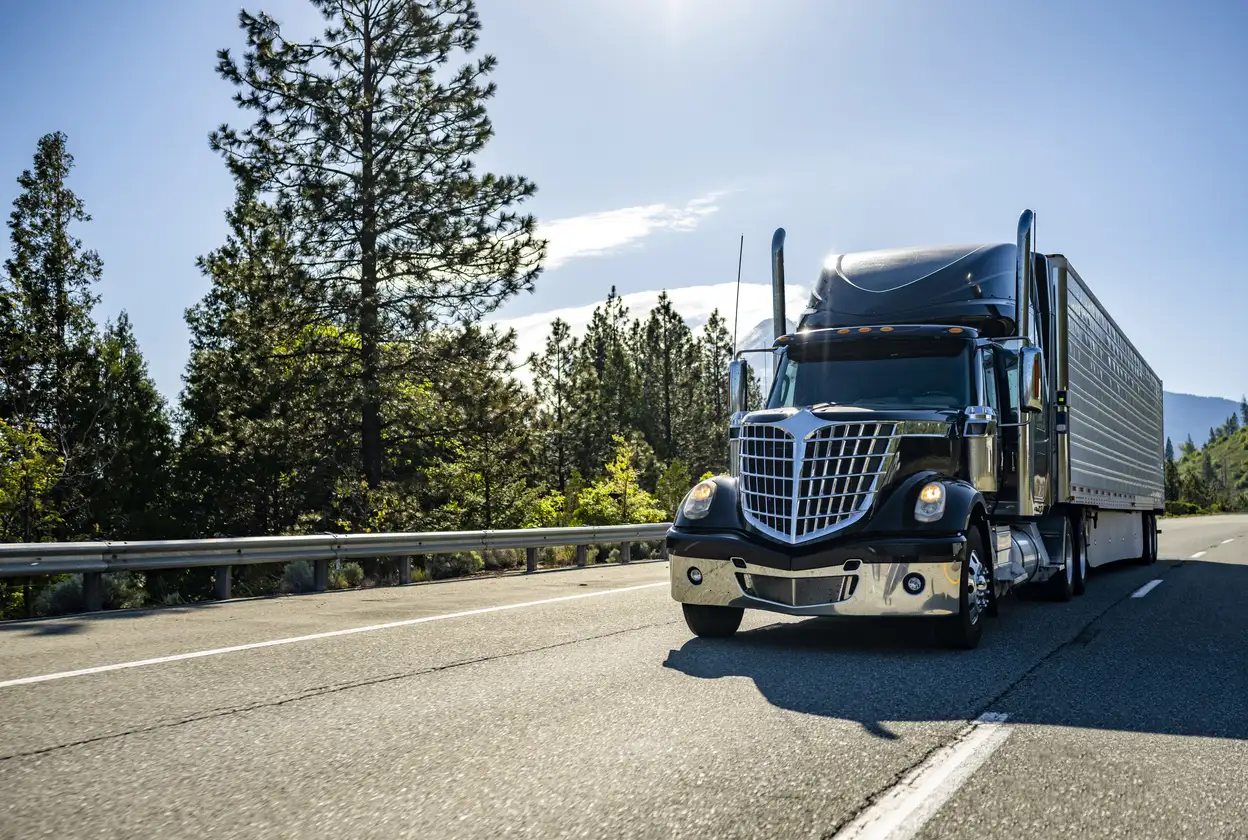
Commercial trucking insurance in Columbus, Ohio, costs between $9,500 and $18,000 per year for owner-operators in 2026. Federal law under FMCSA 49 CFR 387.9 requires $750,000 in primary liability for interstate carriers. Ohio intrastate carriers regulated by the Public Utilities Commission of Ohio (PUCO) must file a Form E proof of insurance and pass an 18-month new entrant safety audit.
Columbus sits within a one-day truck drive of nearly half the US population. It is home to Rickenbacker International Airport, one of the few cargo-dedicated airports in the world. The I-70 and I-71 interchange is under a major reconstruction project that will run through the late 2020s. These facts shape what coverage you need and what it will cost you.
Premiums vary by cargo type, route radius, driver record, and fleet size. Figures above reflect 2026 market averages.
Key Takeaways
Columbus is not just a large Ohio city. It is one of the most important freight hubs in the entire eastern United States. Before you get a quote, these are the key facts every Columbus trucker needs to know:
- 2026 cost range: Owner-operators pay $9,500 to $18,000 per year. New authorities often pay $12,000 to $25,000 in year one.
- Federal minimum: FMCSA requires $750,000 primary liability for interstate carriers under 49 CFR 387.9.
- PUCO requirement: Ohio intrastate carriers file Form E with PUCO and complete an 18-month new entrant safety audit.
- I-70 and I-71 construction: The Downtown Ramp Up project continues through the late 2020s and creates active work zone exposure for carriers running through Columbus.
- Rickenbacker freight: Carriers at LCK airport typically need $1,000,000 in liability and specific endorsements for high-value and pharmaceutical cargo.
- Broker standard: Most Columbus shippers and brokers require $1,000,000 in liability and $100,000 in cargo before they award freight contracts.
Why Is Columbus One of the Most Active Trucking Markets in the Country?
Columbus gets overlooked. Most people think of Chicago or Cleveland when they talk about Midwest freight. But Columbus has a stronger case than either city for being the most strategically located freight hub in the eastern United States.
Here is what puts Columbus in that conversation:
- Columbus sits within a one-day truck drive of 45 to 50 percent of the entire US population
- Rickenbacker International Airport (LCK) is one of the few airports in the world built exclusively for cargo. It handles Amazon Air, DHL, and major e-commerce freight without the delays of passenger traffic
- The I-70 and I-71 corridors cross directly through the city, connecting the East Coast to the Midwest in both directions
- Honda of America has manufacturing plants in Marysville and East Liberty, generating daily automotive supply chain freight
- CSX and Norfolk Southern both operate intermodal rail terminals in the Columbus area
- Warehouse vacancy rates in the Rickenbacker corridor were historically low in 2026 as demand for distribution space kept growing
All of that freight needs truckers. And every trucker needs insurance that is built for this specific market.
Which Roads Do Columbus Truckers Use Most and What Are the Risks?
Columbus has a well-known freight challenge. The city is easy to get to but hard to get through. The I-70 and I-71 interchange, known locally as the split, handles thousands of commercial trucks daily. The Downtown Ramp Up project is rebuilding this interchange and will remain an active construction zone through the late 2020s and into the early 2030s.
Before the table, here’s what this means for your Ohio trucking insurance: Construction zone violations can result in double fines and may raise your CSA score faster than a standard moving violation. If you run through downtown Columbus regularly, your agent should know this and factor it into your risk profile.
| Route | Main Use | Risk Level |
|---|---|---|
| I-70 East and West | Primary cross-country freight, East Coast to Midwest | Very High: major volume, downtown construction zone |
| I-71 North and South | Columbus to Cleveland north, Columbus to Cincinnati south | High: heavy freight, freeway interchanges |
| I-270 Outerbelt | Bypass loop around Columbus, distribution center access | Medium to High: high truck volume, interchange exposure |
| US-33 | Columbus to Lancaster, Athens, and southeastern Ohio | Medium: regional freight, rural stretches |
| SR-317 and Alum Creek Dr | Rickenbacker airport and industrial park access | High: heavy cargo truck concentration |
After reviewing your route mix with your agent, make sure your policy correctly reflects I-70 and I-71 construction zone exposure. Some underwriters apply a work zone surcharge for carriers with regular downtown Columbus runs.
What Does Ohio Law Actually Require for Truck Insurance?
This is where many Columbus truckers get caught out. The federal minimum and the Ohio minimum are not always the same. And the market standard is higher than both. Here is a clear breakdown so you know exactly where you stand.
What the Federal Government Requires
If you cross into Indiana, Kentucky, West Virginia, Pennsylvania, or any other state, federal FMCSA safety rating rules apply.
The minimums are:
- General freight over 10,001 lbs: $750,000 in primary liability
- Oil and certain hazardous materials: $1,000,000 minimum
- High-hazard materials such as explosives and bulk hazmat: $5,000,000 minimum
- Filing required: Form BMC-91 or BMC-91X submitted directly to FMCSA
What Ohio PUCO Requires for Intrastate Carriers
If you stay within Ohio only, PUCO governs your for-hire authority.
Here is what Ohio intrastate carriers must do:
- Obtain for-hire authority from the Public Utilities Commission of Ohio
- File Form E proof of insurance electronically with PUCO
- Complete the 18-month new entrant safety audit conducted by a PUCO compliance officer
- Maintain current UCR (Unified Carrier Registration) filing each year
- Keep your USDOT number active and your safety rating in good standing
What Columbus Shippers and Brokers Actually Require
The legal minimum gets you on the road. It does not always get you freight.
Most Columbus-area brokers and Rickenbacker cargo clients require:
- $1,000,000 in primary liability
- $100,000 in cargo coverage
- Specific endorsements for pharmaceutical, automotive, or high-value technology freight
If you want to work with major distribution clients in the Rickenbacker corridor, plan for $1,000,000 as your baseline, not $750,000.
How Much Does Commercial Truck Insurance Cost in Columbus, Ohio?
Columbus is a competitive insurance market. Rates are generally lower than in coastal states but higher than rural Ohio. The table below gives you a realistic picture of what Franklin County and greater Columbus area carriers are paying in 2026.
Two things drive Columbus premiums above the rural Ohio average. First, the I-70 and I-71 construction zone increases your liability exposure. Second, Ohio has a history of high-value jury verdicts in commercial trucking cases, which pushes underwriters to price Columbus risks more carefully.
| Operator Type | Annual Premium Range | Notes |
|---|---|---|
| Established owner-operator | $9,500 to $18,000 | Clean record, two or more years of operating history |
| New authority, first year | $12,000 to $25,000 | PUCO new entrant period adds scrutiny and cost |
| Small fleet, two to five trucks | $22,000 to $70,000 | Scales with fleet size and cargo type |
| Rickenbacker air cargo carriers | $14,000 to $24,000 | High-value cargo endorsement often required |
| Reefer and refrigerated carriers | $12,000 to $20,000 | Cargo spoilage endorsement needed |
| Automotive supply chain carriers | $13,000 to $22,000 | Honda plant freight, strict shipper requirements |
| Hazmat carriers | $18,000 to $40,000 or more | Hazmat endorsement and excess liability required |
After reviewing this table, keep in mind that these are averages. Your specific rate depends on your safety record, the age of your trucks, your cargo type, and how many miles you run annually through the I-70 and I-71 corridor.
Which Truck Types Are Most Common in Columbus?
The truck types below are based on Columbus’s actual freight mix: e-commerce distribution, automotive supply chains, air cargo ground transport, and regional delivery across central Ohio.
Premiums below are for established carriers with clean records. First-year authorities and hazmat operators will pay more.
| Truck Type | What They Do in Columbus | 2026 Annual Premium |
|---|---|---|
| Dry Van Tractor-Trailer | Runs I-70 and I-71 for regional and national distribution. Serves Amazon, Walmart, and Target DCs in the Columbus area. | $9,500 to $18,000 |
| Automotive Transport Truck | Moves Honda parts and finished vehicles between Marysville, East Liberty, and Columbus distribution points. | $13,000 to $22,000 |
| Reefer Truck | Carries pharmaceutical and food freight to and from Rickenbacker airport clients and central Ohio distribution. | $12,000 to $20,000 |
| Flatbed Truck | Hauls construction materials and industrial equipment across the I-270 corridor and into surrounding counties. | $13,000 to $21,000 |
| Box Truck | Handles last-mile and regional delivery across Columbus, Dublin, Westerville, Gahanna, and Reynoldsburg. | $9,000 to $15,000 |
If you serve automotive supply chain clients such as Honda plants or Tier 1 suppliers in central Ohio, ask your agent about the specific cargo documentation requirements those shippers impose. Missing a certificate of insurance update can hold up a load even when your coverage is valid.
What Coverage Does a Columbus Trucker Actually Need?
There is no single answer to this question. It depends on what you haul and where you run. But there is a core set of coverages that most Columbus carriers need to operate safely and stay compliant.
The table below is a starting point. Your agent should walk through each line and tell you which ones apply to your specific operation before you sign anything.
| Coverage Type | What It Covers |
|---|---|
| Primary Liability | Bodily injury and property damage to others. Required by law for all carriers. |
| Physical Damage | Repairs or replacement after collision, theft, or weather damage. |
| Motor Truck Cargo | Protects the freight you are hauling from loss, theft, or damage in transit. |
| Reefer Breakdown | Covers spoiled cargo if your refrigeration unit fails. Needed for pharma and food loads. |
| Automotive Cargo | Covers vehicles in transit for car haulers and transport carriers. |
| Non-Trucking Liability | Covers you when the truck is being used outside of active dispatch. |
| Umbrella and Excess Liability | Extends above primary limits. Important in Ohio given nuclear verdict history. |
| Workers Compensation | Covers driver injuries on the job. Required for fleets with employed drivers in Ohio. |
Once you go through this list, pay special attention to the umbrella coverage. Ohio courts in the Columbus metro area have delivered high jury verdicts in commercial trucking cases. Carrying only the federal minimum on I-70 or I-71 leaves you exposed to a gap that could cost your business everything.
What Happens When a Columbus Trucker Does Not Have Enough Coverage?
A dry van owner-operator based in the south Columbus area had a regular route running on I-71 north toward Cleveland. The Downtown Ramp Up construction project on I-71 near downtown has reduced three lanes to one during overnight hours.
One evening, the driver did not see the lane merge signage in time. The truck clipped a concrete barrier on the right side. The impact damaged a support column for a highway sign structure. ODOT filed a damage claim for $62,000 to repair the column and the sign system. A passenger vehicle that stopped suddenly behind the truck also sustained damage, and that driver filed a bodily injury claim.
The total combined claim came to $430,000 after legal fees. The operator carried the FMCSA minimum of $750,000. The claim was covered. But just barely.
Had the operator been going faster or had a second vehicle been involved, the $750,000 limit would have been exhausted. An umbrella policy for an additional $1,000,000 would have cost this carrier roughly $1,500 per year. For carriers running the I-70 and I-71 construction zone daily, that cost is worth it.
How Do You Choose the Right Truck Insurance Provider in Columbus?
Columbus has no shortage of insurance agents. But most of them do not specialize in commercial trucking. Here is how to tell the difference between a generalist and someone who actually knows this market.
What to Look For in a Columbus Agent
These factors matter most when choosing a provider for a Columbus trucking operation:
- PUCO filing experience: Your agent must handle Form E for Ohio intrastate carriers in-house, not refer you to PUCO directly
- Knowledge of the 18-month new entrant audit: New authorities need an agent who can guide them through PUCO compliance, not just sell them a policy
- I-70 and I-71 construction zone rating: Experienced agents know how to account for work zone exposure in your premium
- Rickenbacker and air cargo endorsement access: High-value freight clients at LCK have requirements most generalist policies miss
- Automotive supply chain experience: Honda-related carriers have specific cargo documentation needs your agent should understand
- Multi-carrier access: A broker with 30 or more carriers finds better rates for Columbus’s varied freight profiles
Three Questions to Ask Before You Sign
Before you commit to any policy, ask these three questions directly:
- Do you handle PUCO Form E filings and FMCSA BMC-91 filings in-house?
- Have you placed coverage for carriers running the I-70 and I-71 construction corridor in Columbus?
- Do you have access to carriers that write Rickenbacker airport cargo or automotive supply chain freight?
Clear answers mean the agent knows Columbus trucking. Vague answers are a signal to keep looking.
Frequently Asked Questions
Why Choose Alvix Insurance for Columbus Truck Insurance?
Alvix Insurance Group has over a decade of experience in commercial trucking insurance. We are licensed in more than 23+ states and work with more than 30+ insurance carriers. Before recommending a policy, we compare options across those carriers based on your actual routes and cargo. Whether you haul dry van freight on I-70, run automotive supply chain loads for Honda in central Ohio, or manage air cargo ground transport out of Rickenbacker, we build coverage around what you actually do. We understand the PUCO new entrant process, the I-70 and I-71 construction zone exposure, and what Rickenbacker cargo clients actually require from their carriers.
We keep things plain and simple. You will know what your policy covers, what it excludes, and what it costs before you sign anything. No hidden gaps at claim time and no coverage you did not ask for. If you are ready to review your Columbus trucking insurance, contact Alvix Insurance Group today for a free, no-obligation quote.
Get Your Free Columbus Truck Insurance Quote. Call Alvix Insurance Group Today
Is Your Columbus Trucking Business Fully Protected?
Columbus is one of the busiest freight markets in the country. The roads are active. The construction zones are real. The shippers have strict requirements. And Ohio courts have delivered large verdicts against commercial carriers who were underinsured.
A policy built for a rural Ohio operation will not hold up in the Columbus market. You need coverage that accounts for the I-70 corridor, the Rickenbacker cargo requirements, and the PUCO compliance process.
Talk to Alvix Insurance Group. Get a clear look at what your coverage actually includes. Make sure it fits the work you do in Columbus.
Get a Free Quote Today.
Related Read: Commercial Truck Insurance Dayton


