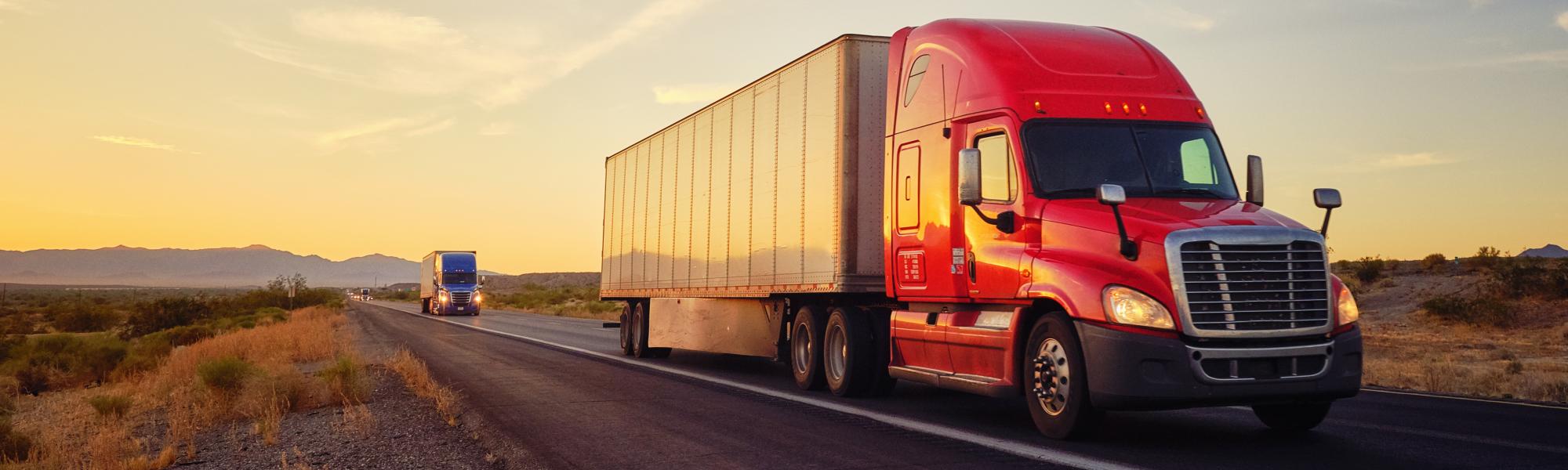
Quick Answer: Florida sets a $750,000 liability floor for trucks over 10,000 lbs. Most brokers now push that to $1,000,000 before booking your load. A Florida commercial trucking insurance policy for this market layers cargo, physical damage, and general liability on top. Dump truck coverage here typically runs $8,000-$15,000 a year.
Key Takeaways
- Federal floor: $750,000. Real broker floor: often $1,000,000.
- Florida dump truck insurance: $8,000-$15,000 a year, South Florida trending higher.
- 4 corridors drive most of the risk here: I-95, Florida’s Turnpike, US 1/441, and Port of Palm Beach access roads.
- Florida generates about 9% of US insurance claims but close to 79% of US insurance lawsuits.
- The cheapest quote and the most reliable carrier are rarely the same carrier.
West Palm Beach runs on trucks. Interstate freight, local delivery, and port-bound cargo move through this corridor daily. One coverage gap can ground an authority before a load ever moves.
Major Freight Corridors and Risk Exposure Points
Truck traffic here concentrates on 4 corridors. Each one prices differently on a policy.
- I-95 carries the heaviest long-haul volume. It also sees the corridor’s highest rear-end collision rate.
- Florida’s Turnpike moves regional and interstate freight at higher speeds. Local congestion runs lighter here.
- US 1 and US 441 carry local delivery and construction traffic. Dense intersections raise the exposure.
- Port of Palm Beach access roads see concentrated import, export, and drayage traffic.
A generic policy rarely fits every operator running these 4 routes.
Vehicle Types Operating Through West Palm Beach
Owner-operator rigs, box trucks, dump trucks, flatbeds, reefers, and full fleets all share these corridors. Each vehicle class still rates differently on the identical route.
Florida Minimum Liability Requirements and Legal Compliance
Direct answer: Florida’s federal floor sits at $750,000 for trucks over 10,000 lbs GVWR. It drops to $300,000 under that weight. FMCSA has also floated raising the general-freight floor to $2,000,000, worth watching if you’re setting long-term limits.
A $750,000 policy keeps your authority legal. It rarely keeps you bookable. We see brokers reject the bare federal minimum on a growing share of freight contracts every renewal cycle.
What every West Palm Beach trucking policy needs to stay compliant and bookable:
| Requirement | Federal Floor | Common Broker Requirement |
|---|---|---|
| General freight liability | $750,000 | $1,000,000 |
| Under 10,000 lbs GVWR | $300,000 | $300,000-$500,000 |
| Hazmat / passenger carriers | $5,000,000 | $5,000,000 |
| Cargo coverage | Not federally mandated | $100,000 minimum |
Federal FMCSA Filings vs. Broker-Side Requirements
Confirm your coverage actually clears a broker’s contract, not just the federal floor, in this order:
- Pull your declarations page and find your actual liability limit, not your quoted premium.
- Compare that limit against the broker’s contract, since $1,000,000 is now the common practical floor.
- Confirm your Form E filing matches FMCSA’s record, since a mismatch here, not the coverage itself, is what suspends an authority.
Physical Damage, Cargo, and General Liability as Compliance Layers
Liability keeps your authority legal. It does not repair your truck or replace a stolen trailer.
Physical damage protection coverage and cargo freight insurance protection are what brokers ask for right after liability.
Core Coverage Types Every West Palm Beach Trucking Policy Should Include
A complete trucking policy for this market layers several coverages, not just one.
| Coverage Type | What It Protects | Typical Buyer |
|---|---|---|
| Primary liability insurance | Bodily injury and property damage you cause | Every authority, required |
| Physical damage coverage | Your own truck and trailer | Financed or high-value equipment |
| Cargo coverage | The freight you are hauling | Any for-hire carrier |
| General liability insurance | Non-auto business exposure (loading, premises) | Fleets, warehouse-adjacent operations |
| Trailer interchange insurance | Non-owned trailers under interchange agreements | Port drayage, intermodal operators |
Primary Liability and Cargo Coverage Explained
Primary liability pays out when your truck causes an accident. Cargo coverage only pays for the freight itself.
Reefer haulers should read their cargo policy closely. Cheap, fast-issue policies commonly exclude specific commodities by default.
Eggs and frozen dairy get named more often than most operators expect. Confirm your exact commodity list before you book a load, not after a claim gets denied.
Trailer Interchange and Non-Trucking Liability
Standard cargo insurance usually skips physical damage on a trailer you don’t own. Trailer interchange coverage closes that specific gap.
Here’s a line worth checking at your own renewal. If your policy already carries trailer interchange coverage, a separate non-owned trailer physical damage line may duplicate it.
That overlap is a common place carriers quietly overcharge. Check our glossary for trucking insurance if any underwriting term on your quote isn’t clear.
Dump Truck Insurance Costs in Florida: 2026 Regional Breakdown
Direct answer: Dump truck insurance in Florida runs $8,000 to $15,000 a year. Garaging zip code and operating radius move that number more than truck value does.
South Florida counties, Palm Beach included, sit toward the top of that range. See our Florida trucking insurance rates page for the full statewide breakdown by vehicle type.
Florida truck insurance costs by vehicle type (annual range):
| Vehicle Type | Florida Annual Range |
|---|---|
| Dump truck | $8,000-$15,000 |
| Box truck | $4,000-$10,000 |
| Hot shot | $7,000-$14,000 |
| Flatbed | $9,000-$18,000 |
| Semi truck (OTR) | $9,000-$18,000 |
| Tank truck | $15,000-$40,000 |
Palm Beach County vs. Orlando and Central Florida Dump Truck Rates
A dump truck on a tight, local construction radius prices better than one running statewide. A paid-off, older truck on a short Palm Beach County radius often lands near the bottom of the $8,000-$15,000 band.
Dump truck insurance in Orlando generally sits lower in that same band. Inland corridors carry less litigation density than the coast.
The range itself doesn’t change by city. Where your truck lands inside it does. Our regional Florida trend analysis breaks this down county by county.
What Actually Drives Dump Truck Premiums Up or Down
- Garaging zip code inside a high-litigation county pushes rates toward the top of the range. Our urban vs. rural cost guide breaks down exactly why.
- Operating radius matters more than truck age for local, short-haul dump work.
- Claims history on the authority itself sets renewal pricing, not the driver’s personal record. A first-year quote runs high mainly because a new authority has no company loss history yet.
- Coverage stack (liability, physical damage, and cargo together) costs more than liability-only. It closes the gaps a construction hauler actually faces.
Specialized Truck Insurance Solutions for West Palm Beach Fleets
West Palm Beach’s freight base mixes construction, agriculture, port import/export, and last-mile delivery.
That mix is why vehicle-specific coverage is the norm here, not the exception. Fleets running south toward Miami often carry the same mixed profile.
Commercial vehicles that require dedicated coverage in this market:
- Owner-operator trucks and single-authority startups
- Box trucks and delivery vans
- Dump trucks and other construction vehicles
- Refrigerated trucks hauling perishable freight
- Flatbeds and heavy-haul rigs
- Semi-trucks and full tractor-trailer combinations
- Multi-vehicle fleets running mixed equipment
Vehicle- and Freight-Type Specialty Coverage
Straight truck, tow truck, dry van, tanker, and car hauler operations each rate differently in Florida. Hot shot trucking shows this most sharply.
A brand-new hot shot authority has a handful of carriers willing to write it. Most of the market wants 2 years of insurance history first, regardless of driving record.
That scarcity, not actual risk, pushes a first-year quote higher than expected.
Business-Stage and Authority-Type Plans
A single-truck new authority needs different limits than an established fleet on the same route.
Local freight operations and gig platforms like Amazon Relay each carry their own certificate requirements. Confirm both before you accept a load.
Why Commercial Truck Insurance Costs More in Florida Than Most States
Florida is not an expensive trucking-insurance state by accident. 2 structural factors explain most of the gap against neighboring states.
Florida’s Litigation and Lawsuit Environment
Florida generates roughly 9% of the nation’s insurance claims. It is tied to close to 79% of the country’s insurance lawsuits. That gap is the clearest single reason Florida commercial auto premiums run above average.
Insurers price the cost of litigating a claim, not just the claim itself. A 2023 change to Florida’s fee-shifting statute reduced insurers’ incentive to settle quickly.
Litigation costs have stayed elevated since.
Carrier Reputation and Claims-Handling Differences
The quoted premium alone rarely tells you which carrier pays a claim fast. Some carriers accept almost any risk profile and price for it deliberately. A wide-open book assumes higher losses across the whole pool.
One signal worth watching: a quote so high it looks absurd is sometimes intentional, not a mistake. A carrier will occasionally price a marginal risk that high on purpose, hoping the applicant walks away instead of forcing a formal decline.
Read our claims process guide before you assume the cheapest quote is the safest one.
How to Choose the Right Truck Insurance Company in West Palm Beach
Picking a West Palm Beach truck insurance company comes down to more than the lowest quoted number.
Questions to Ask Before You Bind a Policy
- How fast does the carrier process a claim, and is that handled in-house or outsourced?
- Does the standard policy carry endorsement gaps that block port, intermodal, or hazmat freight?
- What is the carrier’s broker-acceptance rate on contingent freight contracts?
- Does the agency understand West Palm Beach’s corridor risk, or is it applying a generic statewide rate?
Why Local Broker Expertise Matters
Here’s what typically happens when a policy’s limits don’t match a broker’s floor:
- The broker requests your certificate of insurance before releasing a load.
- Their system flags your liability limit against its own minimum, often $1,000,000.
- A limit below that floor gets the load reassigned. You eat the deadhead cost of a wasted trip.
A broker who actually places West Palm Beach policies knows which carriers write local drayage without an endorsement gap. That route-level knowledge keeps a policy from failing at the exact moment it needs to work.
FAQs
Final Thoughts: Getting Covered the Right Way in West Palm Beach
Commercial trucking in West Palm Beach brings real opportunity and real, corridor-specific risk. A policy built on the federal floor alone leaves gaps. A broker contract or one serious accident can expose them fast.
Alvix Insurance Group has placed trucking policies since 2014. 24/7 certificate-of-insurance access means a COI request never waits until Monday. A dedicated account manager tracks what your specific corridor actually costs to insure.
Ready to see what your West Palm Beach fleet actually qualifies for? Get a free quote for trucking insurance or contact our team to review your current policy against what brokers in this market actually require.


