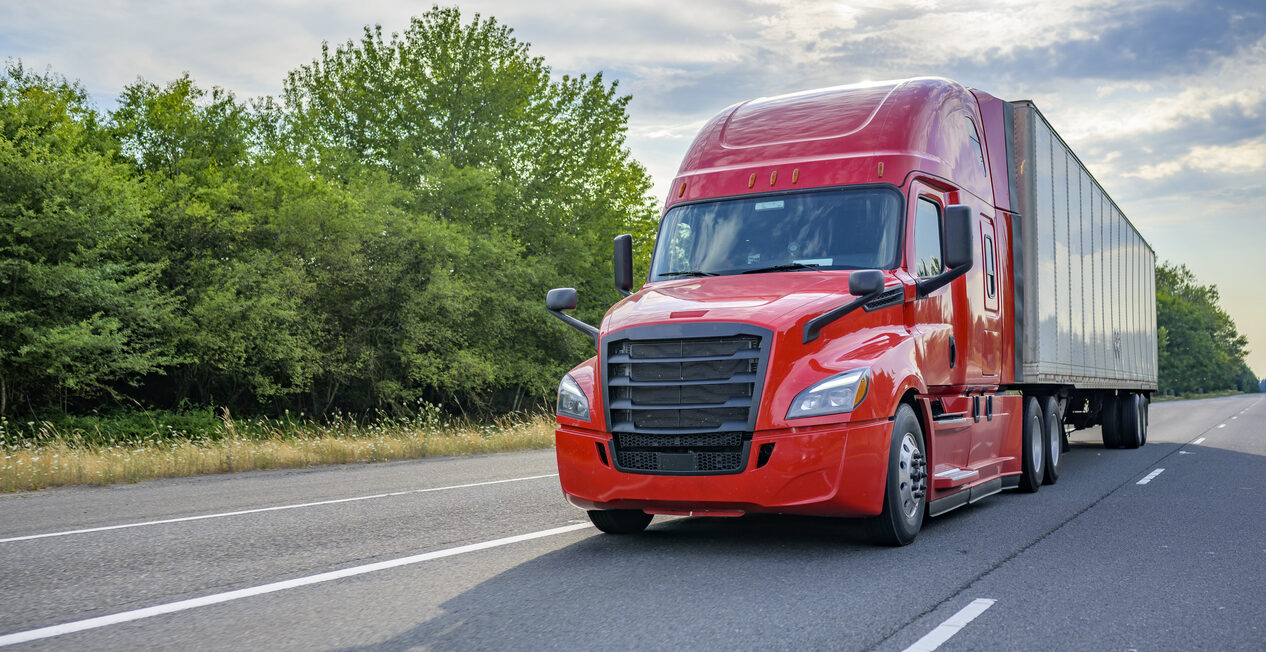
Commercial trucking insurance in Owensboro typically costs between $8,000 and $16,000 per truck each year for owner-operators running under their own authority. Kentucky carriers that operate only within state borders need Kentucky Intrastate Authority and a state liability certificate on file. Carriers that cross into Indiana, Tennessee, or other neighboring states need a USDOT number, an MC number, and the federal MCS-90 endorsement — a guarantee attached to your liability policy confirming you meet federal financial-responsibility rules.
Key Takeaways
- Intrastate vs. Interstate: Owensboro carriers hauling only within Kentucky file through the Kentucky Transportation Cabinet. Carriers that cross state lines must meet FMCSA requirements and carry a valid MCS-90 endorsement.
- Market Coverage Benchmark: Federal minimums start at $750,000, but many carriers carry $1,000,000 in combined single-limit (CSL) coverage, meaning one combined limit for bodily injury and property damage, before a load board will dispatch a load.
- Truck-Type Cost Range: Agricultural and dump-truck policies average $6,000–$11,000 annually; flatbed and tanker operations can reach $10,000–$18,000 depending on cargo class and operating radius.
- Authority Impact on Premium: Independent owner-operators typically pay $1,100–$1,800 per month. Operators leased under a motor carrier’s authority pay $300–$400 per month for gap coverages only.
Kentucky Minimum Insurance Requirements
Intrastate Carriers
Carriers operating only within Kentucky must get Intrastate Motor Carrier Authority through the Kentucky Transportation Cabinet. Maintaining proper Kentucky truck insurance coverage is also required to remain compliant. Proof of liability coverage must be on file with the state before you start operating. Carriers hauling household goods or other regulated freight also need to file a separate cargo certificate confirming active coverage.
Interstate Carriers
Carriers crossing from Owensboro into Indiana (via the US-60 bridge) or other neighboring states need a USDOT number, an MC number, and the federal MCS-90 endorsement.
What is the MCS-90? It’s not a standalone policy; it’s a federal guarantee attached to your existing liability policy. It confirms you meet FMCSA financial-responsibility standards, so if your policy has gaps, the MCS-90 still protects the public up to the federal minimum (though you remain responsible for repaying the insurer afterward).
Intrastate vs. Interstate Authority: Quick Comparison
| Requirement | Intrastate (Kentucky-only) | Interstate (crosses state lines) |
|---|---|---|
| Files with | Kentucky Transportation Cabinet | FMCSA |
| ID required | Kentucky Intrastate Authority | USDOT number + MC number |
| MCS-90 endorsement needed? | No | Yes |
| Annual registration | State filing only | Also requires Unified Carrier Registration (UCR), an annual federal registration system for interstate carriers |
| Minimum liability | $300,000–$750,000 depending on freight weight | $750,000, with $1,000,000 as the practical market standard |
| Typical use case | Local/regional hauls that stay inside Kentucky | Any load crossing into Indiana, Tennessee, or other states |
Kentucky Commercial Liability Limits
The table below summarizes the minimum liability limits required by Kentucky and the typical market standards for each cargo weight category.
| Vehicle Weight & Cargo Type | Jurisdiction | Minimum Liability Required | Market Standard |
|---|---|---|---|
| Freight under 10,000 lb | Intrastate (KY) | $300,000 | $1,000,000 |
| Freight 10,001 – 26,000 lb | Intrastate (KY) | $300,000 | $1,000,000 |
| General Freight over 26,001 lb | Intrastate / Interstate | $750,000 | $1,000,000 |
| Fuel, Hazmat & Tanker Loads | Interstate (FMCSA) | $1,000,000 | $2,000,000+ |
Note: Most freight brokers require $1,000,000 primary liability and at least $100,000 motor‑truck cargo coverage before they they’ll assign you a load.
Get a quote matched to your liability requirements. Contact Alvix Insurance Group at (305) 909‑6444.
Insurance Costs by Truck Type in Owensboro
Owensboro’s economy drives a specific mix of freight operations, agricultural hauling, construction materials, fuel, and regional retail distribution. Each truck class carries a distinct risk profile that directly shapes your annual premium.
- Grain & Livestock Haulers: $7,000–$12,000/year. Rural route driving during harvest season increases rollover and roadway‑hazard exposure, which underwriters weigh against the short operating radius.
- Dump Trucks & Construction: $6,000–$11,000/year. Short-radius work zones help keep costs down, but active construction sites along US-431 and industrial corridors raise property-damage risk.
- Flatbed Operations: $10,000–$16,000/year. Shifting loads, tie-down failures, and open-road exposure on US-60 and I-165 push up cargo-claim frequency, especially for heavy-haul and low-boy trailer work common in Owensboro’s manufacturing sector.
- Tanker & Fuel Trucks: $12,000–$18,000/year. Tanker operators face the most underwriting scrutiny because of hazmat handling, spill liability, and proximity to Ohio River industrial zones.
- Refrigerated / Reefer Units: $10,000–$15,000/year. Spoilage and temperature‑failure claims add measurable premium pressure for operators hauling perishable agricultural products out of Western Kentucky.
Owner‑Operators vs. Leased Authority in Owensboro
Independent Owner‑Operators (Own Authority)
When you operate under your own USDOT number out of Owensboro, you carry 100% of the primary liability risk, and premiums average $1,100–$1,800 per month. You need primary liability, physical damage, and cargo insurance in your own name. Your Kentucky Intrastate Authority or federal MC authority stays active only as long as these filings are kept current.
Leased Operators (Under Motor Carrier Authority)
If you’re leased to a larger motor carrier operating in the Owensboro region, that carrier’s master policy, their company-wide liability policy, covers you while you’re on dispatch (actively hauling a load for them). Your out-of-pocket cost drops to $300–$400 per month, and you only need to buy Non-Trucking Liability (also called Bobtail coverage, since it covers your tractor when it’s not pulling a trailer) plus physical-damage coverage for your own tractor.
Factors That Affect Your Premium in Owensboro
The following table lists the most common factors that affect your trucking insurance premium, along with the typical impact range and how difficult each factor is to address.
| Factor | Premium Impact | Difficulty to Resolve |
|---|---|---|
| At‑fault accident in the past 3 years | +35 % to +60 % | Hard |
| No telematics or dashcam installed | +10 % to +20 % | Easy |
| Physical‑damage deductible under $1,000 | +8 % to +15 % | Easy |
| Driver under 25 years old | +20 % to +40 % | Time‑based |
| Less than 2 years in business | +15 % to +30 % | Time‑based |
| Seasonal agricultural hauling routes (rural road exposure) | +5 % to +12 % | Operational |
Managing these factors, even just a few of them, can meaningfully lower your rate.
Which Coverage Level Do You Need?
Select the coverage tier that aligns with your operation and the expectations of your freight brokers.
| Coverage Tier | Primary Liability | Cargo Coverage | Who It Suits |
|---|---|---|---|
| Bare Minimum | $300K–$750K | None required | Legally compliant only, severely limits load‑board access. |
| Broker Standard | $1,000,000 CSL | $100,000 | Qualifies for most freight brokers and regional load boards. |
| Full Protection | $1,000,000+ CSL | $250,000+ | Hazmat, heavy‑haul, fleet operations, and dedicated contracts. |
Choosing the right tier ensures you meet contractual requirements and actually protect your assets, not just stay technically legal.
Every Accident Can Turn Into a Financial Disaster
Core Coverages Your Fleet Needs in Owensboro
- Primary Liability Insurance: Covers bodily injury and property damage you cause to others. Non-negotiable for keeping your operating authority active in Kentucky and federally.
- Motor Truck Cargo Insurance: Protects the freight on your trailer against fire, collision, theft, and spoilage. Critical for agricultural carriers, fuel haulers, and reefer operators.
- Physical‑Damage Protection: Covers repair or replacement of your tractor and trailer after a collision, fire, theft, or severe weather. Required by lenders if your equipment is financed.
- Non‑Trucking Liability (Bobtail): Protects leased owner-operators when the truck is used for personal trips, off-dispatch, and outside the motor carrier’s coverage.
- Trailer Interchange Coverage: Covers physical damage to a trailer you don’t own while it’s in your possession under a trailer-interchange agreement.
- General Liability: Covers operational liabilities outside the vehicle, loading dock incidents, third‑party bodily injury at a customer site, and premises damage not tied to the truck itself.
How to Lower Your Commercial Premiums
- Run regular MVR checks: Motor Vehicle Record checks that track a driver’s violation and accident history. Catching high-risk drivers before renewal prevents sharp premium increases.
- Install telematics and forward-facing dashcams: Insurers discount fleets that can actively defend against fault claims. Footage linked to your ELD (Electronic Logging Device, the device that records driving hours) resolves disputed liability before it turns into litigation, especially valuable on rural agricultural routes.
- Raise your physical-damage deductible: Moving from $1,000 to $2,500 or $5,000 lowers your monthly premium, as long as you keep enough cash reserves to cover the higher out-of-pocket cost if you file a claim.
- Bundle coverages under one carrier: Buying primary liability, cargo, and general liability from a single provider often unlocks multi-policy discounts and simplifies claims.
- Maintain a clean loss-run history: Your loss run is the official record insurers use of your past claims. A three-year loss run with zero at-fault claims is the single most powerful rate-reduction tool available to any Owensboro operator.
The Filing Process: Kentucky Authority and MCS‑90
Intrastate Filings (Kentucky Transportation Cabinet)
If you operate only within Kentucky, your licensed agent submits proof of insurance to the Kentucky Transportation Cabinet to validate your Kentucky Intrastate Motor Carrier Authority. If you haul regulated commodities, you’ll also need active cargo coverage on file before you start hauling.
Interstate Filings (MCS‑90)
For hauls crossing from Owensboro into Indiana or any other state, FMCSA requires the MCS-90 endorsement attached to your liability policy. Your agent files this directly with the FMCSA. Interstate carriers must also register annually through the Unified Carrier Registration (UCR) system and keep a valid USDOT number active at all times.
Secure Your Owensboro Trucking Insurance
Owensboro’s mix of Ohio River industrial freight, seasonal agricultural hauling, construction activity, and regional interstate distribution means your risk exposure is genuinely different from a carrier running out of a purely urban market. Operating with thin cargo limits, a lapsed Kentucky filing, or insufficient primary liability can expose your entire business to losses you can’t recover from on your own.
Partnering with an experienced commercial trucking broker makes sure your Kentucky authority filings, MCS-90 endorsement, and primary liability limits satisfy both state regulators and the highest-paying freight brokers serving the Western Kentucky market.
Alvix Insurance Group is licensed in 23+ states, backed by A-rated carriers, and specializes exclusively in commercial trucking insurance..
Request a quote tailored to your truck class, operating authority, and cargo needs, and drive with confidence on Kentucky’s highways and beyond.
Frequently Asked Questions
Related Read: Commercial Trucking Insurance in Covington


