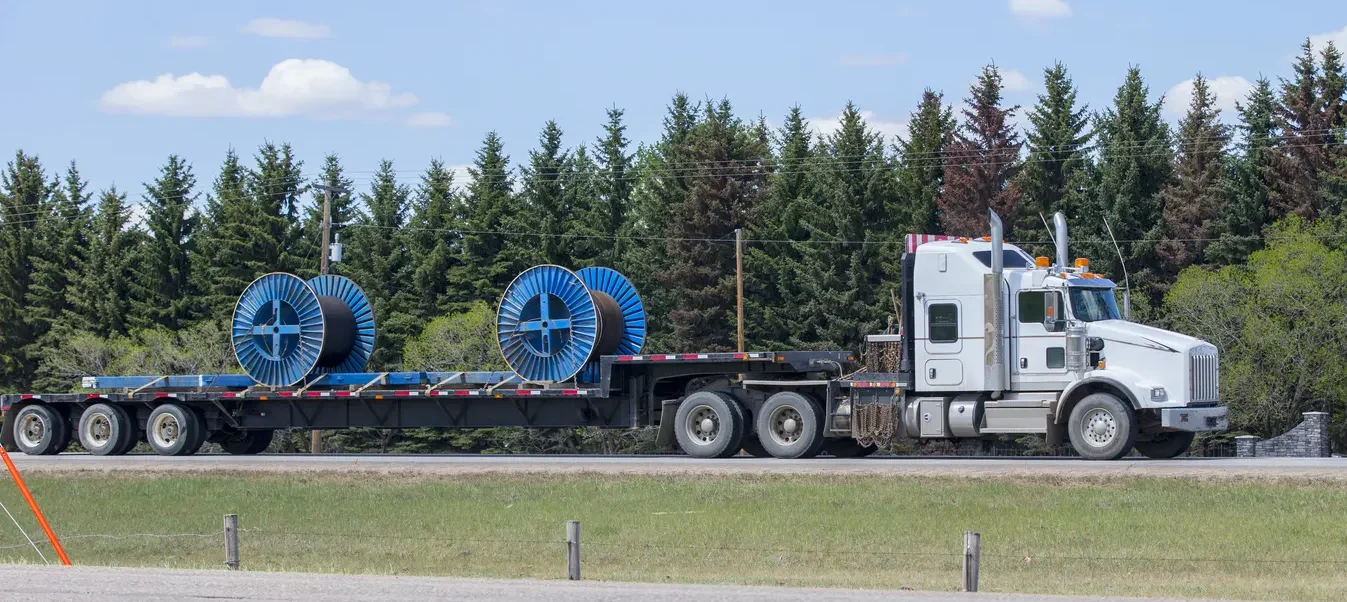
Commercial trucking insurance in Reno, Nevada, is required by both federal law and Nevada state law for any vehicle hauling freight for pay. Personal auto insurance does not cover commercial hauling, ever. The minimum liability for most interstate truckers is $750,000, but most freight brokers and shippers in the Reno market require $1,000,000 before they will hand you a load. Coverage cost depends on your cargo type, driving history, operating radius, and FMCSA safety scores. Working with a broker who specializes in trucking and has access to multiple carriers is the fastest way to get the right policy at a competitive rate.
Key Takeaways
- Personal auto insurance never covers commercial hauling. If you haul freight for pay without a commercial policy, any claim will be denied, no exceptions.
- Nevada requires a minimum of $750,000 liability for most intrastate non-hazmat operations. Federal FMCSA minimums apply if you cross state lines.
- Freight brokers often require $1,000,000 in coverage. Carrying only the state minimum can cut you off from loads on DAT, Truckstop, and major shippers at TRIC.
- Reno’s mountain routes raise your risk profile. Donner Pass and Sierra Nevada winter conditions are factors that insurers price into your premium.
- New authorities pay 30–50% more than established carriers. Your rate drops as you build a clean loss history and strong FMCSA safety scores.
- Bobtail and non-trucking liability are not the same thing. Mixing them up leaves you uninsured in specific situations, a common and costly mistake.
- A policy lapse, even for one day, can revoke your operating authority. Never let coverage expire between loads or renewal periods.
- The right broker has carrier access and multi-state licensing. If your broker only works with one or two carriers, you are not getting the full market.
Reno is not just Nevada’s second-largest city. It is a major freight and logistics hub. Interstate 80 cuts right through it. US-395 connects northern and southern Nevada here. That puts Reno at the crossroads of some of the busiest truck routes in the western United States.
If you run a truck or a fleet out of Reno, you already know the roads, the loads, and the risks. But do you know if your insurance actually covers everything it should? This guide breaks it all down in plain language so you can make smart, confident decisions.
What Is Commercial Trucking Insurance and Why Is It Different from Personal Auto Insurance?
Commercial trucking insurance is a specialized policy built for vehicles used in business. A personal auto policy will not cover your truck if you are hauling freight for pay. That is a hard exclusion most drivers find out about only after a claim is denied.
Commercial trucking policies are designed around the realities of freight:
- Higher vehicle values
- Cargo liability
- Long hours and high mileage
- Multiple drivers using the same rig
- Federal and state compliance requirements
In the Reno area, Nevada insurance requirements depend on what you haul, how far you go, and whether you cross state lines. Getting this wrong costs you money or your operating authority.
What Types of Commercial Trucking Insurance Do You Actually Need in Reno?
There is no one-size-fits-all policy for truck operators. Your coverage depends on your operation. Here is a clear breakdown of the most common coverage types and what each one does for you.
Reno truckers typically operate in high-demand freight corridors, from the Port of Oakland through northern Nevada and into Utah. That means many local operators need both intrastate and interstate coverage. Knowing the difference matters before you sign anything.
| Coverage Type | What It Covers | Who Needs It |
|---|---|---|
| Primary Liability | Bodily injury and property damage you cause to others | All for-hire truckers, federally required |
| Physical Damage | Damage to your own truck (collision + comprehensive) | Owner-operators and fleet owners with financed equipment |
| Motor Truck Cargo | Damage or loss of the freight you are hauling | Any trucker moving goods for pay |
| Bobtail Insurance | Coverage when driving without a trailer | Owner-operators under a lease agreement |
| Non-Trucking Liability | Personal use of the truck off dispatch | Owner-operators not under permanent lease |
| General Liability | On-site injuries, completed operations, loading/unloading | Trucking companies with terminals or warehouses |
| Trailer Interchange | Damage to non-owned trailers under a written agreement | Flatbed and dry van operators pulling others’ trailers |
| Occupational Accident | Medical and lost income for owner-operators (not employees) | Independent truckers not covered by workers’ comp |
Every one of these coverages solves a specific problem. Skipping one can leave a gap that costs far more than the premium would have.
What Are the Minimum Insurance Requirements for Truckers Operating in Nevada?
Nevada follows federal FMCSA safety rating requirements for interstate carriers and has its own rules for intrastate operations. The minimums are not suggestions. They are the floor, and most experienced operators carry more than the floor.
The state requires registration with the Nevada Transportation Authority (NTA) for intrastate-for-hire carriers. Federal carriers must register with the FMCSA and maintain a DOT number with active insurance filings.
Here is what the minimums look like based on what you haul:
| Operation Type | Minimum Liability Required |
|---|---|
| Non-hazmat freight under 10,001 lbs (interstate) | $300,000 |
| Non-hazmat freight over 10,001 lbs (interstate) | $750,000 |
| Hazardous materials (certain categories) | $1,000,000 |
| Oil transport | $1,000,000 |
| Radioactive or explosive materials | $5,000,000 |
Nevada intrastate carriers hauling non-hazmat freight are generally required to carry at least $750,000 in liability. However, the right coverage level depends on your specific cargo type and operation.
These numbers reflect federal minimums. Shippers, brokers, and freight platforms like DAT and Truckstop often require higher limits, commonly $1,000,000, before they will assign loads. Carrying only the minimum can limit your freight options significantly.
How Does the Reno Freight Market Affect Your Insurance Costs?
Reno’s location creates a specific risk profile that insurers pay attention to. Understanding this helps you have a better conversation with your broker and potentially lower your premium.
Reno sits at a high elevation. The surrounding Sierra Nevada range creates winter driving conditions, ice, black ice, chain control zones on I-80, and mountain passes with steep grades. Donner Pass, just west of Reno, is one of the most notorious stretches of I-80 in the country for weather-related accidents involving large trucks.
Insurers factor in:
- Route exposure: Frequent trips over mountain passes increase accident risk
- Cargo type: Electronics, alcohol, and fuel all carry higher theft and loss rates
- Driver history: A clean MVR (Motor Vehicle Record) significantly reduces your premium
- Years in business: New authorities typically pay more than established carriers
- Safety scores: Your FMCSA SMS scores (unsafe driving, hours of service, vehicle maintenance) directly affect your insurability and rate
Reno also has a growing logistics sector tied to the Tahoe-Reno Industrial Center (TRIC), the largest industrial park in the United States by acreage. Major distribution centers for Amazon, Tesla, Google, and others operate out of TRIC. Truckers servicing these accounts may face specific insurance requirements from those shippers directly.
What Factors Determine the Cost of Commercial Trucking Insurance in Reno?
No two trucking operations pay the same rate. Insurers price risk based on dozens of factors. Here are the ones that move the needle most for Reno-area operators.
| Rating Factor | Impact on Premium |
|---|---|
| Type of cargo hauled | High, hazmat, and high-value goods cost significantly more |
| Operating radius (local, regional, long-haul) | High, longer radius increases exposure |
| Driver age and MVR history | High violations and accidents can double your rate |
| Years with active authority | High, new authorities pay 30–50% more on average |
| FMCSA safety scores | High or poor scores reduce carrier options |
| Vehicle age and condition | Medium, older equipment with no safety tech costs more |
| Annual mileage | Medium, more miles mean more exposure |
| Overnight parking location | Medium, unsecured parking increases cargo theft risk |
| Deductible level | Medium, higher deductible lowers the premium |
| Claims history (last 3–5 years) | Very high, even one major claim changes your rate significantly |
Your premium is not fixed. It is built from a profile of your business. Knowing what goes into that profile helps you take steps to lower your costs over time.
What Are the Most Common Insurance Mistakes Reno Truckers Make?
These mistakes show up repeatedly when trucking businesses come to us after a denied claim or a compliance violation. They are avoidable, but only if you know how to look for them.
1. Confusing bobtail with non-trucking liability
These are not the same coverage. Bobtail covers you when driving without a trailer, but only when you are under a permanent lease agreement with a motor carrier. Non-trucking liability covers personal use of the truck when you are not under dispatch. Using the wrong one means the other carrier’s policy might not apply either.
2. Letting the policy lapse between loads
If your policy cancels mid-term, even for a day, your operating authority can be revoked by the FMCSA. Getting it reinstated takes time and money. Some carriers will not work with you again.
3. Skipping cargo coverage to save money
A single load of electronics or pharmaceuticals can be worth $100,000 or more. Cargo coverage is often less expensive than people expect. Skipping it to save a few hundred dollars per year is rarely worth it.
4. Not updating the policy when adding drivers or equipment
Adding a truck or a driver without notifying your insurer can void coverage on that asset entirely. Keep your broker informed of your operation changes.
5. Buying based on price alone
The cheapest policy is rarely the right one. A carrier with poor financial ratings or claims handling that drags out for months is not a deal; it is a problem waiting to happen.
Is Owner-Operator Insurance Different from Fleet Insurance in Reno?
Yes. The structure, cost, and coverage options differ meaningfully. Here is how they compare.
Owner-operators are either leased to a motor carrier or operating under their own authority. That distinction changes everything about what coverage you need and who is responsible for providing it.
If you are leased to a motor carrier:
The carrier’s primary liability covers you while on dispatch. But you are responsible for:
- Physical damage to your own truck
- Bobtail coverage when deadheading without a load
- Occupational accident coverage (if not provided by the carrier)
- Cargo liability if the carrier’s policy does not extend to leased operators
If you are under your own authority:
You are the motor carrier. You are responsible for all coverages, primary liability, cargo, physical damage, and any state filings required by the NTA or FMCSA.
Fleet operators, those running two or more trucks, often qualify for fleet discounts, blanket physical damage policies, and scheduled driver coverage rather than listing each driver individually. Fleet policies can also include safety program incentives that lower premiums when you demonstrate low loss ratios over time.
How Do You Find the Right Commercial Trucking Insurance Provider in Reno?
Not every insurance company writes commercial trucking. And among those that do, not everyone has access to the right carriers for your specific operation. Working with an independent broker who specializes in trucking is the most effective approach.
Here is what to look for when choosing a provider:
- Specialist experience: General commercial lines agents often lack the trucking market knowledge to place complex risks correctly
- Carrier access: A broker with access to 30 or more trucking-specific carriers can shop your risk broadly and find competitive pricing
- Multi-state licensing: If you run interstate, your broker should be licensed in every state you operate in
- Filing capabilities: Your broker should be able to file your MCS-90 endorsement, BMC-91 bond, and state-specific forms directly
- Claims support: Ask how they handle claims. Do they advocate for you or just report to the carrier?
Frequently Asked Questions
From coverage requirements to policy costs, these FAQs address the questions we hear most often from owner-operators and fleet owners looking for commercial truck insurance.
Still have questions? If you didn’t find the answer you were looking for, call our insurance team at +1 (305) 909-6444. We’re here to help you understand your options and find the right commercial truck insurance coverage.
Start Protecting Your Trucking Business in Reno
Reno’s trucking economy is real and growing. From TRIC’s massive distribution operations to the steady freight flow on I-80 and US-395, truck operators in northern Nevada face a unique combination of opportunity and risk.
Insurance Solutions for Every Type of Trucking Operation
We work with truck operators across Reno and the broader northern Nevada region. Our team is licensed in 23+ states, which means we can cover your operation wherever the load takes you. We have built relationships with 30+ trucking-specific carriers, giving us the market access to find competitive rates for new authorities, experienced fleets, specialized cargo operations, and everything in between.
Local Experience Backed by Nationwide Coverage
If you haul over Donner Pass in January, deliver to Amazon’s TRIC facility, or run flatbed loads from Reno to Salt Lake City, we understand your routes, your risks, and what coverage actually needs to look like for your operation.
Get a quote built for how you actually work. Talk to a Reno-area commercial trucking insurance specialist today.


