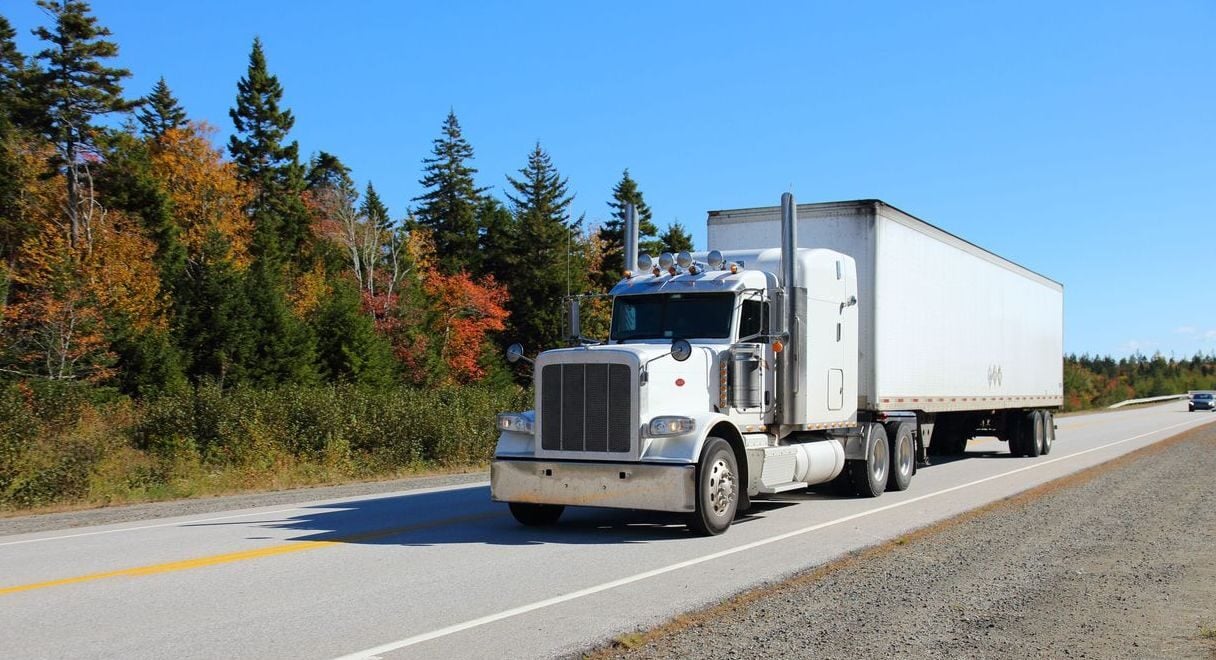
Commercial trucking insurance in Carson City, NV, costs between $10,800 and $19,200 per year for owner-operators in 2026. Federal law under FMCSA 49 CFR 387.9 requires $750,000 in primary liability for interstate carriers. Nevada intrastate carriers must comply with Nevada Transportation Authority (NTA) rules and file a Form E proof of insurance.
Carson City is the state capital of Nevada. It sits on the I-580 and US-395 corridor connecting to Reno and the Tahoe-Reno Industrial Center, one of the largest industrial parks in the United States. Carriers here face mountain pass grades, Washoe Valley high-wind closures, California border freight exposure, and Sierra Nevada winter weather. These risks make coverage decisions more complex than in a flat, inland market.
Premiums vary by cargo type, route radius, driver record, and fleet size. Figures above reflect 2026 market averages.
KEY TAKEAWAYS
Carson City sits at the crossroads of Nevada’s main north-south corridor and some of the West’s most demanding mountain routes. Here is what every carrier in this market needs to know before getting a quote:
- 2026 cost range: Owner-operators pay $10,800 to $19,200 per year. Mountain route exposure and California border proximity add to costs.
- Federal minimum: FMCSA requires $750,000 primary liability for interstate carriers under 49 CFR 387.9.
- Nevada NTA: Intrastate carriers must file Form E with the Nevada Transportation Authority and meet state minimums.
- Wind closures: The Washoe Valley stretch of I-580 between Carson City and Reno is subject to active high-wind restrictions for trucks nine feet tall or higher.
- TRIC freight: Carriers serving the Tahoe-Reno Industrial Center need coverage structured for high-volume industrial and technology supply chain loads.
- New authority: First-year carriers typically pay 25 to 50 percent more than established operators.
Why Carson City Is a Demanding Trucking Market
Carson City is small in population. It is large in freight significance.
Here is why this market is more complex than it looks:
- I-580 and US-395 connect Carson City directly to Reno and I-80, the main east-west transcontinental freight corridor
- The Tahoe-Reno Industrial Center (TRIC) is one of the largest industrial parks in the US by land area. It is home to Tesla’s Gigafactory, Amazon distribution, and Switch data centers
- USA Parkway (SR-439) is the main access route into TRIC and was subject to temporary closures in 2026 due to infrastructure work
- Carson City sits 30 miles from Reno and less than an hour from the California border
- Cross-state freight between Nevada and California is common and adds interstate compliance requirements
- The Sierra Nevada range creates steep grades, sudden weather changes, and chain control requirements from late fall through early spring
All of these factors affect how your policy should be structured. A generic Nevada rate does not account for the difference between running flatbed freight to TRIC and hauling reefer loads over a Sierra Nevada pass.
The Roads Carson City Truckers Use Most
Route selection matters in this region. Each road below carries its own risk profile and its own insurance implications.
Before the table, one key note: the Washoe Valley segment of I-580 between Carson City and Reno is formally monitored by NDOT for high-wind events. During wind restrictions, trucks nine feet tall or higher are prohibited from this stretch. Carriers who run this daily should understand that downtime from closures is not covered by standard liability policies. Business interruption coverage is worth discussing with your agent.
| Route | Main Use | Risk Level |
|---|---|---|
| I-580 and US-395 North | Carson City to Reno, TRIC access, I-80 connection | High: wind closures, high-volume industrial freight |
| US-50 East (Loneliest Road) | Regional and cross-state freight toward Fallon and Utah | Medium: remote stretches, limited services, wind exposure |
| US-395 South | Carson City toward Minden, Gardnerville, and California | Medium to High: mountain grades, seasonal snow, and ice |
| SR-439 (USA Parkway) | TRIC industrial park access route | High: heavy industrial truck traffic, infrastructure closures in 2026 |
| US-50 West | Carson City toward Lake Tahoe and California border | High: steep mountain grades, chain control, winter closures |
After reviewing your routes, share them with your agent. A carrier running SR-439 into TRIC daily has very different exposure than one hauling regionally on US-50 East. Your premium should reflect that difference.
What Nevada Law and Federal Rules Require in 2026
The rules for Carson City carriers depend on whether you cross state lines. Here is a clear breakdown.
Federal FMCSA Rules for Interstate Carriers
If your truck crosses into California, Utah, Oregon, or any other state, FMCSA safety rating rules apply.
The minimum requirements are:
- General freight over 10,001 lbs: $750,000 in primary liability
- Oil and certain hazardous materials: $1,000,000 minimum
- High-hazard cargo such as explosives and bulk hazmat: $5,000,000 minimum
- Interstate carriers also need an MCS-90 endorsement on their policy
- Filing required: Form BMC-91 or BMC-91X submitted directly to FMCSA
Nevada NTA Rules for Intrastate Carriers
If you stay within Nevada only, the Nevada Transportation Authority governs your for-hire authority.
What you need:
- Comply with NTA regulations for for-hire carriers operating within Nevada
- File Form E proof of insurance with the NTA
- State minimum liability for intrastate general freight: $750,000 combined single limit for commercial trucks
- UCR (Unified Carrier Registration) must be current annually
What TRIC Shippers Require
The Tahoe-Reno Industrial Center has some of the strictest shipper requirements in Nevada.
Most TRIC tenants require carriers to carry:
- $1,000,000 in primary liability minimum
- $100,000 in cargo coverage
- Specific endorsements for high-value technology and automotive freight
Meeting these thresholds is what gets you approved as a carrier at Tesla, Amazon, and Switch facilities. The legal minimum alone is not enough to work with these clients.
What Commercial Trucking Insurance Costs in Carson City in 2026
Nevada premiums are generally lower than California but higher than rural inland states. Mountain route exposure and proximity to California push Carson City rates above the Nevada state average. The table below reflects what Carson City-area carriers are paying in 2026.
| Operator Type | Annual Premium Range | Notes |
|---|---|---|
| Owner-operator, established carrier | $10,800 to $19,200 | Clean record, two or more years of authority |
| New authority, first year | $14,000 to $26,000 | 25 to 50 percent surcharge for limited history |
| Small fleet, two to five trucks | $24,000 to $75,000 | Scales with fleet size and cargo |
| TRIC industrial and tech freight | $14,000 to $24,000 | High-value cargo endorsement often required |
| Reefer and refrigerated carriers | $13,000 to $21,000 | Cargo spoilage endorsement needed |
| Hazmat carriers | $18,000 to $40,000 or more | Hazmat endorsement and excess liability required |
| Flatbed and mountain route carriers | $14,000 to $22,000 | Grade and chain control exposure factored in |
Two factors drive Carson City premiums above other Nevada markets.
- First, mountain route exposure increases physical damage and liability costs for carriers running US-50 West and US-395 South.
- Second, cross-border freight into California introduces California litigation risk into your underwriting profile, even for carriers based in Nevada.
The Five Truck Types Most Active in Carson City
Carson City’s freight mix is shaped by industrial growth at TRIC, cross-state traffic to California, and mountain corridor transport. These are the five truck types you see most in this market and what each typically costs to insure.
The premiums below are for established carriers with clean records. New authorities and high-value or hazmat cargo will cost more.
| Truck Type | What They Do in Carson City | 2026 Annual Premium |
|---|---|---|
| Dry Van Tractor-Trailer | Runs I-580 between Carson City and Reno, then onto I-80 for regional distribution. Serves TRIC warehousing and distribution clients. | $10,800 to $19,200 |
| Flatbed Truck | Hauls industrial components and construction materials to TRIC and regional job sites. Runs mountain routes with steep grade exposure. | $14,000 to $22,000 |
| Reefer Truck | Carries food and pharmaceutical freight across the California-Nevada corridor. Mountain route cold-chain loads require cargo spoilage coverage. | $13,000 to $21,000 |
| Box Truck | Handles local delivery across Carson City, Minden, Gardnerville, and Douglas County. Serves state government supply chains. | $10,000 to $15,000 |
| Tanker and Fuel Truck | Delivers fuel across Nevada’s remote corridors including US-50 East and US-95. Hazmat endorsement required. Long stretches without services increase breakdown exposure. | $18,000 to $40,000 or more |
If you run flatbed or reefer freight over US-50 West toward South Lake Tahoe and California, ask your agent specifically about mountain grade coverage and chain control delays. Not all cargo policies cover load shifts that happen during mandated chain-up stops.
Core Coverages Carson City Carriers Need
A complete policy for a Carson City trucking operation covers more than just the federal minimum. Here is a plain breakdown of what each coverage does and who needs it.
The table below is a starting point. Your agent should review your cargo, your routes, and your fleet before telling you which of these applies to your operation.
| Coverage Type | What It Covers |
|---|---|
| Primary Liability | Bodily injury and property damage to third parties. Required by law for all carriers. |
| Physical Damage | Repairs or replacement after collision, theft, or weather events including snow and ice. |
| Motor Truck Cargo | Protects the freight you are hauling from loss, theft, or damage in transit. |
| Reefer Breakdown Endorsement | Covers cargo spoilage if your refrigeration unit fails. Required for food and pharma loads. |
| MCS-90 Endorsement | Required for all interstate carriers. Covers federally mandated minimum liability when crossing state lines. |
| Hazmat Endorsement | Chemical and fuel spill liability. Required for tanker and hazmat freight on Nevada corridors. |
| Non-Trucking Liability | Covers you when the truck is being used outside of active dispatch. |
| Umbrella and Excess Liability | Extends coverage above primary limits. Important for carriers running California border freight. |
Once you go through this list with your agent, pay close attention to the MCS-90 requirement. Many Carson City carriers run cross-border loads into California without realizing they need this endorsement on file. Missing it can trigger a compliance violation during a roadside inspection.
A Real Situation Carson City Truckers Have Faced
A flatbed operator based in Carson City had a regular run hauling steel components from a TRIC manufacturer to a job site in the Sacramento, California area. The route used I-580 north to Reno, then I-80 west over Donner Pass.
In November, chain controls were put in place on I-80 near the California border. The driver stopped to install chains. While chaining up on the shoulder, a load shift caused part of the cargo to move. When the driver pulled back onto the highway, the shifted load created an imbalance at highway speed near Auburn, California. The driver lost control and the truck went onto the shoulder, damaging a guardrail and a mile marker assembly.
The California Department of Transportation filed a claim for guardrail repair at $38,000. The driver also received a citation for an unsecured load under California vehicle code.
The operator’s cargo policy did not include a load securement endorsement for mountain route chain stops. The guardrail damage was covered under liability. But the operator faced the citation and a CSA score increase that raised his next policy renewal by $3,200.
A proper mountain route policy review before that first winter run would have flagged the load securement gap and the California vehicle code exposure.
How to Choose a Truck Insurance Provider in Carson City
Not every agent specializes in truck insurance for Nevada’s mountain corridors or the TRIC industrial market. Here is what to look for before you commit to a policy.
What Matters in Carson City
These are the factors that matter most when choosing an insurance provider for this market:
- Nevada NTA filing experience: Your agent must handle Form E for intrastate carriers in-house
- Mountain route underwriting knowledge: An experienced agent knows how to rate grades, chain control exposure, and wind restriction downtime
- California cross-border experience: Carriers running into California need an agent who understands how California adds to your risk profile
- TRIC and high-value cargo access: Technology and automotive freight at TRIC needs specific cargo endorsements most generalist agents miss
- MCS-90 compliance: Interstate carriers need this endorsement filed correctly. Not all agencies verify this before binding coverage
- Multi-carrier access: A broker with 30 or more carriers finds better rates for Nevada’s varied freight profiles
Three Questions to Ask Before You Sign
Ask these questions to any agent before you commit to a policy:
- Do you handle Nevada NTA Form E filings and FMCSA BMC-91 filings in-house?
- How do you rate physical damage for carriers running mountain passes like US-50 West and Donner Pass?
- Have you placed coverage for carriers serving the Tahoe-Reno Industrial Center?
If the answers are vague, look elsewhere.
Frequently Asked Questions
Why Choose Alvix Insurance for Carson City Truck Insurance
Alvix Insurance Group has over a decade of experience in commercial trucking insurance. We are licensed in more than 23+ states and work with more than 30+ insurance carriers. Before recommending any policy, we compare options across those carriers based on your actual routes and cargo. Whether you haul flatbed freight to the Tahoe-Reno Industrial Center, run reefer loads over Sierra Nevada passes into California, or manage local deliveries across Carson City and Douglas County, we build coverage around what you actually do. We understand Nevada’s mountain route risks, NTA intrastate filing requirements, and how California border exposure affects your underwriting profile.
We keep things simple. You will know what your policy covers, what it excludes, and what it costs before you sign. No surprises at claim time. If you are ready to review your Carson City trucking coverage, contact Alvix Insurance Group for a free, no-obligation quote.
Get Your Free Carson City Truck Insurance Quote. Call Alvix Insurance Group Today
Protect Your Carson City Trucking Business
Carson City gives truckers access to major industrial clients, cross-state freight, and some of the most active distribution corridors in the West. That access is valuable. It also comes with real challenges.
Mountain passes close in winter. Wind restrictions stop traffic in the Washoe Valley. California border freight adds compliance and litigation exposure. A policy written for a flat, inland market will not protect you here.
Get coverage built for Carson City. Talk to Alvix Insurance Group, get a clear picture of what your policy actually includes, and make sure it fits your routes and your cargo.
Get a Free Quote Today


