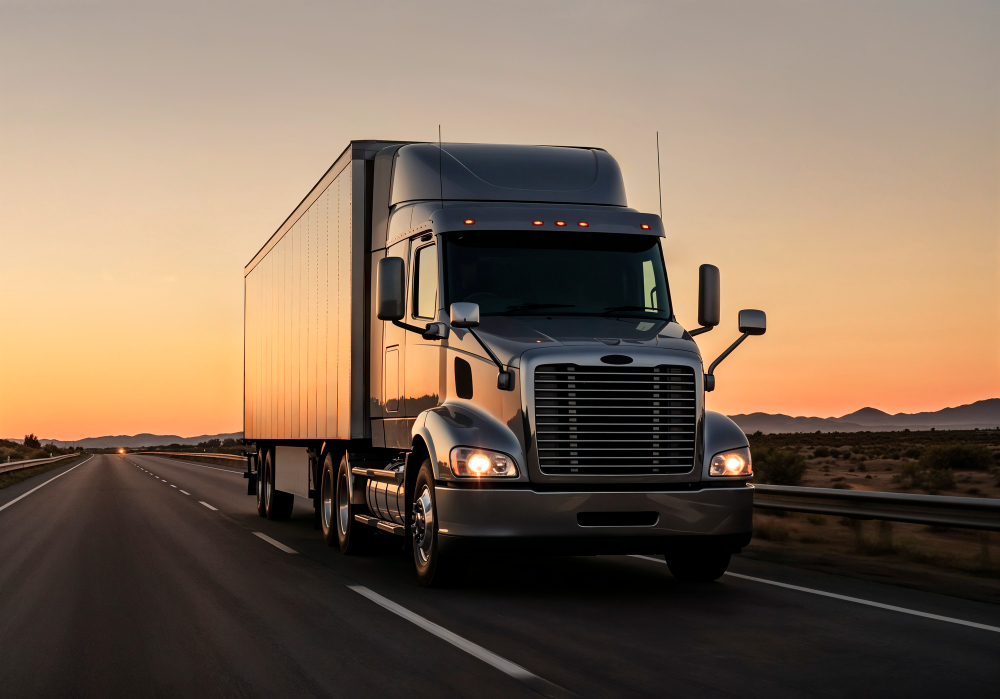
Freight through the DFW Inland Port, one of the largest inland ports in the country, moves on some of the busiest interstates in Texas, and underwriters price that volume directly into your premium.
Commercial trucking insurance in Dallas TX runs $8,000 to $16,000 a year for an established owner-operator with a clean record, and $12,000 to $34,000-plus for a first-year authority with no loss history. Alvix Insurance Group has placed primary truck liability insurance for Dallas carriers since 2014.
Rates move on 5 factors: truck type, credit, claims history, garaging ZIP code, and actual operating radius.
This guide covers TxDMV and FMCSA requirements, what Dallas carriers pay by truck type, and the coverage mistakes that quietly cost owner-operators money every year.
Quick Answer: $8,000-$16,000/year for an established Dallas owner-operator, $12,000-$34,000-plus for a first-year authority, $4,500-$6,000 for a leased driver on bobtail-only coverage. Minimum liability is $750,000 federal, $1,000,000 practical market floor.

Key Takeaways
- New first-year Texas authorities often struggle to get quoted at all; Progressive is usually the only carrier willing to write single-truck operations.
- Being legally compliant at $750,000 doesn’t guarantee a broker will book your freight, since most require $1,000,000 in practice.
- Dallas-garaged trucks price 15% to 30% above rural Texas rates from I-35E congestion, cargo theft rates, and towing exposure.
- Leased drivers often duplicate coverage by buying standalone non-trucking liability on top of a bobtail policy already covering them.
- An independent broker placing policies across multiple A-rated carriers, not one house brand, gets Dallas operators a fairer rate.
What Dallas Trucking Insurance Actually Costs
Semi-truck liability premiums in the Dallas-Fort Worth market run $8,000 to $16,000 a year for an established operator with a clean record. Newer authorities and specialty freight cost more, per Alvix’s current Texas carrier data below.
1. Annual Premium by Truck Type
- Semi-truck / dry van: $8,000 to $16,000 a year
- Auto hauler / car transporter: $10,000 to $20,000 a year, driven up by higher declared cargo value per load
- Dump truck / regional hauler: $7,000 to $14,000 a year
- Box truck, local Dallas delivery: $3,500 to $9,000 a year
2. First-Year Authority Pricing in Texas
Texas sits alongside California, Florida, and New York as one of the toughest states to insure for liability, and most carriers will not quote a first-year, single-truck authority at all.
Progressive is often the only one that will, so treat it as a starting point, not a permanent home.
Some brokers and UIIA drayage accounts are selective about Progressive-insured carriers. Plan to move to an A-rated market like Northland, Harco, or Canal after a clean claims year, working with a broker who places policies across multiple carrier markets rather than 1 house brand.
3. Leased Owner-Operators Pay Less
Leased owner-operators need far less coverage, since the carrier’s own primary liability policy covers the load. Bobtail and physical damage alone often run $4,500 to $6,000 a year.
The catch: many leased drivers also buy a separate Non-Trucking Liability Insurance policy that duplicates coverage their lease already provides. Check the lease agreement before adding it.
Texas and Federal Liability Minimums
Your minimum required coverage depends on where you drive and what you haul. Intrastate carriers under TxDMV rules need $300,000 to $1,000,000 combined single limit; interstate carriers under FMCSA need a $750,000 floor, rising to $5,000,000 for hazmat.
1. TxDMV vs. FMCSA Minimums
Intrastate carriers operating only within Texas fall under Texas Department of Motor Vehicles rules. Once a load crosses the state line, FMCSA rules take over, set out in 49 CFR Part 387.
| Operating Authority | Cargo Type | Required Liability |
|---|---|---|
| Intrastate (TxDMV) | General freight, under 26,000 lbs | $300,000 CSL |
| Intrastate (TxDMV) | General freight, over 26,000 lbs | $500,000 CSL |
| Intrastate (TxDMV) | Oil transport | $1,000,000 CSL |
| Interstate (FMCSA) | General freight, over 10,001 lbs | $750,000 CSL |
| Interstate (FMCSA) | Hazardous materials | $5,000,000 CSL |
| Practical market minimum | Most brokers/shippers | $1,000,000 CSL |
2. The $750,000-vs-$1,000,000 Bookability Gap
That last row is where new operators get blindsided. The $750,000 federal minimum is what the law requires, but most brokers will not sign with a carrier under $1,000,000.
You can be fully legal and still lose loads because your CSL does not clear a broker’s risk threshold. Confirm your limit before turning down freight over it.
3. Form E, MCS-90, and BMC-91X Filings
Intrastate carriers must keep a Form E filing active with TxDMV. Interstate carriers need an MCS-90 endorsement and a BMC-91X filed with FMCSA. Either lapse suspends your authority immediately.
Coverage Every Dallas Carrier Should Understand
Alvix structures every Dallas policy around 7 coverage types, each answering a different question about who pays when something goes wrong.
| Coverage | What It Pays For | Typical Dallas Terms |
|---|---|---|
| Primary liability | Bodily injury/property damage you cause others; satisfies Form E/MCS-90 | $750K-$1M+ CSL |
| Physical damage | Your own truck after collision, theft, or hail | Actual cash value; $1K-$2.5K deductible |
| Motor truck cargo | The freight itself | $100K-$250K per vehicle |
| Bobtail | Driving without a trailer, still under dispatch | Often bundled with lease-on |
| Non-trucking liability | Truck used for anything outside carrier business | $300-$600/yr if bought separately |
| Trailer interchange | Non-owned trailers you drop and hook | Skip if you only pull owned trailers |
| Excess liability | Cushion above primary limits | For $2M-plus shipper contracts |
Two mistakes show up constantly in Dallas policy reviews:
- Insuring a truck above its actual cash value on a stated-amount policy buys nothing extra, since insurers pay the lower figure at claim time.
- Leased drivers who buy standalone non-trucking liability often duplicate coverage their bobtail policy already includes.
General liability and occupational accident coverage round out off-road incidents and independent-contractor medical costs, and belong on every complete Dallas policy alongside the 7 coverages above.
Dallas-Specific Risk Factors That Move Your Premium
Alvix prices Dallas-garaged trucks 15% to 30% above rural Texas rates, driven by 3 factors:
- Interstate density: The Texas Triangle connecting Dallas, Fort Worth, Houston, and San Antonio carries the highest freight concentration in the southern United States, and I-35E’s ongoing construction raises accident frequency.
- Cargo theft concentration: Texas accounted for roughly 20% of national cargo theft incidents in 2025, with the Dallas-Fort Worth corridor flagged as an active hot zone around Hutchins, Duncanville, Everman, and North Dallas.
- Post-accident towing exposure: Non-consent tow operators can bill steep “heavy recovery” fees with little regulatory cap under Texas law, and insurers often pay quickly since storage fees accrue daily.
Spring hailstorms are another North Texas fixture that push physical damage claims up every year. Ask your broker whether your claims process includes a towing sublimit before you need it, not after.
Owner-Operators vs. Fleets: Coverage That Fits How You Run
A single owner-operator, a leased driver, and a 6-truck fleet each need a different policy shape in Dallas. Pricing them the same way is how operators end up over-insured or under-protected.
- Independent owner-operators carry full primary liability, physical damage, and cargo on their own authority.
- Leased drivers lean on bobtail and physical damage only, since the carrier’s policy covers the rest.
- Fleets benefit from consolidating every unit under 1 carrier instead of splitting across 2 policies, simplifying certificate-of-insurance issuance and renewal scheduling. See how fleet insurance works for the mechanics.
New authorities should ask upfront whether their insurer will add trucks and drivers mid-term, since some won’t touch a policy until the authority hits its first full year.
Common Overpayment Mistakes Dallas Operators Make
These 6 mistakes show up repeatedly in claims files and renewal audits, and most cost a Dallas operator $200 to $600 a year each:
- Insuring equipment above actual cash value on a stated-amount policy, which pays the lower figure anyway
- Paying for non-trucking liability while already leased onto a carrier’s bobtail coverage
- Carrying cargo limits well above the freight value actually hauled
- Keeping trailer interchange coverage without ever pulling non-owned trailers
- Never revisiting your deductible or filed radius at renewal
- Assuming loyalty earns a discount, when shopping the renewal every year is standard practice in this market
How to Lower Your Dallas Trucking Insurance Premium
Five actions move a Dallas premium the most, per Alvix’s underwriting experience with Texas carriers, ranked by impact:
- Maintain a clean FMCSA record. A single at-fault accident can outweigh 2 clean years in an underwriter’s model.
- Confirm your filed radius matches what you drive, since a carrier rated for 500 miles who runs 250 overpays monthly.
- Install telematics and dash cams to document safe driving underwriters can verify.
- Raise your physical damage deductible if you can absorb more risk.
- Shop your renewal with an independent broker every year instead of auto-renewing.
FAQs
Work With a Dallas-Focused Trucking Insurance Broker
Pricing here depends on so many individual factors (credit, claims history, garaging ZIP code, commodity, radius) that comparing quotes rarely means much.
Alvix places policies across multiple A-rated markets instead of 1 underwriter’s appetite, and its account managers already understand Dallas-specific risk before you apply.
Get Your Dallas Trucking Insurance Quote
Alvix Insurance Group has placed commercial trucking coverage since 2014, with 24/7 certificate of insurance access and dedicated account managers who understand the DFW corridor.
Request your Dallas trucking insurance quote and get a policy built around how you actually run.


