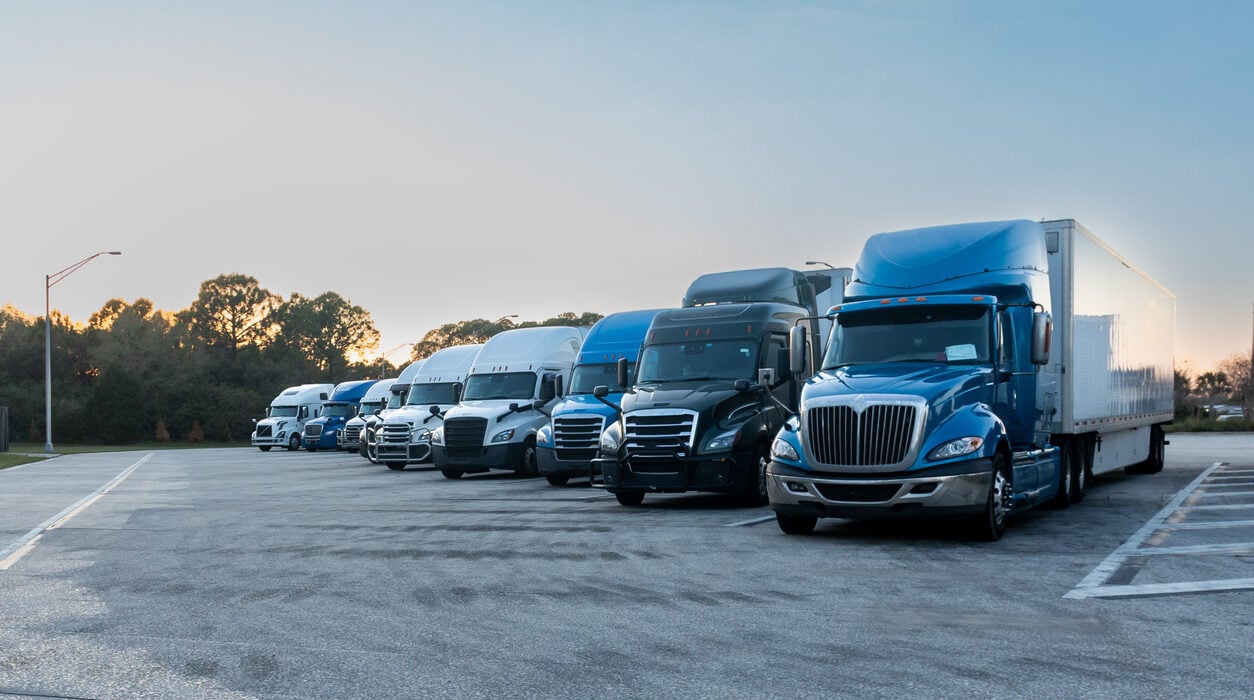
Commercial trucking insurance in Ohio costs $7,500 to $34,000+ a year. The exact number depends on vehicle type, garaging ZIP, and how long you’ve held your MC authority. Semi trucks typically run $7,500-$15,000; tank trucks run $13,000-$34,000.
First-time authority holders should see how owner-operator coverage differs from a leased-on driver’s before shopping a quote.
Quick answer: Federal law sets a $750,000 liability floor for general freight. Most Ohio brokers and shippers won’t dispatch a load under $1 million, though.
A new MC authority commonly quotes $12,000-$25,000+ for the same semi truck an established carrier insures for $7,500-$15,000. That gap closes at the first clean renewal, not by shopping harder in month three.
Key takeaways
- Ohio’s just-in-time auto freight (Honda in Marysville, Jeep in Toledo) carries late-delivery penalties most generic cargo policies don’t price for.
- OSHP inspections at weigh stations on I-70/71/75/80 hit your CSA score before a claim ever does.
- A “stated amount” limit above your truck’s real value is premium you can never collect.
- Interstate and intrastate Ohio carriers file through two different regulators.
How Much Does Commercial Trucking Insurance Cost in Ohio
Ohio premiums track vehicle class first, garaging location second. A box truck running local Columbus freight and a tank truck hauling chemicals on I-71 are not priced from the same table.
Treating them as if they were is the single most common reason a new operator’s first quote comes in double what an established fleet pays.
| Vehicle Type | Annual Range in Ohio |
|---|---|
| Box Truck | $4,000 – $8,500 |
| Hot Shot Trucking | $6,000 – $12,000 |
| Dry Van Trucking | $7,000 – $13,500 |
| Semi Truck | $7,500 – $15,000 |
| Flatbed Truck | $7,500 – $15,000 |
| Dump Truck | $7,500 – $14,000 |
| Reefer Truck | $8,500 – $17,000 |
| Auto Transport | $9,000 – $18,000 |
| Logging Truck | $10,000 – $21,000 |
| Tank Truck | $13,000 – $34,000 |
| Heavy Haul | $12,000 – $28,000 |
These ranges assume a garaging ZIP outside a dense metro core; Columbus, Cleveland, and Cincinnati carriers typically land at the higher end of their vehicle’s band (see the regional breakdown below for why).
Ohio Regulatory Requirements Every Carrier Must Meet
1. Federal Filings: MCS-90 and BOC-3
Every interstate carrier needs an MCS-90 endorsement on file with FMCSA. It’s a federal guarantee that your insurer pays covered judgments, even if a policy exclusion would otherwise block the claim. Your insurer also files a BOC-3 (Designation of Process Agent) before your MC number activates.
A mismatch between what your agent files and what FMCSA has on record is the single most common reason a brand-new authority sits in “Pending” status for weeks instead of days.
Ohio State Highway Patrol also runs CVSA roadside inspections at weigh stations along I-70, I-71, I-75, and I-80. Underwriters price a rising CSA score months before it ever becomes a claim.
2. Ohio’s Intrastate Filing Body: PUCO
Carriers running freight entirely within Ohio file through the Public Utilities Commission of Ohio, not FMCSA alone.
PUCO’s motor carrier division has required its own proof-of-insurance filing since carriers first registered intrastate authority, separate from the federal BOC-3.
An agent unfamiliar with that distinction is how an otherwise-compliant Columbus local hauler ends up non-compliant on a state technicality.
Coverage You Need to Operate Legally in Ohio
1. Primary Liability Is the Floor, Not the Whole Policy
Primary Truck Liability Insurance covers bodily injury and property damage you cause. It’s the coverage FMCSA and most brokers check first. It typically represents 50-75% of your total premium.
Pairing it with General Liability Insurance Coverage covers incidents off the highway, like a loading dock injury, that primary liability doesn’t touch.
2. Cargo and Physical Damage Protect the Load and the Truck
Cargo Freight Insurance Protection protects what you’re hauling. Most brokers require at least $100,000 in limits before they’ll tender a load.
Physical Damage Protection Coverage repairs or replaces the truck after a collision or weather event. That risk is real on the lake-effect corridor through Cleveland and Youngstown each winter.
3. Non-Trucking Liability vs. Bobtail: The Distinction That Trips Up Leased Operators
Non-Trucking Liability Insurance covers your truck off-duty and off-dispatch, like a grocery run or a visit home. Bobtail coverage is different.
It protects you when the tractor has no trailer attached but you’re still working. That gap covers you between a drop-off and your next pickup.
Owner-operators leased to a carrier often assume the carrier’s policy covers both. In practice, we’ve caught this gap on more leased-on Ohio policies than not during a renewal review; it frequently covers only one, or neither. Confirm which coverage your lease agreement actually requires before you sign, not after a claim gets denied.
Trailer Interchange Insurance Protection and Excess Liability Insurance Coverage round out what most Ohio fleets add as they scale past a single truck.
Coverage Gaps That Quietly Inflate Ohio Premiums
A policy that looks complete on paper still leaks money in a handful of predictable places. These are the line items we flag most often on an Ohio renewal review:
- Stated amount above actual cash value: A $45,000 truck insured for $75,000 “stated amount” still only pays the lower figure at claim time. The rest is premium you can never collect.
- Bobtail duplicated with your carrier’s policy: If you’re 100% leased on, your carrier’s non-trucking liability may already cover you. A separate bobtail endorsement is then money paid twice.
- Cargo limits sized for freight you don’t haul: A $250,000 cargo limit on $60,000 loads is wasted premium. Match the limit to what you actually carry.
- Deductibles that haven’t moved since day one: Raising a physical damage deductible from $1,000 to $2,500 commonly saves $400-$900 a year, if you can absorb the difference out of pocket.
Why New Ohio Authorities Pay More in Year One
1. First-Year Quote Shock Is Rating, Not a Scam
- A fresh MC number can still price two to three times higher than a five-year carrier’s.
- That’s not padding, it’s rating math: no claims history means no individual record to price against.
- New authorities get priced as a group instead, and that group statistically files more claims in year one than year three.
2. A 12-Month Path to a Lower Renewal
- Most carriers won’t meaningfully re-rate a policy before the first renewal, regardless of how clean the year was.
- Running one truck under one MC number for a full 12 months moves the needle more than shopping five brokers in month three.
- Document every load, and avoid a mid-term equipment or driver swap.
Commercial Trucking Insurance by Ohio Region
1. Columbus and Central Ohio
- Columbus sits at the crossing of I-70 and I-71, and the Rickenbacker Inland Port south of the city moves auto and intermodal freight in and out on rail as much as road.
- That mix is why auto hauler trucking insurance in Columbus runs $9,000-$18,000 a year, above the state’s dry van baseline.
- Honda’s Marysville and East Liberty plants and Jeep’s Toledo assembly line also run tight just-in-time delivery schedules.
- A late auto-parts load can trigger a penalty clause a generic cargo policy was never written to cover, so confirm your cargo limit accounts for the penalty, not just the parts.
2. Youngstown and the Mahoning Valley
- Youngstown’s steel and manufacturing freight base drives more flatbed and heavy-haul exposure than the statewide average, and the Ohio Turnpike (I-80) runs straight through the Mahoning Valley.
- Oversize steel and equipment loads on that stretch need their own permit and proof-of-insurance filing through the Ohio Turnpike and Infrastructure Commission, on top of the state and federal filings above.
- Winter lake-effect snow off Lake Erie adds real physical damage risk from October through March.
- Carriers in and around Youngstown should expect flatbed and dump truck premiums toward the middle of the statewide range, not the low end.
3. Cleveland and Cincinnati
- Both metros carry higher theft and claim density than rural Ohio, which is why trucks garaged in either city land at the top of their vehicle type’s range.
- Secure, documented parking is one of the few underwriting factors a carrier fully controls, and citing it at quote time can shave real dollars off a metro policy.
Choosing the Right Ohio Trucking Insurance Broker
A generalist agent who occasionally writes a trucking policy and a specialist who places nothing but trucking risk are not interchangeable, even at the same price. The specialist knows which exclusions matter for your freight type, and whether your BOC-3 and Form E actually match what FMCSA has on file.
A quote a few thousand below everyone else’s is rarely a better deal; it usually means thinner claims-handling, discovered only after you file. Shop your policy every renewal, not just once, since loyalty rarely earns a flat rate in commercial trucking.
Alvix Insurance Group has placed trucking-specific policies since 2014, so every Ohio quote accounts for PUCO’s filing rule and FMCSA’s MCS-90 requirement from the start. Certificate of insurance requests get answered 24/7, including weekends.
FAQs
Conclusion
Commercial trucking insurance in Ohio is priced on vehicle type, garaging location, and claims history, not on which company answers the phone fastest. Know your real cost band, close the gaps that quietly inflate premiums, and file correctly with FMCSA and PUCO from day one.
Get Your Ohio Trucking Insurance Quote from a team that has placed trucking-specific policies since 2014, or talk to an account manager about which filings your lease or authority actually requires.


