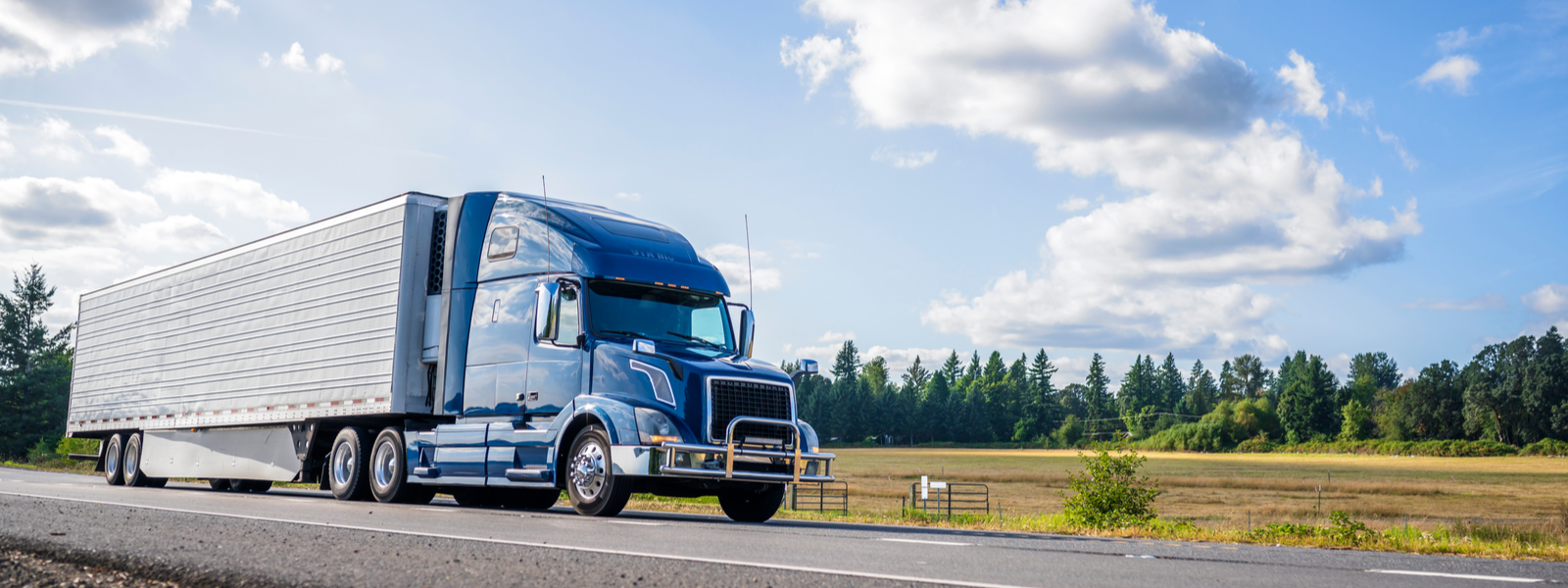
Commercial trucking insurance in Naples, Florida, is a legal requirement for any vehicle hauling freight for pay. Your personal auto policy will not cover the commercial operations period. Florida follows federal FMCSA minimums, which means most interstate truckers need at least $750,000 in liability coverage. Most freight brokers and major shippers in the Southwest Florida market require $1,000,000 before assigning loads. Your premium depends on cargo type, driver history, operating radius, and your FMCSA safety scores. At Alvix Insurance Group, we work with 30+ trucking-specific carriers across 23+ licensed states to help Collier County operators find the right coverage at a competitive rate.
Key Takeaways
Here is what every Naples trucker should know before reading further.
- Personal auto insurance never covers commercial hauling. Any claim filed under a personal policy while hauling freight for pay will be denied.
- Florida requires a minimum of $750,000 liability for most non-hazmat interstate operations under FMCSA rules.
- Most freight brokers require $1,000,000. Carrying only the minimum can lock you out of loads from major shippers and logistics platforms.
- Naples routes carry unique risks. Coastal humidity, hurricane season, and heavy seasonal traffic on US-41 and I-75 affect your risk profile and premium.
- New authorities pay 30–50% more. A clean loss history and strong FMCSA scores lower your rate over time.
- Bobtail and non-trucking liability are not interchangeable. Using the wrong one leaves a coverage gap when you need it most.
- One day of lapsed coverage can revoke your operating authority. Never let your policy expire between renewal periods or load assignments.
- Carrier access matters. A broker tied to only one or two carriers cannot shop your risk, and that costs you money.
Naples is more than a Gulf Coast resort city. It is a working commercial hub in Southwest Florida. US-41 (Tamiami Trail) and I-75 move constant freight in and out of Collier County. Agricultural loads head north from Immokalee. Construction materials flow south into the booming Naples development corridor. And seasonal population surges push delivery demand higher every winter.
If you run a truck or a fleet out of Naples, you face a combination of year-round freight demand and Florida-specific risks that require more than a generic commercial policy. This guide walks you through everything you need to know, in plain language, so you can protect your livelihood and keep your wheels moving.
What Is Commercial Trucking Insurance and Why Does It Matter in Naples?
Commercial trucking insurance is a purpose-built policy for vehicles used to haul freight for pay. It is not an upgrade to your personal auto policy. It is an entirely different type of coverage.
A personal auto policy excludes commercial use. If you are hauling cargo and get into an accident, that claim will be denied. That leaves you personally liable for vehicle damage, injuries, and cargo loss all at once.
Florida’s trucking environment makes this even more important. The state has one of the highest rates of commercial vehicle accidents in the country. Naples specifically sees heavy truck traffic tied to:
- Agricultural freight from Immokalee and surrounding Collier County farms
- Construction deliveries supporting Naples’ ongoing development boom
- Retail and warehouse distribution tied to the growing population corridor from Naples to Fort Myers
- Seasonal freight surges from October through April when the snowbird population nearly doubles
A commercial trucking policy covers all of this. A personal policy covers none of it.
What Types of Commercial Trucking Coverage Do Naples Operators Actually Need?
There is no universal policy that fits every operation. What you haul, how far you drive, and how your business is structured all determine which coverages apply to you.
Naples-area truckers operate across a wide range of freight types, from produce and landscaping materials to fuel, building supplies, and high-value retail goods destined for the luxury market that defines much of Collier County. Each cargo type carries its own risk and its own coverage requirement.
Here is a clear breakdown of the most common coverage types for Southwest Florida operators:
| Coverage Type | What It Covers | Who Needs It |
|---|---|---|
| Primary Liability | Bodily injury and property damage you cause to others | All for-hire truckers are federally required |
| Physical Damage | Damage to your own truck (collision + comprehensive) | Owner-operators and fleets with financed equipment |
| Motor Truck Cargo | Loss or damage to the freight you are hauling | Any trucker moving goods for pay |
| Bobtail Insurance | Coverage when driving without a trailer, under a lease | Owner-operators leased to a motor carrier |
| Non-Trucking Liability | Personal use of the truck when not under dispatch | Owner-operators not under permanent lease |
| General Liability | Loading/unloading injuries, completed operations | Trucking companies with yards or warehouses |
| Trailer Interchange | Damage to non-owned trailers under a written agreement | Flatbed and dry van operators pulling others’ trailers |
| Occupational Accident | Medical and income replacement for owner-operators | Independent truckers not covered by workers’ comp |
Every coverage type above solves a specific problem. Missing one creates a gap. And in a state with Florida’s litigation environment, coverage gaps get expensive fast.
At Alvix Insurance Group, we review your full operation before recommending a coverage structure, not just check a box and issue a policy.
What Are the Minimum Insurance Requirements for Truckers Operating in Florida?
Florida follows federal FMCSA requirements for interstate carriers. For intrastate operations, the Florida Department of Transportation (FDOT) sets the rules. Neither set of minimums is optional.
It is important to understand that these are floors, not recommended levels. Most experienced operators in the Naples market carry more than the minimum, and most freight brokers require it.
Here is what the minimums look like based on what you haul:
| Operation Type | Minimum Liability Required |
|---|---|
| Non-hazmat freight under 10,001 lbs (interstate) | $300,000 |
| Non-hazmat freight over 10,001 lbs (interstate) | $750,000 |
| Hazardous materials (certain categories) | $1,000,000 |
| Oil transport | $1,000,000 |
| Radioactive or explosive materials | $5,000,000 |
Florida intrastate for-hire carriers must also register with the FDOT and maintain active insurance filings. If your authority lapses or your insurance is not on file, you cannot legally operate, and the fines in Florida are significant.
One more thing worth knowing, major freight platforms and direct shippers in the Southwest Florida market routinely require $1,000,000 in primary liability before assigning loads. Carrying only the federal minimum will limit your options in a competitive freight market.
How Do Naples and Southwest Florida Conditions Affect Your Insurance Costs?
- Hurricane season risk: From June through November, Florida’s Gulf Coast faces elevated storm risk. Comprehensive physical damage claims spike during active hurricane seasons. Insurers price this into premiums for vehicles garaged or operated in coastal Collier County.
- Seasonal traffic surges: Naples’ population nearly doubles between October and April. More vehicles on US-41, I-75, and SR-951 means higher accident frequency, and insurers know this.
- Agricultural cargo routes: Loads moving out of Immokalee involve produce with tight delivery windows and high spoilage risk. Cargo policies for refrigerated or time-sensitive freight carry specific sub-limits and conditions.
- Construction freight demand: Naples has been one of the fastest-growing construction markets in Florida, where dump trucks, heavy equipment transport, concrete delivery, and building material hauling all face elevated liability exposure.
- Humidity and corrosion: The Gulf Coast environment accelerates wear on commercial vehicles. Older equipment with deferred maintenance increases both physical damage claims and FMCSA inspection risk.
The good news: most of these factors are within your control over time. A clean driving record, well-maintained equipment, and strong FMCSA scores all point your premium in the right direction.
What Are the Most Common Insurance Mistakes Naples Truckers Make?
These mistakes come up repeatedly, usually when a trucker calls after a denied claim or a compliance issue. They are completely avoidable with the right guidance.
1. Assuming personal auto insurance covers side jobs
Many owner-operators start hauling freight on the side before setting up a formal business. A personal policy will not cover a single commercial load. One accident during an uncovered haul can result in a six-figure personal liability.
2. Confusing bobtail with non-trucking liability
These are not the same. Bobtail covers driving without a trailer under a lease agreement. Non-trucking liability covers personal use when off dispatch. Getting them mixed up leaves you exposed in the specific situation you thought you were covered for.
3. Letting coverage lapse between loads or during the slow season
Naples has a real off-season. Some operators try to reduce costs by canceling or suspending coverage during summer months. A single day of lapsed coverage can trigger FMCSA authority revocation. Reinstatement takes time and damages your standing with carriers.
4. Not reporting new drivers or equipment
Adding a driver or truck without notifying your insurer can void coverage on that asset entirely. Florida’s legal environment makes this especially risky; undisclosed drivers are a common reason claims get denied.
5. Choosing the cheapest policy without reading it
Price matters. But a policy with broad exclusions, low cargo sub-limits, or a carrier with slow claims handling can cost far more than the premium saved. In Southwest Florida’s litigation-friendly environment, policy quality matters as much as price.
Is Owner-Operator Insurance Different from Fleet Insurance in Naples?
Yes, meaningfully so. The structure, cost, and required coverages differ based on how your operation is set up.
Owner-operators and fleet operators have different responsibilities and different options. Understanding where you fall determines what you actually need to carry.
If you are leased to a motor carrier:
The carrier’s primary liability covers you while on dispatch. You are still responsible for:
- Physical damage to your own truck
- Bobtail coverage when driving without a load
- Occupational accident coverage if the carrier does not provide it
- Cargo liability if it is not extended to leased operators under the carrier’s policy
If you operate under your own authority:
You are the motor carrier. All coverages are your responsibility, including primary liability, cargo, physical damage, and all required FMCSA and FDOT filings.
Fleet operators running two or more trucks often qualify for blanket physical damage policies, scheduled driver programs, and fleet discounts tied to loss ratios. Safety program participation can also unlock additional premium reductions at renewal.
Alvix Insurance Group works with both individual owner-operators and multi-truck fleets across the Naples area. The structure of your policy depends entirely on how you operate. not on a template.
How Do You Find the Right Commercial Trucking Insurance Provider in Naples?
Not every insurance agency writes commercial trucking. And among those that do, not all have access to the right carriers for your specific freight type and operating territory.
Here is what to look for when choosing a trucking insurance provider in Southwest Florida:
- Trucking specialization: A general commercial lines agent may not know the difference between bobtail and non-trucking liability. That gap in knowledge costs you.
- Carrier access: A broker with access to 30 or more trucking-specific carriers can truly shop your risk and find competitive pricing across the market.
- Multi-state licensing: If you run interstate loads even occasionally, your broker should be licensed in the states you operate in.
- Filing capabilities: Your provider should handle MCS-90 endorsements, BMC-91 bonds, and Florida-specific FDOT filings directly.
- Claims advocacy: When something goes wrong, does your broker fight for you or just report the claim and step back?
These are the right questions to ask before you sign anything.
Alvix Insurance Group Knows the Naples Trucking Market
Naples is a growing freight market. Agricultural loads from Immokalee, construction deliveries across Collier County, and the constant demand from Southwest Florida’s seasonal population all keep local trucks busy year-round.
Getting the right insurance is not a one-time checkbox. It is an ongoing part of running a professional trucking business.
Alvix Insurance Group brings over a decade of experience placing commercial trucking coverage for owner-operators and fleets across Southwest Florida. We are licensed in 23+ states, so your coverage follows you wherever the load goes. Our relationships with 30+ trucking-specific carriers mean we can find competitive options for new authorities, seasoned fleets, specialized cargo, and everything in between.
Naples operators trust us because we know the routes, the risks, and the right coverage structure for this market. Let us put that experience to work for you.
Get a free quote today. Talk to an Alvix Insurance Group specialist who knows Naples trucking.


