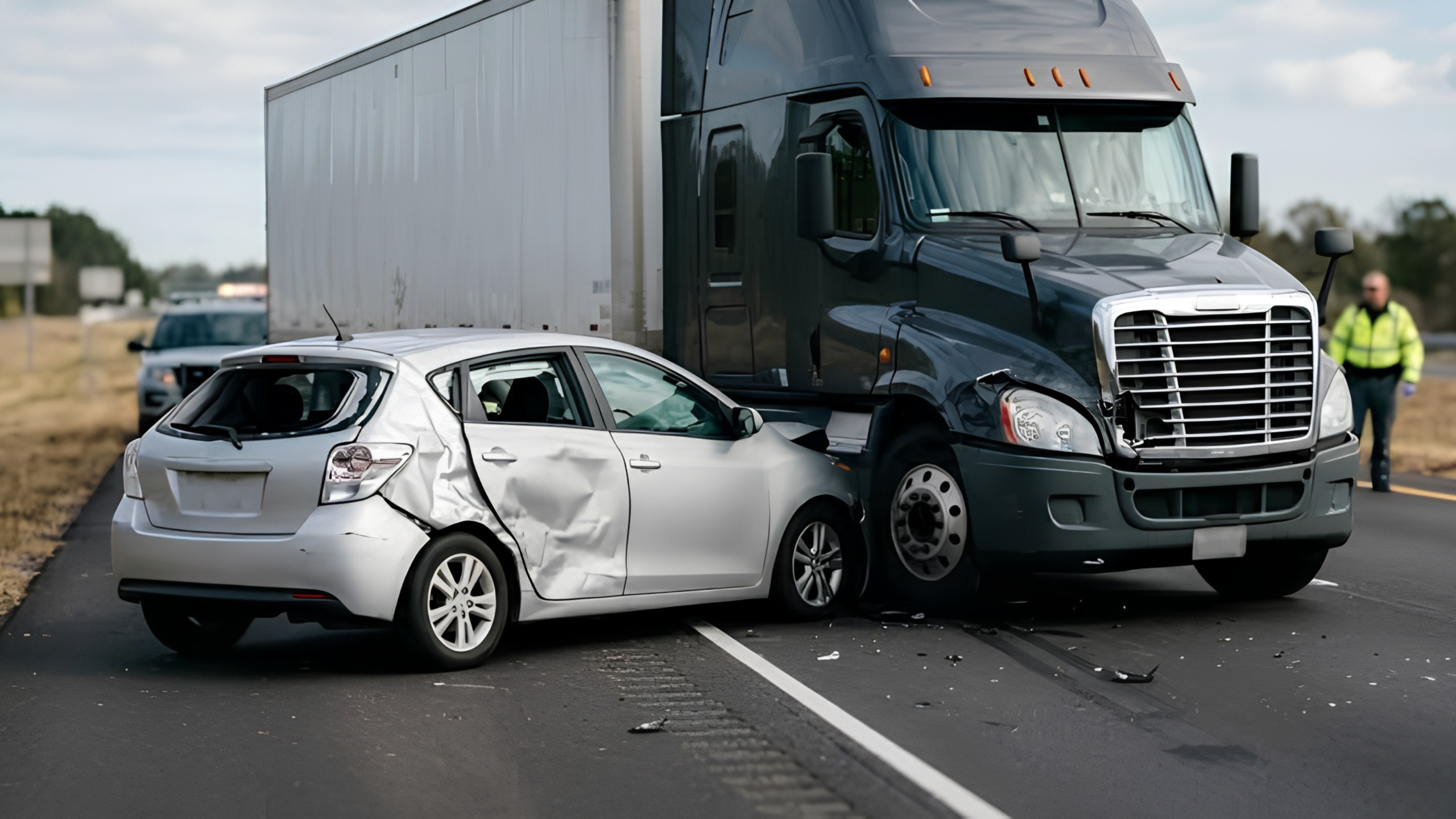
Quick Answer: This commercial truck accident checklist starts before help arrives: secure the scene, check for injuries, call 911, and photograph everything before a vehicle moves. Notify dispatch and your insurer the same day.
Whether drug testing, DOT reporting, or your CSA score comes into play depends on 3 specific facts, not just “there was a wreck.”
Key Takeaways
- A crash is only a DOT-recordable accident under 49 CFR 390.5 with a fatality, an injury treated away from the scene, or a disabling-damage tow.
- Drug and alcohol testing under 49 CFR 382.303 requires a specific combination of citation, injury, tow, or fatality.
- What you document in the first 15 minutes shapes how a claims adjuster reads your file weeks later, and how your driving record reads years later.
- A not-at-fault crash can still surface again in hiring conversations or a lawsuit years after the fact.
What Counts as a DOT-Recordable Commercial Truck Accident
| DOT-Recordable Criteria (49 CFR 390.5) | What It Means |
| Fatality | Anyone dies, regardless of fault |
| Injury treated away from the scene | Immediate medical treatment somewhere other than the crash site |
| Disabling damage requiring a tow | Vehicle can’t be driven away under its own power |
1. Why This Threshold Changes How You Act
Drivers who assume every bump is a federal incident tend to over-apologize or panic about testing that was never coming.
2. When a Collision Isn’t DOT-Recordable at All
A dock-backing incident or a slow parking-lot contact usually fails all 3 criteria. Log it anyway under 49 CFR 390.15’s accident register in case the story is disputed later.
Before It Happens: The Pre-Accident Checklist
Most drivers only think about accident response after the fact, but a few minutes of prep beforehand saves real time and evidence later.
What to Carry in the Cab Before You Ever Need It
- A physical accident report form or diagram pad, plus a pen
- Your insurance card, COI, and the carrier’s DOT number written down, not just saved online
- Your safety department’s after-hours number saved in your phone, not just the main office line
- A working dash cam with enough storage, checked before the trip starts
Know Your Carrier’s Protocol Before You’re Standing at a Scene
Confirm your company’s drug testing policy now. Some carriers test stricter than the federal minimum, and finding out mid-scene wastes time you don’t have.
The First 15 Minutes at the Scene
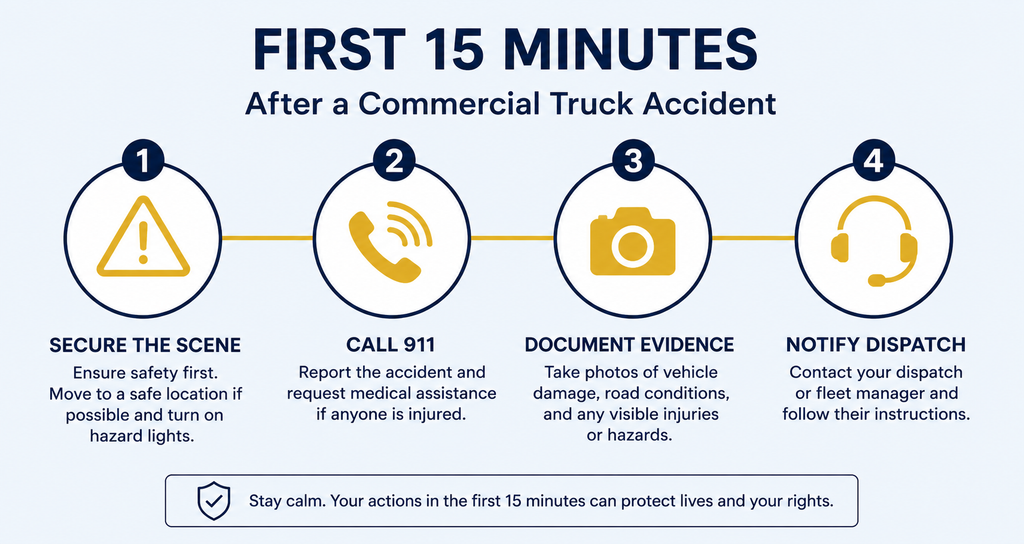
1. Secure the Scene, Check Injuries, Call 911
Hazard lights on, check yourself and passengers first, then call 911 even if damage looks minor. A police report is evidence neither side can dispute later.
A driver checking the truck before running to the other vehicle isn’t necessarily callous. It often means they’re already on the phone with 911.
2. Hold Straight or Swerve? The Split-Second Call
If a vehicle suddenly crosses into your lane, the trained answer runs against instinct: hold your lane and brake hard. Tires can only do one speed, slow, or turn well at a time.
- A straight-line braking impact keeps the danger zone to roughly one lane
- A swerve at highway speed in an 80,000-pound vehicle risks a rollover or a multi-lane pileup
3. What to Say (and Never Say)
Exchange license, registration, and insurance details. Skip fault commentary entirely, including a reflexive “I’m sorry,” since it gets logged and quoted back later.
Answer police questions factually, without speculating.
Documenting the Scene Before Anything Moves
- Wide shots of both vehicles’ final resting positions
- Close-ups of damage from multiple angles, with time stamps
- License plates, DOT numbers, and company markings on every vehicle
- Witness contact information and a brief statement
- The exact location, including mile marker or cross street
1. Collect the Right Details, Not Just Photos
Get the other driver’s insurance, plus the DOT number and carrier’s legal name for a commercial vehicle. The door name isn’t always who actually insures it.
2. Your ELD and Dash Cam Are Evidence, If You Save Them
Dash cam footage commonly overwrites on a rolling loop within days.
Flag it for your safety department before it auto-deletes, since a gap here works against you even when you did nothing wrong.
Who to Call and When
| Notify | When | Why |
| 911 / police | Immediately | Creates the official accident report |
| Dispatch/safety department | Within minutes | Decides the drug/alcohol test question |
| Your insurance agent | Same day | Most policies require prompt notice |
1. Dispatch and Your Insurer, Same Day, Not Same Week
We’ve seen carriers push back on claims when notice arrives a week late, even with liability never in question, purely because the delay violated the reporting clause.
2. What to Do When the At-Fault Carrier’s Insurer Goes Silent
File through your own physical damage coverage, get moving, and let your insurer pursue reimbursement from the at-fault carrier’s insurer through subrogation. This isn’t giving up your claim. The carrier’s DOT number, not the door name, pulls up who actually insures them.
DOT Post-Accident Drug and Alcohol Testing
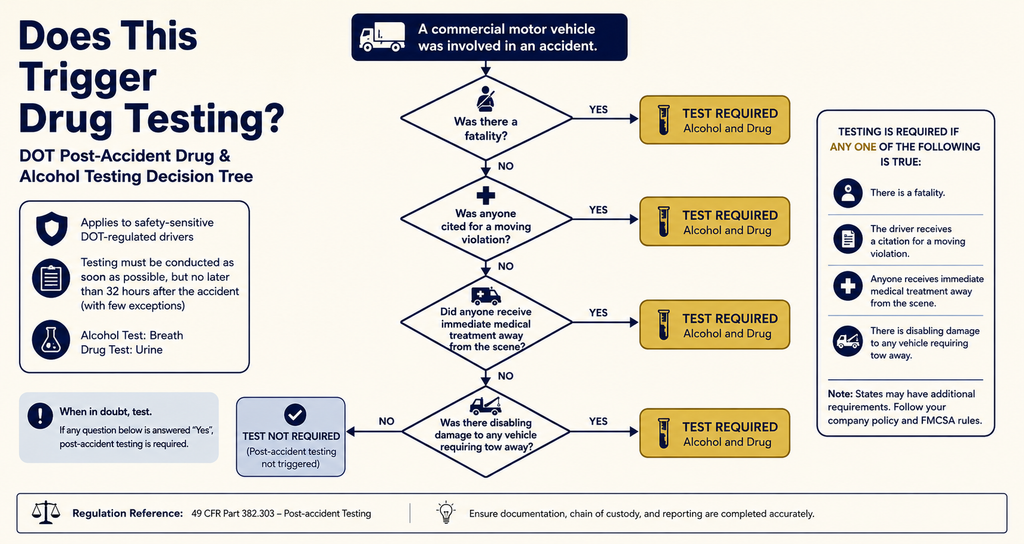
Testing isn’t automatic just because a crash happened; it depends on citation, injury, tow, and fatality in specific combinations.
| Trigger | Testing Required? |
| Fatality, regardless of citation | Yes, always |
| Injury away from scene, AND cited | Yes |
| Towed for disabling damage, AND cited | Yes |
| Injury or tow, but not cited | No |
1. The Clocks Nobody Explains Well
Alcohol testing should happen within 2 hours; attempts stop at 8 hours.
Drug testing has a 32-hour window, starting at the moment of the crash, which is why calling dispatch fast matters.
2. Refusing Counts as a Positive Result
A refusal triggers immediate removal from safety-sensitive duty and a full return-to-duty process.
Document any legitimate medical reason immediately, rather than just not showing up.
Your Insurance Claim and Coverage Stack
Commercial trucking insurance is a stack of separate coverages, and one accident can trigger several at once.
| Damage | Coverage That Responds |
| Your tractor or trailer | Physical Damage Protection |
| Freight hauled | Cargo Freight Insurance |
| Non-owned trailer | Trailer Interchange Insurance |
| Injury to another party | Primary Truck Liability |
| Injury to you | Occupational Accident Coverage |
1. Adjusters Rebuild the Moment of Impact
They use the police report, photos, ELD data, and witness statements together, not any single piece alone. Thin documentation means a slower, more disputed claim.
2. A Tow Bill Isn’t Always the Final Number
Non-consent towing is loosely regulated in many states, which invites aggressive itemization. Insurers frequently negotiate these bills down through rate review before paying.
How One Accident Follows You Long After the Scene Clears
1. Your CSA Score and a Review Almost Nobody Knows About
A DOT-recordable crash enters your carrier’s Crash Indicator BASIC for 2 years, regardless of fault.
FMCSA’s Crash Preventability Determination Program lets a carrier submit a Request for Data Review through DataQs, excluding a genuinely not-preventable crash from that public score.
A police report plus your own scene photos is exactly the evidence this review wants.
2. Your Record, Hiring, and Liability Years Later
Many state records don’t assign fault, just note “an accident occurred.” Carriers weigh honest disclosure far more than the bare entry, since background checks catch concealment anyway.
Statutes of limitations run 2 to 4 years in most states. Keep every scrap of documentation, since a driver can still get contacted, even served papers, well after the fact.
When It’s a Fatal Accident
- Testing is mandatory regardless of citation, no exceptions
- You’ll likely be taken off the truck and given lodging while an independent investigation runs
- Resolution commonly takes 12 to 24 months, which is normal, not a bad sign
- Many drivers step away from driving for a period afterward, and Critical Incident Stress Management resources exist for exactly this
FAQs
Protect Yourself After a Truck Accident
A commercial truck accident is a sequence of decisions, and most that matter happen in the first 15 minutes. Document everything, report same-day, and let regulatory criteria decide what happens next.
Want coverage that actually responds the way you expect?
Alvix Insurance Group has placed trucking policies, with 24/7 certificate of insurance access and a dedicated account manager who already knows your file.
See how FMCSA safety ratings tie back to your premium, or get a trucking insurance quote.


