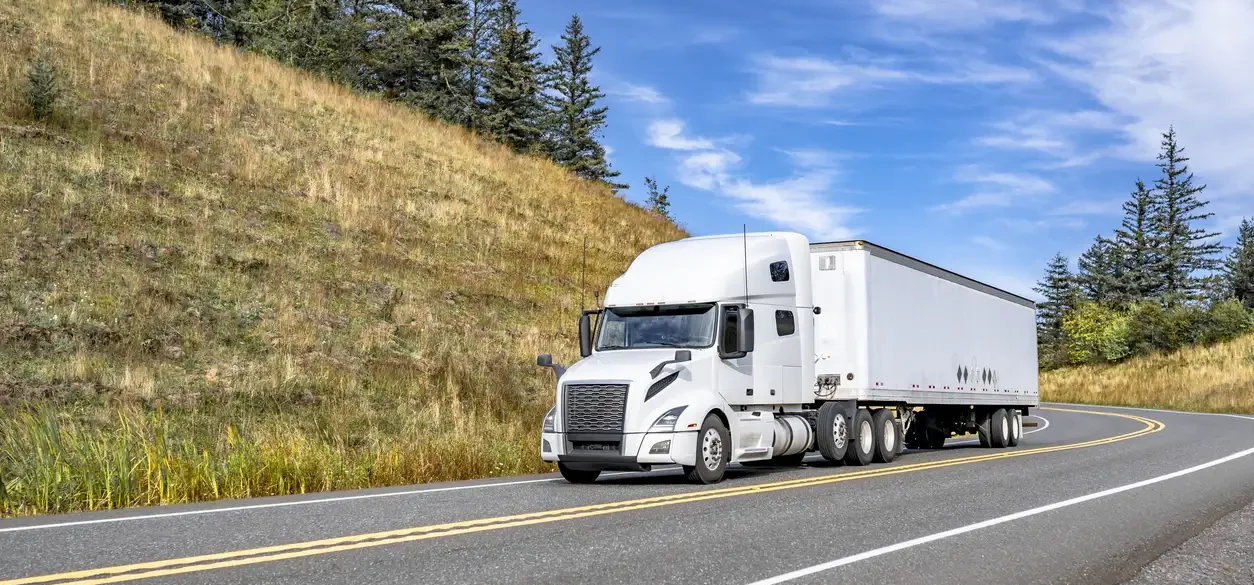
Commercial trucking insurance in Aurora, IL, costs between $11,000 and $22,000 per year for owner-operators in 2026. Federal law under FMCSA 49 CFR 387.9 requires $750,000 in primary liability coverage for interstate carriers. Illinois intrastate carriers must file proof of insurance with the Illinois Commerce Commission using Form E. Aurora is the second-largest city in Illinois and sits along the I-88 Ronald Reagan Memorial Tollway, a major freight corridor. The city has large logistics parks, a Union Pacific intermodal terminal, and direct access to the Chicago metro market. Carriers operating in Aurora face heavy traffic, local truck route restrictions, and insurance rates influenced by the Chicago market.
KEY TAKEAWAYS
- 2026 cost range: Owner-operators pay $11,000 to $22,000 per year. Chicago metro proximity adds to the cost.
- Legal minimum: FMCSA requires $750,000 primary liability under 49 CFR 387.9 for interstate carriers.
- Illinois ICC: Intrastate carriers must file Form E with the Illinois Commerce Commission.
- Local truck routes: Aurora has Class II Truck Route rules. Some roads have a 36-ton weight limit for trucks with five or more axles.
- Shipper requirement: Most brokers require 1,000,000 in liability and 100,000 in cargo before they give you loads.
- New authority: First-year carriers typically pay 25 to 50 percent more than established operators.
Why Aurora Is a Major Trucking Market
Aurora is not just a Chicago suburb. It is one of the busiest freight markets in northern Illinois.
Here is what drives the volume:
- I-88 is a designated Illinois Department of Transportation truck route
- The Park 88 Logistics Center and I-88 Gateway Logistics Center are active distribution hubs
- The Union Pacific Global III Intermodal Terminal connects local warehousing to national rail
- The area supports e-commerce fulfillment, cold storage, and industrial operations
- Aurora is within a one to two-day ground shipping reach of most of the US population
- The I-88 corridor is an alternative to I-80 for western freight moving toward Chicago
All of this creates a steady stream of trucks on local roads. More trucks mean more claims. More claims means your policy needs to be structured for this specific market, not a generic Illinois rate.
Which Roads Do Aurora Truckers Use Most Often
Every route in Aurora carries its own risk. Knowing your road helps you understand your premium.
One important note before the table: I-88 is a toll road. Carriers who run it daily face the Illinois Tollway’s commercial vehicle rate structure. Toll costs are a real operating expense, and your insurer should factor your I-88 exposure into your liability rating.
| Route | Main Use | Risk Level |
|---|---|---|
| I-88 Ronald Reagan Tollway | Chicago metro freight, east-west distribution | High – toll road, heavy volume, merge exposure |
| IL-59 | North-south local freight, retail and distribution | Medium to high – heavy commuter mix, signals |
| US-30 Lincoln Highway | Regional freight, industrial corridor access | Medium – older road, variable conditions |
| IL-25 | Fox River Valley local transport | Medium – mixed urban and rural |
| IL-56 | Aurora to Naperville, local distribution | Medium – congestion near intersections |
After reviewing your route mix, share it with your agent. A carrier running I-88 daily into Chicago has different exposure than one running local delivery on IL-25. Your premium should reflect that difference.
What Illinois Law Requires in 2026
Before you pick a policy, you need to know what the law requires. The rules differ depending on whether you cross state lines.
Federal FMCSA Rules for Interstate Carriers
If your truck crosses into Wisconsin, Indiana, Missouri, or any other state, federal rules apply.
The minimum coverage requirements are:
- General freight over 10,001 lbs: $750,000 in primary liability
- Oil and certain hazardous materials: $1,000,000 minimum
- High-hazard cargo such as explosives and bulk hazmat: $5,000,000 minimum
- Filing required: Form BMC-91 or BMC-91X submitted directly to FMCSA
Illinois ICC Rules for Intrastate Carriers
If you stay within Illinois only, the Illinois Commerce Commission governs your authority.
What you need to do:
- Obtain a Public Carrier Certificate from the ICC
- File proof of insurance electronically using Form E
- Carry an annual Cab Card for each vehicle in your fleet
What Aurora Shippers and Brokers Require
The legal minimum is the floor. It is rarely enough to get freight in the Aurora market.
Most Aurora-area logistics parks and freight brokers require:
- $1,000,000 in liability coverage
- $100,000 in cargo coverage
Meeting these thresholds is what gets you into the Park 88 and I-88 Gateway facilities. Without them, you will be turned away from many loads before they even review your safety record.
What Commercial Trucking Insurance Costs in Aurora in 2026
Aurora sits inside the Chicago metro insurance rating zone. That means trucking insurance premiums in Illinois are higher than in many rural states. The table below gives you a realistic picture of what Aurora carriers are paying in 2026.
| Operator Type | Annual Premium Range | Notes |
|---|---|---|
| Owner-operator, established | $11,000 to $22,000 | Clean record, two or more years of authority |
| New authority, first year | $14,000 to $28,000 | 25 to 50 percent surcharge for limited history |
| Small fleet, two to five trucks | $26,000 to $80,000 | Scales with fleet size and cargo type |
| Reefer and refrigerated carriers | $13,000 to $21,000 | Cargo spoilage endorsement needed |
| Flatbed and heavy haul | $14,000 to $22,000 | Open load and oversize exposure |
| Hazmat carriers | $20,000 to $40,000 or more | Hazmat endorsement plus excess liability required |
| Box truck, local delivery | $10,000 to $16,000 | Lower mileage, regional exposure |
Two things push Aurora premiums above the state average.
- First, the Chicago metro garaging surcharge applies to any carrier based in Kane or DuPage County.
- Second, Illinois courts in the greater Chicago region have a history of high jury verdicts in commercial trucking cases.
Both show up in your quote whether you ask about them or not.
These Are the Truck Types Most Active in Aurora
Aurora’s freight mix is shaped by its logistics parks, intermodal terminal, and position on I-88. These are the five truck types you see most on Aurora roads and what each one typically costs to insure.
The premiums below are based on established carriers with a clean record. New authorities and high-risk cargo types will pay more.
| Truck Type | What They Do in Aurora | 2026 Annual Premium |
|---|---|---|
| Dry Van Tractor-Trailer | Runs I-88 and I-90 between Aurora and Chicago. Serves logistics parks and regional distribution. | $11,000 to $20,000 |
| Reefer Truck | Carries food and pharmaceutical freight for cold storage facilities in the I-88 corridor. Cargo spoilage coverage is required. | $13,000 to $21,000 |
| Flatbed Truck | Hauls industrial equipment and construction materials for Kane County projects and intermodal freight. | $14,000 to $22,000 |
| Box Truck | Handles last-mile delivery across Aurora, Naperville, and surrounding Fox Valley communities. | $10,000 to $16,000 |
| Intermodal Container Truck | Moves containers between the Union Pacific Global III Terminal and distribution centers. | $13,000 to $22,000 |
If you operate an intermodal truck at the Union Pacific terminal, ask your agent specifically about chassis coverage. Non-owned chassis liability is a common gap in standard intermodal policies.
Core Coverages Aurora Carriers Need
A complete policy for an Aurora trucking operation covers more than just liability. Here is a plain breakdown of what each coverage does.
Not every carrier on this list needs every coverage below. But the right agent will tell you which ones apply to your cargo and routes before you sign anything.
| Coverage Type | What It Covers |
|---|---|
| Primary Liability | Bodily injury and property damage to third parties. Required by law for all carriers. |
| Physical Damage | Repairs or replacement after collision, theft, or weather damage. |
| Motor Truck Cargo | Protects the freight you are hauling from loss, theft, or damage. |
| Reefer Breakdown | Covers cargo spoilage if your refrigeration unit fails. Required for food and pharma loads. |
| Non-Trucking Liability | Covers you when the truck is being used outside of active dispatch. |
| Intermodal Liability | Covers container and chassis exposure for carriers at intermodal terminals. |
| Umbrella and Excess Liability | Extends coverage above primary limits. Important given Illinois’s litigation environment. |
| Workers Compensation | Covers driver injury on the job. Required for fleets with employed drivers in Illinois. |
Once you review this table with your agent, ask specifically about intermodal and cargo endorsements. These are the two most commonly missed coverages for Aurora-area carriers.
How to Choose a Truck Insurance Provider in Aurora
Not every agent understands the Aurora market. Here is what to look for before you commit to a policy.
What Matters in Aurora
These are the factors that should shape your choice of insurance provider:
- Illinois ICC filing experience: Your agent must handle Form E for intrastate carriers in-house
- Chicago metro rating knowledge: An experienced agent knows how each carrier prices the metro surcharge
- Intermodal coverage access: The Union Pacific terminal creates specific coverage needs that most generalist agents miss
- Multi-carrier access: A broker working with 30 or more carriers finds better rates than a single-carrier agent
- Aurora local route knowledge: Familiarity with the City of Aurora Class II Truck Route rules protects you from compliance gaps
- New authority placement: Aurora has a growing number of new DOT authorities who need agents who can place new business
Three Questions to Ask Before You Sign
Ask these three questions to any agent before you commit:
- One: Do you handle Illinois ICC Form E filings and FMCSA BMC-91 filings in-house?
- Two: How do you account for the Chicago metro garaging surcharge when you compare carrier quotes?
- Three: Have you placed intermodal or logistics park coverage for Aurora-area carriers before?
Clear answers mean the agent knows your market. Vague answers are a sign to look elsewhere.
Frequently Asked Questions
Why Choose Alvix Insurance for Aurora Truck Insurance
At Alvix Insurance Group, we help trucking businesses find coverage that fits the way they actually operate. With 10+ years of experience, access to 30+ insurance carriers, and licenses in 23+ states, we compare multiple options to help you get the right protection at a competitive price.
Whether you run dry van freight on I-88, haul intermodal loads from the Union Pacific terminal, or handle local deliveries throughout the Fox Valley, we tailor coverage to your operation. Our team understands the Aurora market, local shipper requirements, and the factors that can impact trucking insurance rates in the Chicago metro area.
We believe insurance should be straightforward. You’ll know exactly what your policy covers, what it doesn’t, and how much it costs before making a decision.
Get your free Aurora truck insurance quote today. Contact Alvix Insurance Group to review your coverage options.
How Can You Protect Your Aurora Trucking Business?
Aurora gives truckers access to one of the largest freight markets in the Midwest. That access is valuable. It also comes with real risk.
The I-88 corridor is busy. The logistics parks have strict shipper requirements. The courts in the Chicago metro area are known for high-value verdicts against commercial carriers. A policy built for rural Illinois will not protect you here.
Get coverage that fits Aurora. Talk to the Alvix Insurance Group team, review what your policy actually includes, and make sure it matches your routes and your cargo.
Get a Free Quote Today
RELATED PAGES:


