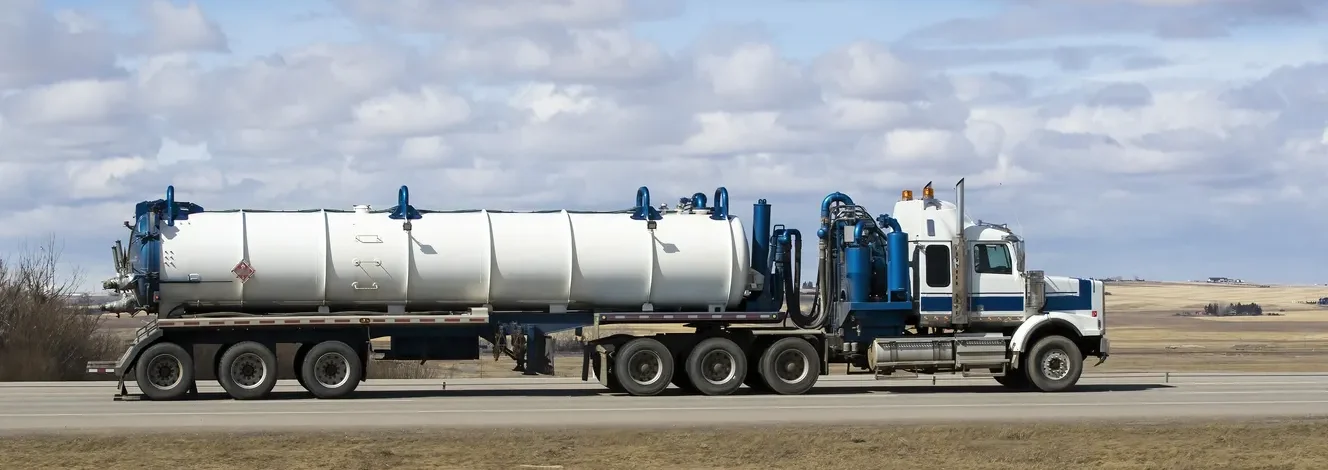
Quick Answer: Your commercial auto policy has a pollution exclusion built in. It bars coverage for spill cleanup, contamination claims, and regulatory fines. That’s why environmental liability insurance exists as its own coverage line, not an add-on to general liability.
A tanker accident on I-40 can trigger two separate categories of expenses, and standard liability insurance may respond to only one of them.
State DOT closes the lane. A HAZMAT contractor gets dispatched. The state agency requires soil and groundwater testing before allowing the road to reopen.
The fee is billed before your insurer completes its assessment of the vehicle. Injury and vehicle claims run through standard liability; cleanup and contamination costs need a dedicated pollution policy in place.
Key Takeaways
- Auto and general liability policies typically exclude pollution-related claims by default.
- MCS-90 is a federal endorsement, not pollution insurance, and it comes with a reimbursement clause.
- Hazmat carriers face FMCSA minimums up to $5,000,000, versus $750,000 for general freight.
- Truckers Pollution Liability covers spills in transit only, not your yard or terminal.
- Occurrence-trigger policies exist as an alternative to claims-made and remove the tail-coverage problem entirely.
- Because this coverage falls outside many standard retail underwriting appetites, businesses may need to secure it through a wholesale broker or an E&S carrier.
Why Your Trucking Policy Excludes Pollution Claims
Every standard commercial auto insurance and general liability form bars coverage for pollutant discharge, dispersal, release, or escape. That’s why fuel, chemical, and waste-hauling operations need a dedicated pollution policy.
A tanker rollover splits costs into 2 buckets:
- Covered by standard liability: vehicle damage and injury claims, through your primary truck liability coverage.
- Not covered without pollution liability: cleanup, agency response costs, and third-party contamination claims.
Owner-operators buying their first policy often assume “liability insurance” is one bucket. An agent usually has to walk through the hazmat exposure directly before pollution coverage gets added.
FMCSA Liability Tiers and the MCS-90 Endorsement
1. The 3 Federal Liability Tiers
Interstate carriers must meet FMCSA minimum liability limits under 49 CFR 387.9. The dollar tiers scale by commodity:
- General freight: $750,000 combined liability, the legal floor. Many brokers push toward $1,000,000 before booking a load.
- Vehicles under 10,001 lbs GVW: a lower $300,000 standard.
- Oil, hazmat, and hazmat-passenger operations: $ 1,000,000- $ 5,000,000, depending on commodity. Tank truck insurance has to be structured around this tier from the first quote.
2. What MCS-90 Actually Does (and Doesn’t)
MCS-90 is a federally required endorsement, not a policy. It forces your insurer to pay covered claims up to the required minimum, even when your own policy would otherwise exclude the loss.
FMCSA’s own MCS-90 form guidance confirms it exists to guarantee public payouts, not to insure the carrier. The insurer can then come after your company to recover what it paid.
MCS-90 protects the public first, not your balance sheet. If it covers a claim because your own limits were too thin, that bill can land back on you.
3. BOC-3, Form E, and MCS-90: Not the Same Filing
These 3 filings get confused constantly. BOC-3 designates your process agent, and Form E is a state-level financial responsibility filing.
MCS-90 is the endorsement above. A mismatch between what’s filed and FMCSA’s record is the most common reason a new authority shows “pending” instead of “active.”
The Coverage Types Inside “Environmental Liability”
Environmental liability for trucking isn’t 1 product. It’s built from 4 distinct types.
| Coverage type | What it responds to | Typical buyer |
| Truckers Pollution Liability (TPL) | Sudden spills or leaks from cargo in transit | Fuel, chemical, and hazardous waste carriers |
| Contractors Pollution Liability (CPL) | Pollution from work performed, not just hauling | Carriers that also handle disposal or site work |
| Environmental / Pollution Legal Liability (EIL/PLL) | Broader pollution at a fixed location, often claims-made | Fleets with terminals, tank farms, or fuel storage |
| Premises Pollution Liability | Contamination originating at a yard or storage site | Owned or leased terminal operators |
A gap shows up on renewal reviews constantly. A fleet buys TPL and assumes it covers the yard too.
That assumption breaks when a leaking terminal tank turns into a claim. TPL is transportation-only; fixed-location contamination needs its own policy.
How this gets placed: most retail carriers don’t write monoline pollution liability for a single truck. For TPL and CPL risks that fall outside standard underwriting guidelines, wholesale brokers can access specialized E&S markets to help secure suitable coverage. Budget an extra week before a new authority’s first hazmat load.
What a Pollution Policy Actually Pays For
Most guides stop at “buy pollution coverage” without explaining what it pays for once a claim starts.
- Sudden vs. gradual pollution: narrower TPL forms cover sudden events only; a slow corroded-fitting leak can fall outside that, though broader EIL or PLL forms usually pick it up.
- Emergency response costs: many policies reimburse costs to prevent a claim from escalating, but the notification window is often just days.
- Non-owned disposal sites: waste haulers rarely own the delivery site, but some CPL and EIL forms extend coverage there if confirmed upfront.
- Defense costs: whether they sit inside or outside the policy limit depends on the form, exactly the gap excess liability coverage backstops.
Which Fleets Carry Real Exposure
Exposure follows the cargo. Every state layers its own spill-reporting rules on top of federal ones, enforced by its own agency, not just the EPA.
A multi-state fleet’s home-state playbook doesn’t travel with it.
- High-priority risks include fuel and petroleum haulers, chemical and hazmat-placarded carriers, as well as garbage and liquid waste haulers.
- Moderate priority: general freight hauling agricultural chemicals, batteries, or aerosols, plus fleets with on-site fuel storage.
- Lower priority, not zero: dry van carriers with no fixed fuel storage, mostly limited to tractor diesel in a crash.
Run this 4-question test regardless of tier:
- Could any of the materials we haul require an environmental cleanup response if spilled, beyond the cost of towing the vehicle?
- Do we store fuel or waste at a facility we own or lease?
- Do our routes cross waterways or environmentally sensitive land regularly?
- Would 1 serious spill threaten the company’s solvency without this coverage?
A “yes” to any of the first 3 means the exposure exists, priced or not.
Mistakes That Show Up on Renewal Reviews
- Assuming auto or general liability covers it. It doesn’t, and the gap is usually discovered during a claim, not before.
- Treating TPL as full coverage. Cargo-in-transit spills only, not a leaking yard tank.
- Confusing MCS-90 with pollution insurance. A reimbursement-clause filing, not a business asset.
- Buying pollution coverage as an afterthought left a gap for months.
- Letting claims-made coverage lapse without tail coverage. The mechanic is most likely to cause a real gap.
Claims-Made vs. Occurrence: Where the Real Gap Hides
Most pollution policies are claims-made. The policy active when the claim is filed responds, not the one active when the spill happened.
Contaminated groundwater can surface years later. Switching carriers without purchasing tail coverage can leave a prior incident without coverage.
Occurrence-trigger policies exist as an alternative and remove this problem entirely, usually at a higher premium. Defense-costs-outside-limits are also frequently available as an endorsement, worth asking about at every renewal.
What to Do During the First Hour After a Spill
- Report to the National Response Center if the release meets a reportable quantity threshold. Delayed reporting can trigger its own penalty.
- Notify your insurer and the state environmental agency immediately, not after cleanup starts.
- Document everything before a cleanup contractor arrives: photos, GPS location, cargo manifest.
- Contact your insurance producer before agreeing to any cleanup costs, liability terms, or other obligations with a state agency or private party.
FAQs
Get Your Fleet’s Environmental Exposure Reviewed
Environmental liability isn’t a box to check once at binding. It’s a coverage stack reviewed every renewal, not just at the first quote.
Alvix Insurance Group has provided commercial trucking coverage and works with fleets across 23+ licensed states. Clients get 24/7 access to certificates of insurance, so a COI request doesn’t wait until Monday.
Get a quote and talk to a producer about your exposure gaps before a spill forces the question.


