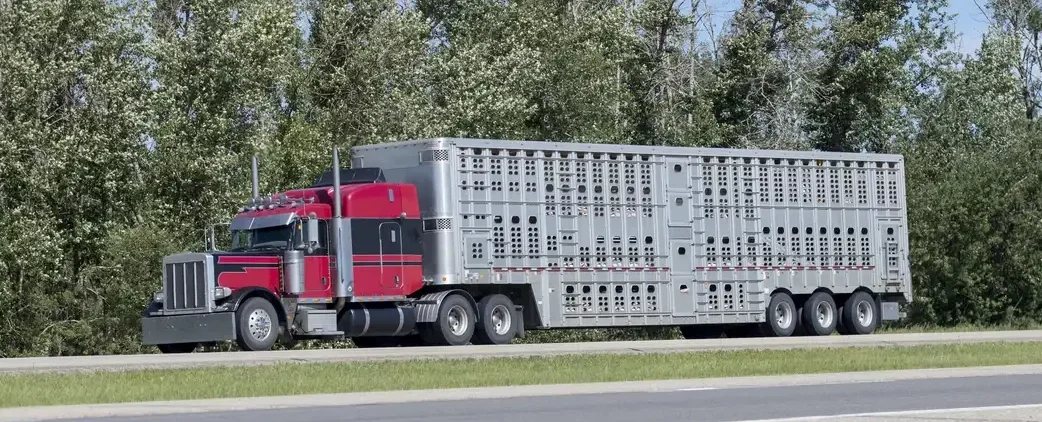
Quick Answer: Livestock truck insurance is a commercial trucking policy built for businesses that haul live animals. It covers your truck, trailer, the animals themselves, and the added risks that come with transporting living cargo, injury, death in transit, disease, and escape. Because live animals are harder to protect and more expensive to replace than standard freight, insurers treat livestock hauling as higher-risk and price it accordingly.
Transporting cattle, horses, poultry, pigs, sheep, or other livestock comes with risks a standard freight policy isn’t built to handle. This guide covers the coverages, costs, requirements, and risk factors livestock haulers need to know, plus how to pick a policy that actually protects your operation.
Key Takeaways
- Livestock truck insurance protects businesses that transport live animals such as cattle, horses, pigs, and poultry.
- Core coverages include primary liability, cargo insurance, physical damage, and livestock mortality insurance.
- Cost depends on the animals you haul, your operating radius, your driving record, and your equipment value.
- Total insurance costs for livestock haulers typically run $12,000–$30,000+ per truck, per year.
- The right coverage keeps you compliant with federal rules, manages your risk, and protects your business financially.
What Is Livestock Truck Insurance?
Livestock truck insurance is a specialized commercial trucking policy for businesses and owner-operators that transport live animals.
Because live animals are sensitive, high-value cargo, insurers generally treat livestock hauling as a higher-risk operation than standard freight, which means different pricing, different exclusions, and coverage add-ons a general trucking policy won’t include.
A livestock trucking policy typically combines coverage for:
- The truck and trailer
- The livestock being transported
- Drivers and employees
- Third parties
- Business assets
- Legal liabilities
- Cargo losses
- Animal mortality risks
This coverage matters for independent livestock haulers, ranchers, agricultural businesses, and commercial transportation companies alike.
Livestock Truck Insurance vs. General Commercial Truck Insurance
The two overlap, but general commercial trucking insurance isn’t built for the risks that come with hauling something alive.
| Coverage Area | General Commercial Truck Insurance | Livestock Truck Insurance |
|---|---|---|
| Cargo covered | Freight, goods, equipment | Live animals, cattle, horses, pigs, poultry, sheep, and more |
| Death/loss of cargo | Damage or theft only | Adds animal mortality coverage for deaths in transit |
| Injury exposure | Property damage focus | Covers animal injury, trampling, and stress-related loss |
| Escape/liability risk | Not typically addressed | Can include coverage for escaped-animal accidents and road incidents |
| Loading/unloading risk | General cargo handling | Specific endorsements for boarding and transfer injuries |
| Disease/contamination | Not applicable | May include biosecurity- and disease-related exclusions or endorsements |
| Typical pricing | Lower, standard freight risk | Higher, insurers price in animal welfare, mortality, and specialized handling risk |
If you haul livestock under a general commercial trucking policy, you may have no coverage at all for animal death, escape, or in-transit injury, the exact claims most likely to happen in this business. A livestock-specific policy closes that gap.
Who Needs Livestock Truck Insurance?
Any business that transports live animals should carry livestock trucking insurance, including:
Common operations include:
- Cattle transportation companies
- Horse transportation businesses
- Swine haulers
- Poultry transporters
- Sheep and goat transport companies
- Dairy farm transport operations
- Auction transport companies
- Ranch owners hauling livestock commercially
- Livestock brokers
- Agricultural trucking companies
- Feedlot transportation providers
- Multi-state livestock carriers
Even farmers transporting their own animals may require commercial insurance depending on state laws, vehicle size, and operating radius.
Types of Livestock Commonly Transported
Different animals carry different risks, and insurers price coverage based on what you’re hauling, not just how far.
| Livestock Type | Transportation Risks |
| Cattle | Injuries, trampling, stress |
| Horses | High value, mortality exposure |
| Pigs | Heat sensitivity, disease transmission |
| Poultry | Ventilation issues, high mortality |
| Sheep | Overcrowding risks |
| Goats | Injury during loading/unloading |
| Dairy Cattle | High-value livestock exposure |
| Bizarre Animals | Specialized handling requirements |
Insurers look closely at the type of animal you transport before offering or pricing coverage.
Why Livestock Haulers Need Specialized Insurance
Hauling live animals creates risks a standard trucking policy usually won’t cover, including:
- Animal injuries during transit
- Animal death (mortality)
- Vehicle accidents
- Trailer rollovers
- Escaped animals
- Cargo contamination
- Heat stress or freezing
- Loading and unloading accidents
- Theft of animals
- Equipment breakdown
- Disease outbreaks
- Public liability claims
A single accident involving live animals can mean losses running into the thousands, sometimes millions, of dollars.
Essential Livestock Truck Insurance Coverages
1. Primary Auto Liability Insurance
This is legally required for commercial motor carriers hauling across state lines. It pays for injuries or property damage your truck causes to someone else.
Covers:
- Medical expenses for third parties
- Property damage
- Legal defense costs
- Court settlements
- Judgments
Typical Limits:
- $750,000 minimum federal requirement
- $1,000,000 recommended for livestock haulers
Most shippers and brokers want to see at least $1 million in liability coverage before they’ll work with you.
2. Motor Truck Cargo Insurance
This protects the animals you’re hauling. Because livestock is living cargo, many insurers offer add-on coverage written specifically for live animals, sometimes called a livestock endorsement.
May Cover:
- Injury to animals during transit
- Animal death resulting from covered accidents
- Theft
- Fire
- Collision losses
- Overturn accidents
Important: Not every cargo policy automatically covers live animals. Confirm your policy specifically names:
- Live animal cargo
- Animal mortality
- Livestock transit coverage
3. Livestock Mortality Insurance
This coverage specifically protects against an animal’s death during transport. It can apply when animals die from:
Coverage may apply when animals die due to:
- Vehicle accidents
- Fire
- Collision
- Trailer overturn
- Natural disasters
- Extreme weather
- Equipment failure
- Transit stress (if specifically added to your policy)
This matters most for horse transporters, breeding livestock haulers, and high-value cattle carriers, where a single animal’s loss can be a major financial hit.
4. Physical Damage Coverage
This protects your truck and trailer.
Collision coverage pays for damage from:
- Collisions
- Rollovers
- Accidents with other vehicles
Comprehensive Coverage protects against:
- Fire
- Theft
- Vandalism
- Hail
- Flood
- Falling objects
- Animal strikes
5. Trailer Interchange Insurance
If you haul trailers you don’t own under a trailer-sharing agreement, this coverage protects those trailers while they’re in your possession.
May cover:
- Collision damage
- Theft
- Fire
- Vandalism
6. General Liability Insurance
This covers incidents unrelated to actual driving, for example:
- A customer gets injured at your facility
- A loading dock accident
- Property damage claims
- Claims tied to your advertising or marketing (rare, but included in most general liability policies)
Typical limits: $1 million per occurrence / $2 million aggregate.
7. Umbrella Insurance
Umbrella coverage adds an extra layer of protection on top of your other liability policies. Livestock haulers often carry umbrella limits of $1 million, $2 million, $5 million, or $10 million.
This extra layer matters most in worst-case accidents involving multiple vehicles, human injuries or fatalities, escaped animals, or large lawsuits.
Risks Unique to Livestock Transportation
Animal escape liability: an escaped animal can cause vehicle accidents, road closures, property damage, and injury lawsuits. Your policy should address this specifically.
Heat stress and suffocation: poor ventilation, mechanical failure, or extreme temperatures can injure or kill animals in transit. Insurers may set special requirements for temperature-sensitive loads.
Disease transmission: poor sanitation can spread disease between animals (avian flu, foot-and-mouth disease, and swine diseases are common examples). Your sanitation and handling procedures can affect what you’re able to get covered.
Loading and unloading injuries: many livestock losses happen during boarding, unloading, or transfers between facilities. These often need a specific policy add-on to be covered.
How Much Does Livestock Truck Insurance Cost?
Livestock trucking insurance coverage varies based on several factors.
Estimated Annual Premiums
| Coverage Type | Typical Annual Cost |
| Primary Liability | $8,000 – $18,000 |
| Physical Damage | $2,000 – $8,000 |
| Cargo Insurance | $2,500 – $10,000 |
| Livestock Mortality Coverage | Varies significantly by animal type and value |
| General Liability | $500 – $2,000 |
| Umbrella Insurance | $1,000 – $5,000 |
Figures above are illustrative industry-typical ranges, replace with your carrier’s actual quoted rates before publishing.
Total insurance costs for livestock haulers typically run $12,000 to $30,000+ per truck, per year, depending on the animals hauled, coverage limits, and risk profile.
Factors That Affect Livestock Truck Insurance Rates
Insurance companies evaluate numerous factors.
1. Driver factors: CDL experience, driving record, accident history, safety violations, years in business.
2. Vehicle factors: truck value, trailer type, vehicle age, safety equipment, maintenance history.
3. Cargo factors: animal species transported, livestock value, trip frequency, transit distance.
4. Operational factors: interstate vs. intrastate operations, radius of operation, annual mileage, number of units, operating authority.
FMCSA Insurance Requirements for Livestock Haulers
Interstate livestock carriers operating under federal authority must meet requirements set by the Federal Motor Carrier Safety Administration (FMCSA)
These generally include:
- Active USDOT Number
- Operating authority (MC Number when applicable)
- Minimum liability insurance filings
- BOC-3 filing
- Safety compliance programs
Insurance companies typically file proof of coverage directly with FMCSA on your behalf.
Failure to maintain insurance can result in:
- Authority revocation
- Fines
- Out-of-service orders
Risk Management Tips for Livestock Trucking Businesses
Lowering your risk is one of the most effective ways to lower your premium.
1. Run regular vehicle inspections — tires, brakes, ventilation systems, gates, trailer floors.
2. Train drivers thoroughly — animal handling, biosecurity (disease-prevention) practices, emergency procedures, safe loading techniques.
3. Maintain proper ventilation — make sure trailers get adequate airflow throughout transport.
4. Use GPS and telematics — real-time vehicle tracking tools can improve route efficiency, driver safety, and vehicle monitoring.
5. Follow animal welfare standards — staying compliant with industry animal-welfare standards reduces claims and makes you easier (and cheaper) to insure.
How to Get the Best Livestock Truck Insurance Policy
Before you sign, ask any insurer:
- Do you cover live animal transportation?
- Is livestock mortality included?
- Are loading and unloading losses covered?
- Are high-value animals insured, and up to what limit?
- What exclusions apply?
- Are animal escape incidents covered?
- Is interstate transportation covered?
Choose an insurer with real experience in both agricultural and trucking risk, not just general commercial auto. Alvix Insurance Group builds customized insurance solutions specifically for livestock haulers.
Common Livestock Truck Insurance Exclusions
Most policies won’t cover:
- Intentional acts
- Improper animal handling
- Wear and tear
- Mechanical breakdown (unless specifically added)
- Disease outbreaks
- Unapproved drivers
- Overloading
- Illegal operations
Always read your policy’s exclusions section carefully before you need to file a claim, not after.
Frequently Asked Questions (FAQs)
Final Thoughts
Livestock hauling comes with risks that a standard trucking policy simply isn’t built to handle. The right coverage protects your trucks, your cargo, your business, and the animals in your care, while keeping you compliant on the road.
Don’t leave your livestock transportation business exposed to costly losses. Contact Alvix Insurance Group today for customized livestock truck insurance solutions and get the protection your business deserves. Request a free quote now and haul with confidence.


