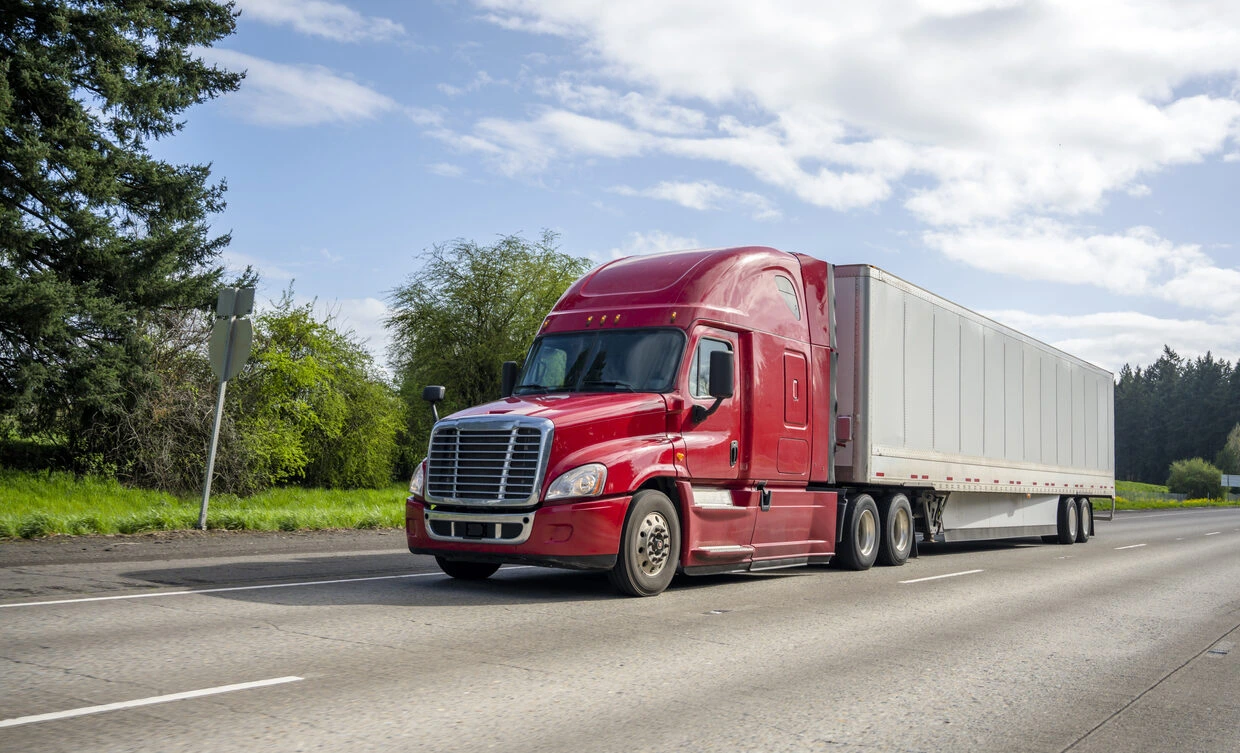
If you are searching for trucking insurance rates in North Carolina, you have already noticed that the numbers vary wildly depending on who you ask. That is because no two operations are priced the same. A dry‑van owner‑operator garaging in Greensboro pays a different rate than a flatbed running I‑85 out of Charlotte, and both pay differently than a new hotshot operator with six months in business.
This guide breaks down what North Carolina truckers are actually paying in 2026, what drives those numbers up or down, and exactly what you can do about it.
Quick Answer
Trucking insurance in North Carolina costs between $9,000 and $17,000 per truck annually for owner‑operators running under their own authority. The average falls around $11,500 for standard dry‑van and regional freight operations. New entrants with under two years in business, drivers with violations, or operators hauling high‑risk cargo can push well above that range. Leased operators under a motor carrier’s authority typically pay $300 – $400 per month for bobtail and physical‑damage coverage only.
Key Takeaways
- Loss history is the single biggest rate driver. A clean three‑year loss run reduces premiums by 20 % to 35 % compared with an operator who has an at‑fault claim on record.
- New businesses pay more. Carriers with under two years of operating history pay 15 % to 30 % above the market average because there is no safety track record for underwriters to evaluate.
- Where your garage matters in North Carolina. Operators in Charlotte, Raleigh, and the I‑85 corridor face higher base rates than rural operators due to traffic density, accident frequency, and litigation environment.
- The $1 million CSL limit is not optional in practice. State minimums start at $300,000, but 95 % of freight brokers require exactly $1,000,000 in combined single‑limit coverage before dispatching a load.
- Your FMCSA CSA score directly affects your renewal rate. Poor scores in the Unsafe Driving or Hours‑of‑Service compliance categories signal elevated risk to underwriters and increase premiums at renewal.
What North Carolina Truckers Are Paying in 2026
Below is a quick snapshot of the typical annual premium ranges by truck type in North Carolina (2026).
| Truck / Operation Type | Annual Premium Range | Key Rate Driver |
|---|---|---|
| Dry Van (Owner‑Operator) | $9,000 – $14,000 | Corridor congestion, driver history |
| Flatbed / Step Deck | $10,000 – $16,000 | Cargo shift liability, open‑load exposure |
| Hotshot (Class 3‑5) | $7,000 – $20,000+ | Expedited nature, trailer type, cargo value |
| Refrigerated / Reefer | $10,000 – $15,000 | Spoilage claims, temperature‑failure liability |
| Dump Truck / Construction | $6,000 – $11,000 | Short radius, worksite property damage |
| Tanker / Hazmat | $12,000 – $18,000 | Spill liability, FMCSA hazmat requirements |
| New Authority (any type) | +15 % to +30 % above class average | No established loss run or safety record |
These ranges illustrate how cargo type, operating radius, and risk profile affect the cost of coverage.
Contact us today at (305) 909‑6444 or visit Alvix Insurance Group
Looking for a Better NC Truck Insurance Rate?
The Eight Factors That Actually Move Your North Carolina Rate
Underwriters build every premium from a structured evaluation of your risk profile. The eight most influential factors, ranked by premium impact, are:
- Loss Run History: A three‑to‑five‑year record of claims. One at‑fault claim in the past three years adds 35 % to 60 % to the base rate; a clean three‑year loss run can qualify you for preferred‑tier pricing.
Action: Request your loss run from your current carrier before each renewal and verify it for errors. - Driver History and MVR Records: Violations, suspensions, or at‑fault accidents in the past three to five years increase rates. A single DUI can add 40 % to 75 % to a driver’s cost component.
Action: Run MVR checks on all drivers before hiring and quarterly thereafter; remove high‑risk drivers before renewal. - Years in Business and Operating History: New carriers have no loss run, so underwriters price for unknown risk. Operators under one year typically pay 20 % to 30 % above market; after two to three clean years, rates normalize.
Action: Focus on building a clean loss run during the first two years. - Garaging Location and Operating Radius:– Territory ratings are baked into every policy. Charlotte and the I‑85 corridor carry the highest base rates; Raleigh and the Research Triangle are next; rural eastern or mountain regions are lower.
Action: If possible, garage in a lower‑risk zip code or demonstrate strong safety performance for high‑risk territories. - Cargo Type and Commodity: General freight is low‑risk; flat‑bed loads, refrigerated goods, and hazmat truck raise premiums. Hazmat carriers must carry a minimum $1,000,000 liability, with many carriers requiring $2,000,000 or more.
Action: Accurately classify cargo and consider adding specialized endorsements only when needed. - FMCSA CSA Score: The Compliance, Safety, Accountability score is pulled directly by underwriters. Scores above the 65th percentile in any BASIC can trigger 10 %–25 % surcharges; scores above 75 may lead to declinations.
Action: Monitor CSA scores monthly via the FMCSA SAFER system and address violations promptly. - Truck Age and Equipment Condition: Vehicles older than ten years without documented maintenance can raise concerns. The sweet spot is five to ten years with a solid maintenance log. Advanced safety tech (ABS, ESC) can lower physical‑damage premiums.
Action: Keep a detailed maintenance log and consider retrofitting newer safety equipment. - Coverage Limits and Deductible Selection: Higher limits increase premiums but lower out‑of‑pocket exposure. Raising the physical‑damage deductible from $1,000 to $2,500 typically reduces the premium by 8 %–15 %; a $5,000 deductible saves even more, provided you have cash reserves.
Action: Choose a deductible that balances premium savings with your ability to cover a loss.
Owner‑Operator vs. Leased: How Authority Status Changes Everything
The single biggest structural decision affecting your insurance cost is whether you operate under your own authority or lease to a motor carrier.
- Owner‑operators (own USDOT number) carry 100 % of the primary liability risk. Full‑policy premiums average $1,100 – $1,800 per month and include primary liability, physical damage, and cargo. All filings, Form E for intrastate work or MCS‑90 for interstate, must stay active, or your authority is suspended immediately.
- Leased operators work under a carrier’s master liability policy while on dispatch. Out‑of‑pocket costs drop to $300 – $400 per month for bobtail (non‑trucking liability) and physical‑damage coverage for the tractor only.
Coverage Tiers: What You Actually Need vs. What Is Required
The following table outlines the common coverage tiers and what each provides.
Before you choose a tier, consider both regulatory requirements and the expectations of freight brokers.
| Coverage Tier | Primary Liability | Cargo | Who It Serves |
|---|---|---|---|
| State Minimum Only | $300,000 – $750,000 | None required | Legally compliant — no load‑board access |
| Broker Standard | $1,000,000 CSL | $100,000 minimum | Qualifies for most freight brokers in NC |
| Full Protection | $1,000,000+ CSL | $250,000+ | High‑value cargo, fleet operations, dedicated contracts |
Choosing the right tier ensures you meet legal requirements, satisfy broker expectations, and protect your business from large losses.
Real Scenario: A dry-van owner-operator running I-85 between Charlotte and Greensboro rear-ends a passenger vehicle during a sudden slowdown in construction traffic near Lexington. Bodily injury settlement: $62,000. Vehicle property damage (owner-operator’s truck): $62,000. Vehicle property damage (other vehicle): $24,000. Legal defense costs: $18,000. Total exposure: $104,000. With a $1,000,000 CSL and $100,000 cargo coverage, the entire claim falls within policy limits. If the operator only carried the state minimum of $300,000, the claim would still be covered, but a larger incident on the same corridor could easily exceed that limit, leaving the driver personally liable for any excess.

Five Proven Ways to Lower Your North Carolina Rate at Renewal
- Run quarterly MVR checks on every driver. Removing a high‑risk driver before renewal can save more than the cost of the check.
- Install forward‑facing dashcams and telematics. Most A‑rated carriers offer a 10 %–20 % physical‑damage discount for verified telematics; footage also helps settle disputes quickly.
- Raise your physical‑damage deductible. If you can cover a $2,500 or $5,000 deductible, the premium savings usually outweigh the higher out‑of‑pocket cost within two claim‑free years.
- Maintain a written maintenance log for each truck. Demonstrating consistent upkeep removes a common underwriting concern about mechanical‑failure claims.
- Bundle primary liability, cargo, and physical damage with one carrier. A single‑carrier policy eliminates coverage gaps, simplifies claims, and qualifies for multi‑policy discounts.
How to Choose the Best Trucking Insurance Coverage and Rates in North Carolina
Choosing the right trucking insurance in North Carolina means matching your coverage to your actual routes, freight, and authority type, not just what the state requires. Here is what to focus on:
- Build your limits around the biggest possible loss on your specific NC corridor. A flatbed running I-85 between Charlotte and Greensboro faces different exposure than a dump truck working a local construction site. The state minimum of $750,000 will not be enough if a serious accident happens in heavy Charlotte traffic.
- Make sure your cargo policy actually covers what you haul in North Carolina. Tobacco, furniture, and manufactured goods are common NC freight types, but some policies carry sub-limits or exclusions that will not fully pay out on high-value loads.
- If you cross into Virginia, South Carolina, Tennessee, or Georgia even once, you need MCS-90 on your policy. A lot of NC operators think they are intrastate until a broker asks for their federal authority, and they realize they are not covered.
- If you are intrastate only, confirm your Form E filing is active with the NC Department of Insurance before you haul anything. A lapse suspends your authority with no grace period.
- Compare carriers on claims handling, not just the quote. NC has active litigation environments around Charlotte and Raleigh, you want a carrier that defends claims, not one that settles everything and raises your renewal rate as a result.
- Review your coverage every year. North Carolina freight lanes shift, your routes change, and your authority status may change. A policy built for last year’s operation may have real gaps in this year’s reality.
Frequently Asked Questions
Get a Rate That Matches Your Actual Risk
North Carolina trucking insurance is not one‑size‑fits‑all. Your rate is built from your specific combination of driver records, cargo type, operating radius, equipment age, and loss history. Generic quotes that do not account for these variables are merely estimates and will change at binding.
Alvix Insurance Group works exclusively in commercial trucking. We are licensed in 23+ states, backed by A‑rated carriers, and specialize in finding the coverage structure that matches exactly what you haul and where you operate.
Contact us today at (305) 909‑6444 or for a free personalized quote and to ensure your coverage meets both legal requirements and broker expectations.
Related read: Trucking Insurance Rates in South Carolina


